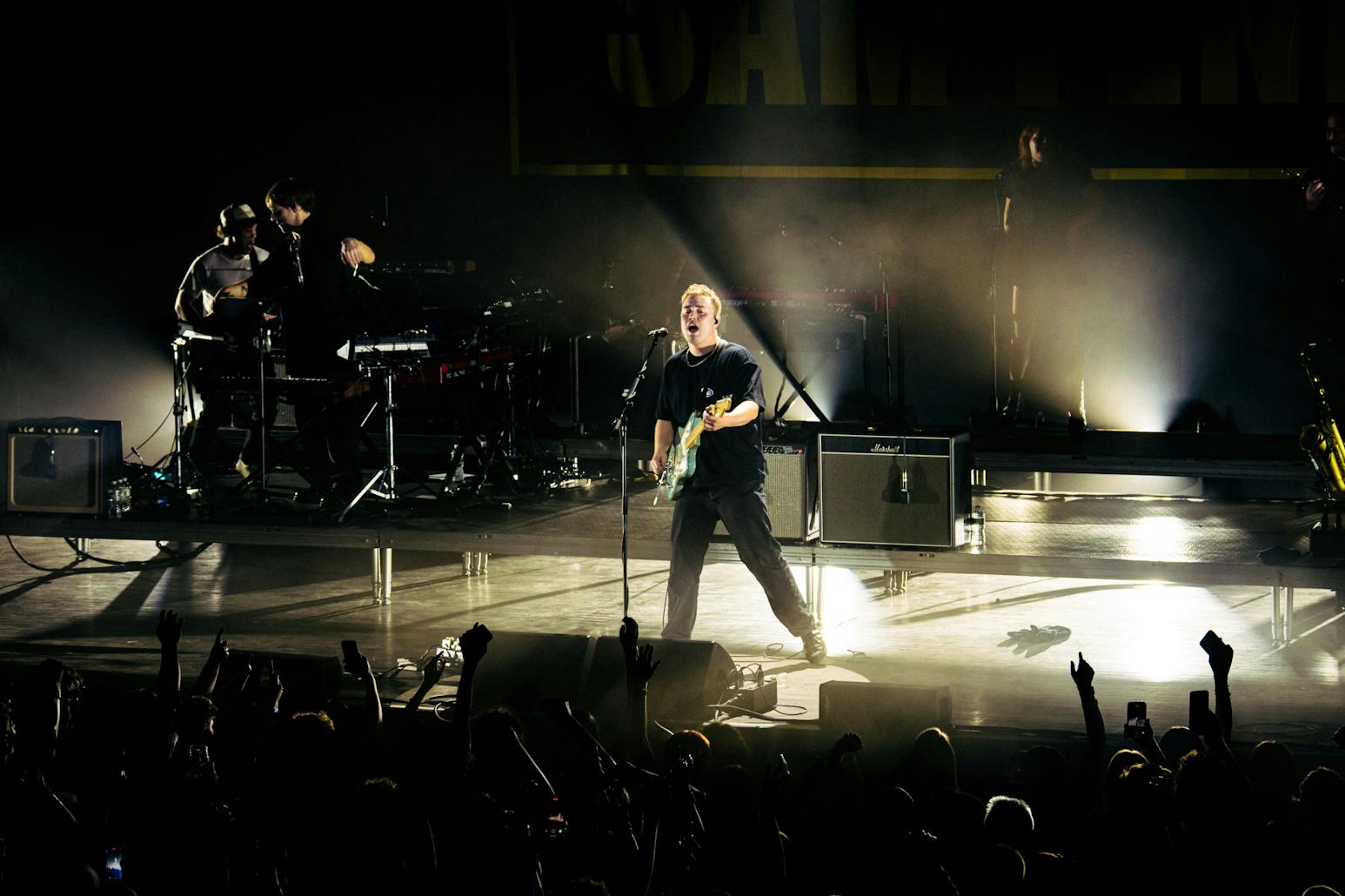
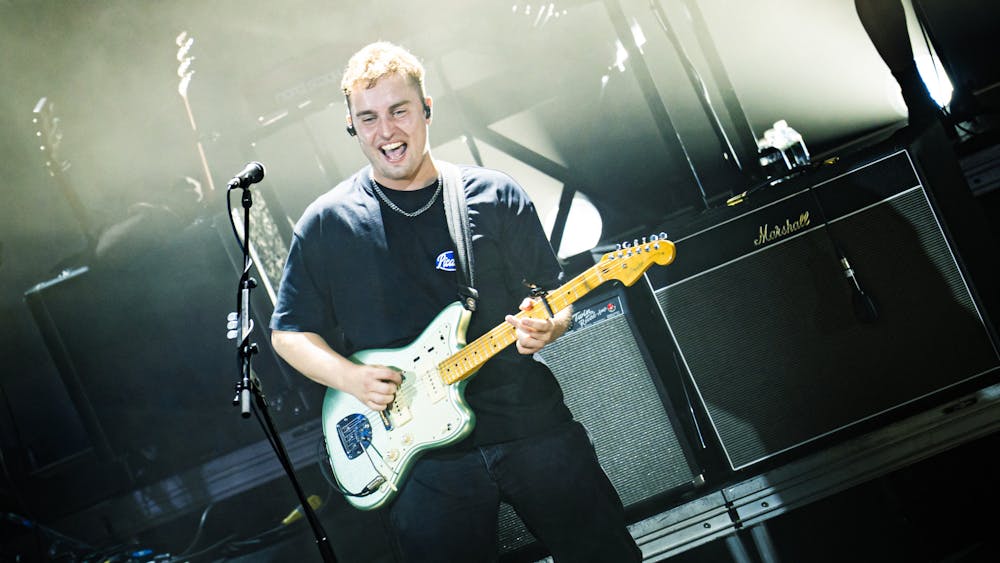
Time for a pop quiz! Picture a musician with a chiseled jaw, intense gaze, and a guitar slung low like a machine gun. He hails from a working–class background, in a town left behind by deindustrialization, and got out through the power of rock–and–roll. His music is powerful, reflective, and unabashedly political. Who is he?
Bruce Springsteen, right?

Wrong. His name is Sam Fender, and he’s British—Geordie, specifically. The musician grew up near Newcastle in North Shields, England—a city hit hard by the collapse of its heavy industries throughout the 1980s, with its residents falling into cycles of poverty and drug addiction. Here, opportunities are few, frustrations many, and one of the most popular activities is street racing. The city even plays host to Geordie Shore, a spinoff of Jersey Shore. In short, it’s Asbury–Park–upon–Tyne.
I am not the first person to compare him with The Boss, and Fender freely acknowledges the influence. He talks about Born to Run and Darkness on the Edge of Town with reverence, having been inspired by the albums ever since his brother introduced them to him at 15. So when I walked into the Fillmore last week, I almost expected a tribute act. The audience seemed to back up my assumption, composed mostly of older men and women dusting off their leather jackets, reliving their glory days of The River Tour. No matter, I thought, the world could always use more Springsteen.
I don’t think I got what I paid for. I had the chance to see Springsteen live a few years back, and it was a religious experience. I don’t mean that in the sense that I felt the presence of some higher power, or basked in the light of the musician’s presence. Rather, the concert had the air of a Sunday service. Springsteen preached to the audience, telling parables from his own life, and we would then rise to sing the hymns he had etched into the American musical canon over the course of half a century. It was a convocation of 50,000 voices, each of whom knew every word to every song, unified by a certain faith in the power of love and the possibility of personal and national uplift.
Fender, by contrast, opened his concert with a joke about Philly drivers. And he was brilliant.
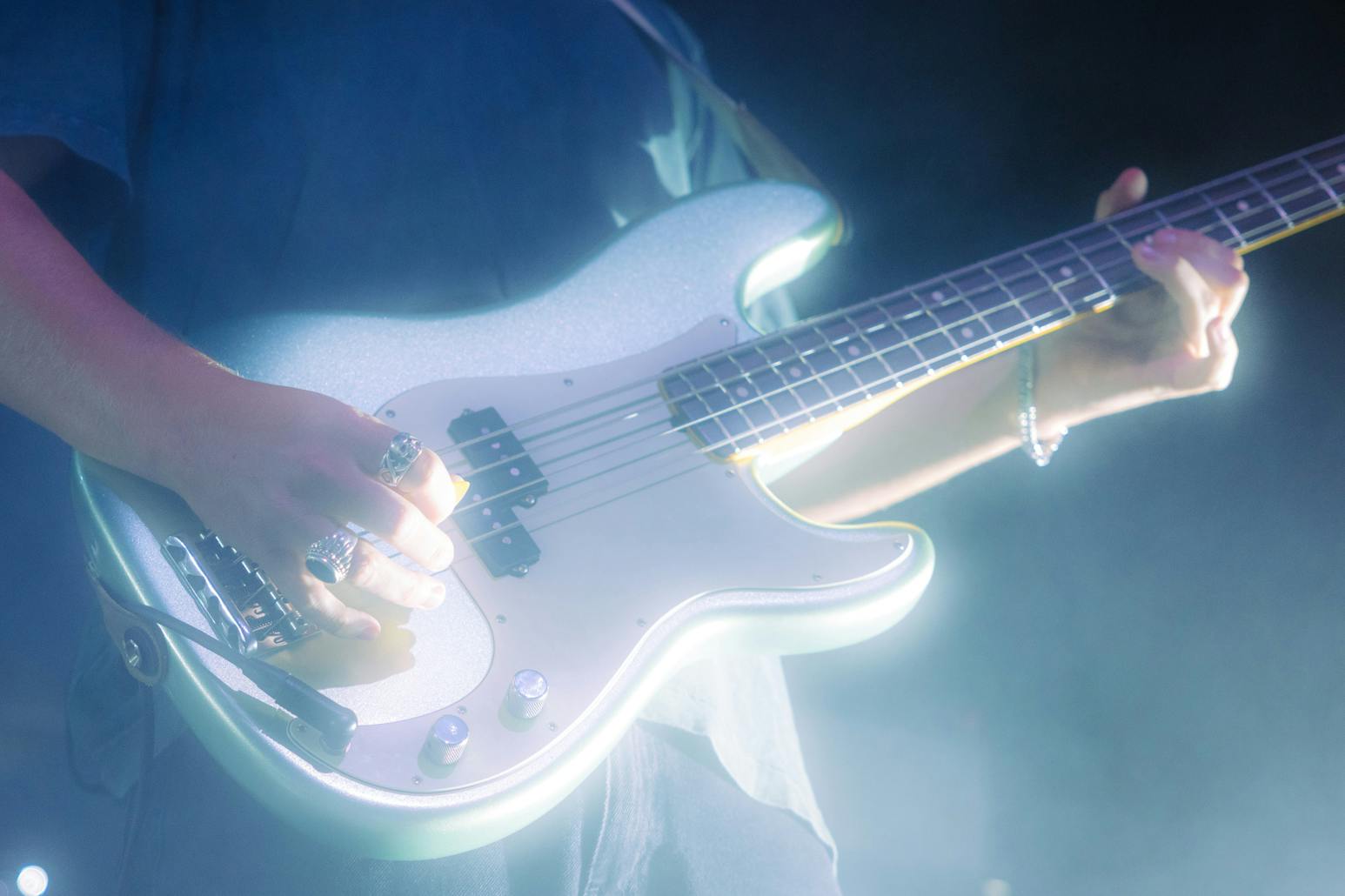
People Watching, his new album, made up most of the setlist, and its songs managed to be contemplative and genuinely vulnerable without losing an ounce of his earlier work’s energy. In “Arm’s Length,” the catchiness of the chorus conceals the hurt beneath its words: “do you have to know me, know me inside out?” It’s reminiscent of Prince’s “I Could Never Take the Place of Your Man” in its frank admission that love is more than attraction—sometimes, getting closer can hurt. The synths take the lead on this track, and their steady richness lays the foundation for “Crumbling Empire”, a conflicted look back at the community Fender calls home. It is genuinely powerful in its exploration of the failures of the British state and corporate power, and a worthy match to Springsteen’s “My Hometown,” which it draws clear inspiration from. Fender brings a mature and substantive perspective on love and class issues, a maturity that is genuinely refreshing in a world where mainstream culture increasingly prioritizes shareability over substance.
Oh, and the concert was the most fun I’ve had in a while. In the spaces between songs, Fender cracked enough jokes to give it the energy of a standup comedy set. There is no rock–star posturing—he laughed about messing up the guitar line and eating too much on the tour. For a man who models for half a dozen fashion brands, Fender showed up to the show disarmingly casual—messy hair and a simple black T–shirt. Halfway through the set, he pulled a young man in a Led Zeppelin shirt onstage to a roaring crowd, handed him a guitar, and invited him to play along.
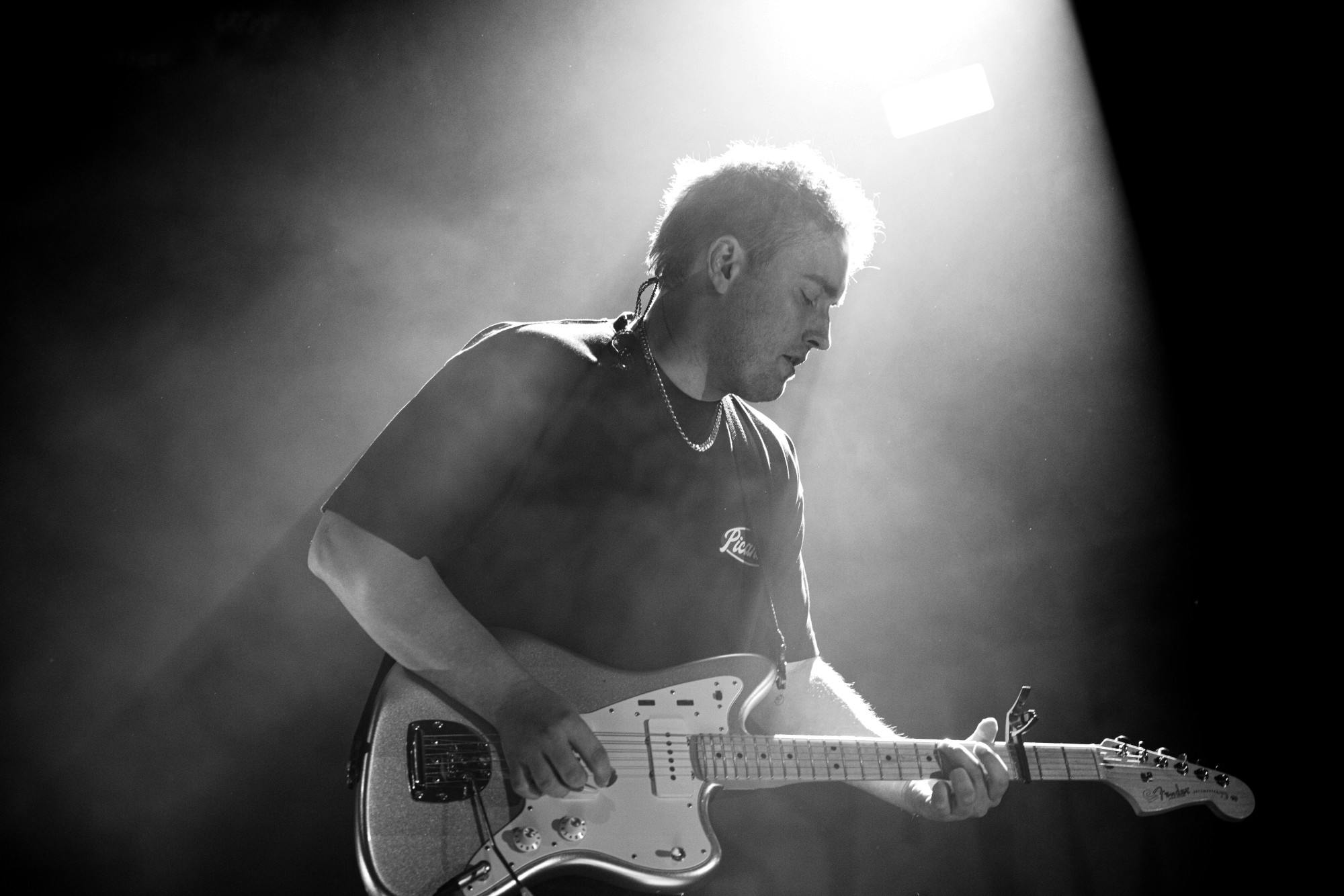
His band was no stranger to the reverie—the keyboardist mounted his instrument and rallied the crowd with a beaming smile, and at one point the backup singer and guitarist joined each other in a jig mid–song, prancing around the stage. People got on top of each other’s shoulders, belted off tunes louder than I thought humanly possible, and nearly brought the house down when Fender shouted “Go Eagles!” As the opening notes to “Hypersonic Missiles”—Fender’s biggest hit to date—played, the crowd leapt into action. For a brief moment we felt a very Springsteen–ian unity of purpose, connected to complete strangers by virtue of knowing the same lyrics and filling the same space.
I’m not sure if Sam Fender is the next Springsteen. I think that comparison may be unfair to both. Fender draws from a broader range of influences, including everything from Tracy Chapman to Britpop. Springsteen, on the other hand, remains the stronger songwriter, possessing a unique ability to be both universal and highly personal in a way that I don’t think Fender yet can. But what Fender is is a breath of fresh air. A genuine rockstar who speaks to serious issues but doesn’t take himself too seriously. A musician who—God forbid—seems to genuinely enjoy making and playing music. An artist who treats his audience like people rather than as consumers of merchandise or brand endorsements. In a time when America’s indie rockers are, quite literally, sombr, maybe we need another British invasion to teach us to rock again.