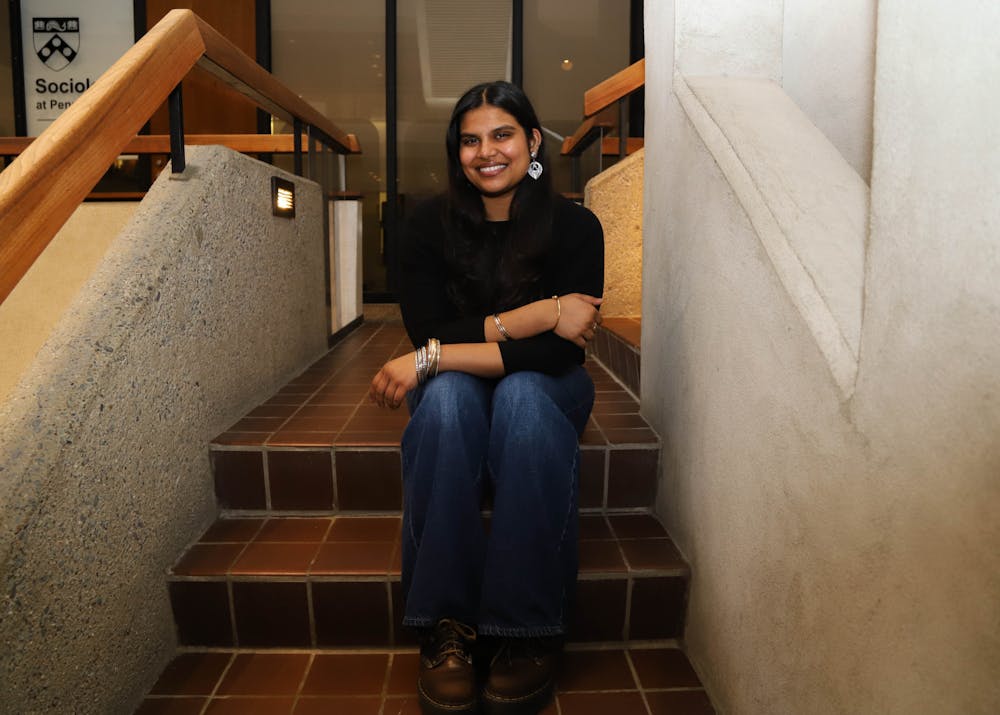
A doctor, a comedian, and a filmmaker walking into a room sounds like the setup to a bad joke. For Trisha Bheemanathini (C’ 26), that’s just her every day. Between midterms in her three (yes, three) majors and Bloomers rehearsals, we found time to chat over Zoom. And while being pre–med is an accomplishment in itself, it’s by no means the defining feature of Trisha’s life. During the hour we share together, she tells me about everything: her little sister, the ins and outs of screenwriting, and her favorite sketches from Bloomers. From the biggest award to the smallest adventure, Trisha reflects on how she’s changed and who she’s changed at Penn.
Name: Trisha Bheemanathini
Hometown: Birmingham, AL
Field(s) of Study: Major in neuroscience, cognitive science, and sociology
Involvement: Bloomers Comedy, Penn Neuroscience Society, Oracle Senior Society, Kinoki Senior Society, Research
How did you find your current academic path?
I originally came in as a cog sci major. I really liked how it was super interdisciplinary, and I wanted to learn a bunch of different things without sort of tying myself to one field. Between the cog sci classes and my pre–med requirements, I wound up completing most of the neuroscience requirements, so I added it on in my junior year. My passion in sociology grew when I took an intro course my sophomore spring, and I really enjoyed it. I have an interest in maternal health and sociology, specifically the applied research concentration, helped me learn through a new lens. And so I just talked to the director, and I was like, ‘Okay, I really want to do this.’ And now I’m finishing it up!
Where did your strong passion for maternal health come from, and how has it developed over time?
I had an innate interest in working with kids. The more that I was dealing with kids, the more I realized that a lot of children’s health decisions fall onto the mother, so I was really interested in the mother–child dynamic. America has tons of money that they put into health care, but we still have really bad mortality rates for pregnant women. That got me really interested in looking into mortality, maternal health, and reproductive rights. I think today, the female body is so villainized. There’s so many campaigns both for and against reproductive rights, and I feel like women are always getting the short end of the stick when it comes to health. I just want to be part of some sort of tiny change in the future that can help fight against that.
For my sociology thesis, I’m looking at vaccine hesitancy in new moms and how they make their decisions for their children. Especially post–COVID–19, because COVID–19 changed a lot of people’s opinions, and it put public health at the forefront of a lot of people’s minds. I knew I wanted my studies to be qualitative. I wanted to take time and sit down and talk to people about being a mom, especially a new mom. I want to be an OBGYN when I grow up, so this gave me a push in that direction.
You mention being a part of (and now chair of) Bloomers. What has your experience been like?
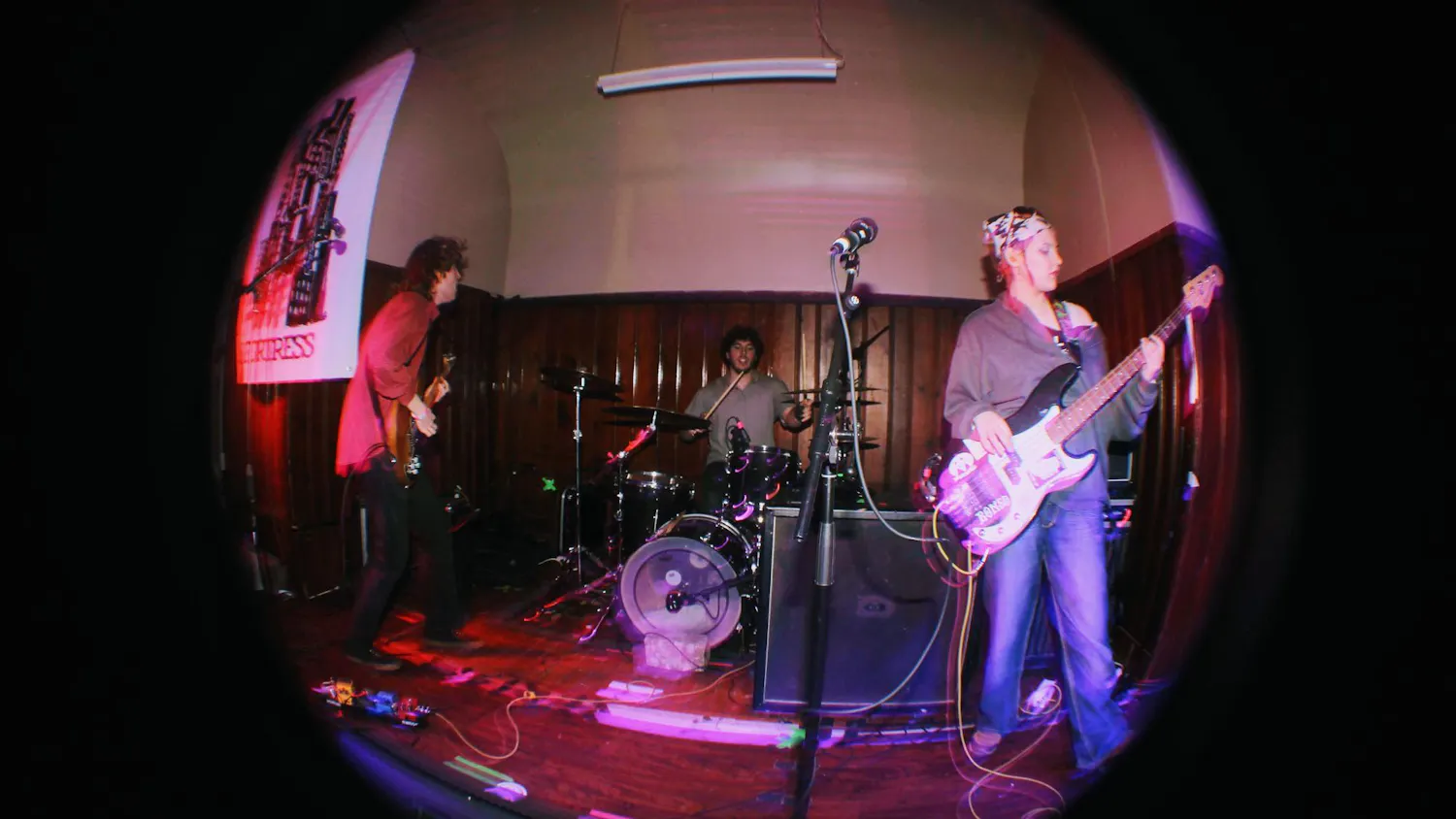
I joined Bloomers my sophomore year, after my friend dragged me to their free show. I was super inspired by it, and I went and auditioned the next day. I came in super STEM, super pre–med. And after joining Bloomers, I really got to experience a writing side to me that I was lacking. Sociology filled that in somewhat, but Bloomers is just pure fun. You go in, and you write with your friends. It’s a super fun and loving environment. Comedy is a creative escape for me, from my sophomore year until now.
Bloomers also gave me a different set of friends that I probably would have never met without it. In the past, quite a few Bloomers have also been pre–med and had this dual interest in medicine and the arts. I would have conversations with them about it, and they opened my eyes to learning how to incorporate the two. I think there’s this notion that you have to pick one thing; either you have to be a doctor, or you have to pursue your passion in the arts. But I’m at this stage where I can totally see myself being a doctor, but also doing this passion, and they sort of meld into each other. I don’t have to pick one and then neglect the other, because I’m still really passionate about both. Getting to talk to other girls in Bloomers about that dual commitment has shown me that it’s possible.
How do you plan on integrating your interest in both medicine and comedy in your future? Do you?
Laughing is like such an essential part of being human. It’s such an integral part of the human experience. Early on, I thought a lot about whether pre–med and comedy, which is just making people laugh, were really intertwined. Obviously, when you’re a doctor, you have to help people, but you also want to make them feel good. You want to make their day a little bit better, and so I think there is a comedic aspect to it. All the doctors I have shadowed were some of the funniest people ever. I don’t know how they do it, but they’re super witty. They walk into a room, and they already know what they’re gonna say. They talk about health–related stuff, but they’ll also make witty remarks, or they’ll remember things about their patients, and they follow up. I always admired that. I remember thinking, ‘You’re supposed to be a serious doctor, but you’re hilarious.’ So I thought about it that way.
You recently won the Kelly Writer’s House Kerry Sherin Wright Prize. Can you talk to me a little bit about your short film?
Last semester, my friend and I went to the Philadelphia Film Society in Center City. They do free showings of short films made by local amateur filmmakers. I was watching all these short films, and I was like, ‘Oh my God. This is what I need to do. Somehow, someway, before I graduate, I need to make a short film.’ I think the Kelly Writers House had applications that were due in the next two weeks. So, I was thinking about what I would possibly do a short film on. All the ones that were shown at the event we went to were all like horror comedies. I wanted to make my own horror comedy, and I came up with the name first: Sketchy. The idea came from Bloomers, where we write, well, sketches. And sketchy is also a word for things that are a little off, so it’s about a sketch comedy group, but it has a more psychological element to it. Screenwriting has been super hard, because it’s such a unique process compared to other forms of writing. If by 50, I can write one good screenplay, I’ll be happy.
Outside of comedy, what’s your go–to creative outlet?
The more and more I got into writing, I started focusing on myself, rather than making other people laugh. Now, I love journaling. I’m also a scrapbooker, and I like to combine the two. I definitely started off scrapbooking, so I would paste in letters I had or pictures from my housewarming. Over time, I eased myself more and more into writing. I’ve been thinking more and more about creating for consumption, and for me, it’s become super inauthentic. I’ll sit down and write something to post on Substack, and whatever I write is always so bad, but when it’s just me and my thoughts in my journal, it’s some of my best work. My thoughts just flow better on paper, and it allows me to be introspective. Sometimes I psychoanalyze myself, or I write about my goals, or get something out that I’ve been holding in. It’s also great to look back at the things I’ve written years ago. I think I’ve grown a lot; I can see how my thinking patterns have changed. But sometimes I also realize “Wow, I still have a long, long way to go,” and that’s okay.
How do you hope to be remembered at Penn?
One of my main goals, throughout Penn and throughout life, is inspiring others to make a change in their community. I want to be remembered as someone who gave a voice to people or inspired them to have their own voice. When you’re a doctor, you can really only help the one person that comes into your office. You can’t help every single woman in America. But what you can do is you can help one patient who can hopefully help their friends, their mom, their grandmom, their kids, and then you create this cycle that betters society. I want people to think of me as the start of that cycle.
Lightning Round:
Scrapbooking necessity? A glue stick. You don’t need a tape roller; you need a glue stick.
Favorite animal? Elephants.
Fav movie? I have four—Moonlight, Get Out, Sinners, and the original Avatar
Favorite thing to do in Philly? Eat banh mi. Càphê Roasters’ banh mi is so good.
Favorite vegan meal to make? Vegan pumpkin bread.
FMK sociology, neuroscience, cognitive science: Marry sociology, because it’s my first love. F cognitive science, and kill neuro, because it’s a lot of work.
One piece of advice you’d give someone interested in writing: If you’re scared about writing a specific thing, write that.
There are two types of people at Penn … people who use the basement Huntsman computer lab, and people who don’t.
And you are … always in that computer lab.
This interview has been edited and condensed for clarity.