It feels like just yesterday Stranger Things came and went. After five seasons spread across nearly a decade, the show ended so unsatisfyingly that fans convinced themselves there had to be a secret bonus episode coming to fix everything. And now, only a few months later, Amazon Prime Video’s The Boys finds itself in a strangely similar position.
After premiering in 2019, running for five seasons, becoming one of streaming’s defining hits, and building an entire shared universe around itself, The Boys has wrapped up. And once again, audiences seem conflicted.
How does one even describe The Boys to those unfamiliar? Based on the comic series of the same name, the show essentially asks: What would “realistically” happen if superheroes actually existed? Its answer: corporate greed, fragile supermen, media manipulation, and enough gratuitous sex and violence to make HBO blush.
For years, that formula worked well. Most fans agree the show peaked in Seasons 1 and 3, when its satire still felt sharp and its unpredictability made it impossible to look away. And not just good by superhero–show standards, but genuinely great seasons of television.
And Season 5 is not awful—it’s not even particularly bad. But it constantly feels like a show operating far below its potential.
There are two major issues. First, the season rarely surprises. Second, it feels more concerned with setting up future spinoffs than properly ending the story the show spent five seasons building.
But the positives deserve acknowledgement first.
One of the best decisions the season makes is finally bringing the Boys back together as an actual team. It feels like ages since the titular group operated with a unified purpose, and seeing them once again argue over how to stop Homelander (Antony Starr) provides some of the season’s strongest material. Each member approaches the problem with a different perspective, and each disagreement feels earned.
Butcher (Karl Urban) especially emerges as one of the season’s highlights. His constant sarcasm and apparent emotional detachment work far better than the increasingly forced and exhausting joke writing surrounding much of the cast. Beneath the sarcasm, the audience understands how much he truly has at stake, and his debates with the team over whether to unleash an apocalyptic–level supe–killing virus leads to conversations that feel like the earned culmination of five seasons of tension.
Perhaps the season’s greatest success is that almost everyone gets exactly the ending they deserve.
Seeing a depowered Homelander desperately try to crawl away and beg for his life after years of presenting himself as an untouchable god is deeply cathartic. The Deep’s (Chace Crawford) death—caused by the very sea creatures he spent years exploiting and neglecting, with an assist from Starlight (Erin Moriarty)—is pathetic in exactly the way the character is. Hughie (Jack Quaid) and Starlight finally get peace together. MM (Laz Alonso) takes Ryan (Cameron Crovetti) into his family. Kimiko (Karen Fukuhara) enjoys her long–earned freedom. And Butcher dies doing what he always does: taking things too far.
The problem is everything surrounding those endings.
The overall structure of the season feels bizarrely unsatisfying. After imprisoning Starlight supporters in “freedom camps,” Homelander fully embraces his god complex and attempts to establish a literal church positioning himself as humanity’s savior. Alongside Firecracker (Valorie Curry), Sage (Susan Heyward), and newcomer Oh–Father (Daveed Diggs), he pushes the country toward open authoritarianism while the Boys attempt to stop him using a lethal anti–supe virus.
But early in the season, the story introduces a major complication: the virus cannot kill anyone enhanced with V1, the original version of Compound V that gave Soldier Boy (Jensen Ackles) his powers. Suddenly, both sides spend most of the season desperately racing to obtain V1 because it supposedly changes everything.
And then … it doesn’t.
By the beginning of the penultimate episode, the show abruptly introduces another solution that ultimately resolves the conflict anyway, retroactively making the entire V1 storyline feel pointless. An enormous portion of the final season suddenly resembles a long–winded backdoor pilot for the upcoming Vought Rising spinoff rather than a meaningful conclusion to The Boys itself.
Planting seeds for future stories is fine. But spending most of the final season of your flagship show advertising future content is another matter entirely.
And unfortunately, the problems do not stop there.
The series seemingly promised apocalypse–level destruction—“Scorched Earth” (or “Earf” if you’re Butcher), worldwide collapse, an army of superheroes—but the climactic showdown takes place in a single room where the only thing scorched is the carpet. What should have been catastrophic instead is anticlimactically contained.
Also, despite all the death and (underwhelming lack of) destruction, the broader world barely changes. Vought still exists—with Stan Edgar (Giancarlo Esposito) in charge, again—and so does Compound V; the systems the Boys spent five seasons fighting remain mostly intact. Maybe Butcher’s genocidal tendencies are debatable, but by the end, it’s difficult to argue the Boys truly ‘won’ in any meaningful way aside from defeating Homelander.
Even viewers who enjoyed the emotional payoffs can acknowledge how sloppy parts of the writing become. Major characters suddenly lose narrative importance from episode to episode. Sage, despite helping orchestrate concentration camps for Starlighters, walks away untouched with her only wish granted—to lose her powers. Firecracker’s importance disappears entirely by the end. New Noir (Nathan Mitchell) dies and doesn’t leave an impact. Oh–Father contributes remarkably little.
Meanwhile, spinoff Gen V’s cast—seemingly poised to become major players in the fight against Homelander—barely matters at all. Even Translucent’s son, a relatively minor Gen V side character, receives more screen time and a more complete arc than all of Gen V’s actual leads put together.
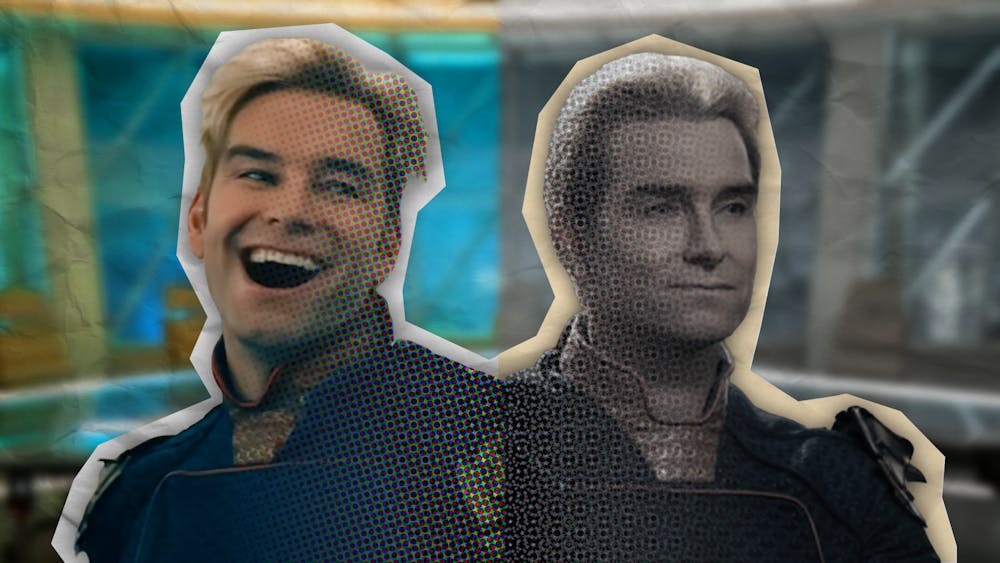
And then there’s Homelander himself. Earlier seasons portrayed him as terrifying because of the tension between his immense power and desperate emotional insecurity (seriously, Freud would have enough material here for an entire textbook). The show spent years implying Homelander would eventually snap publicly in some horrific, irreversible way. Instead, much of his final descent is muted.
Antony Starr was once unquestionably the show’s greatest asset—you truly never knew what Homelander might do in any given scene, and you couldn’t take your eyes off of him. That unpredictability made him terrifying. But over the last two seasons, especially Season 5, that tension has faded. Maybe audiences simply became too used to expecting the unexpected, or maybe the writers slowly sanded down the character’s volatility into something more repetitive and politically blunt.
On that note, most of the political satire starts wearing thin. To be clear, the problem is not that the show became political—it always was. The issue is that earlier seasons used exaggeration to sharpen their satire, while later seasons twisted characters into direct parodies, diminishing their original intrigue. The parody becomes less insightful and, worse, less funny.
And the nitpicks begin piling up rapidly after that. Homelander’s powers fluctuate wildly in strength depending on what a given scene requires; what once sliced people in half accidentally now just pushes them backwards slightly, and the man once capable of hearing a heartbeat through walls suddenly cannot hear superpowered fighting, shattering windows, and screaming happening one room over. Butcher’s terminal cancer is dropped by the end of the show. Soldier Boy doesn’t even appear in the finale. Important reveals, like the Flight 47 tape, feel wasted. Emotional moments undercut themselves with jokes before they can properly land, like most of Frenchie’s (Tomer Capone) funeral. Kimiko literally defeats Homelander through ‘the power of love.’
And just like Stranger Things, many of these complaints sound small individually, but they collectively create the sense of a show losing control of its own internal logic.
The Boys was once among the sharpest, strongest, and most unpredictable shows on television. It felt dangerous and willing to push itself into uncomfortable places instead of simply escalating for the sake of escalation. But unfortunately, it couldn’t keep it up.
Season 5 is not a catastrophic finale that ruins the earlier seasons. It remains entertaining television. But for a show that once broke the mold, ending with “fine” somehow feels even more disappointing than taking one last insane swing and completely missing.