
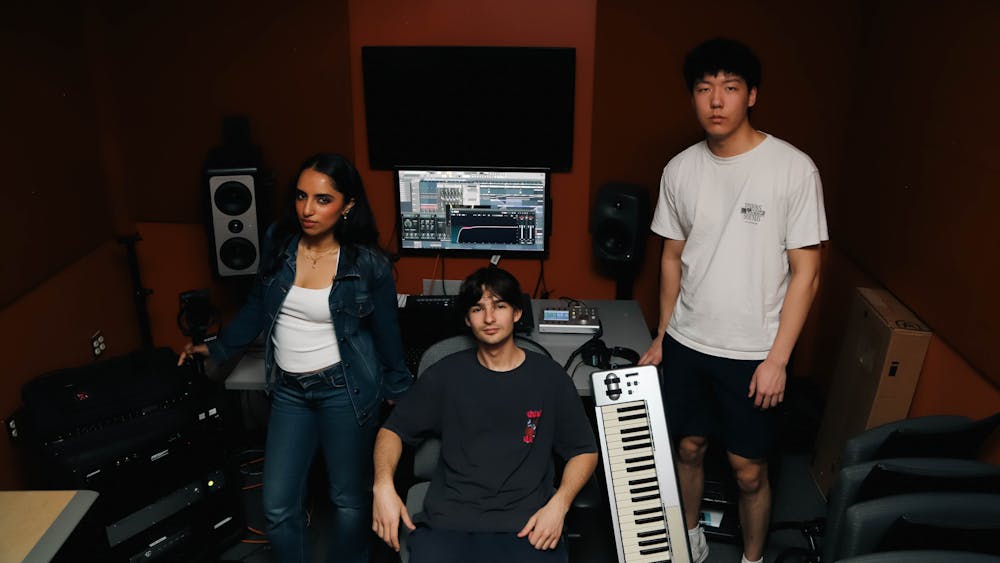
As a healthcare finance and philosophy double–major, Michael Lovaglio (C ’27) doesn’t seem like someone who would spend most of his time in Penn’s electronic music studio. But since discovering the music production software FL Studio when he was 11, Michael has been engrossed in understanding the mechanics of song creation. Like many other student producers at Penn, he is passionate about carving out a unique space for music in his life. By blending technology, theory, and creativity, students like Michael have turned to electronic music production as a means of artistry, one in which they are able to construct and define their own relationship to sound.
“When I was a kid, I had this big fixation on how sounds were made on the radio and anything I’d hear, I’d ask how they make this, how they do that,” Michael says. “I just thought it was the coolest thing ever to be able to do that. So I think it was definitely a combination of having the passion and the desire to really want to learn how to do it, but also accepting that very tedious and difficult process.”
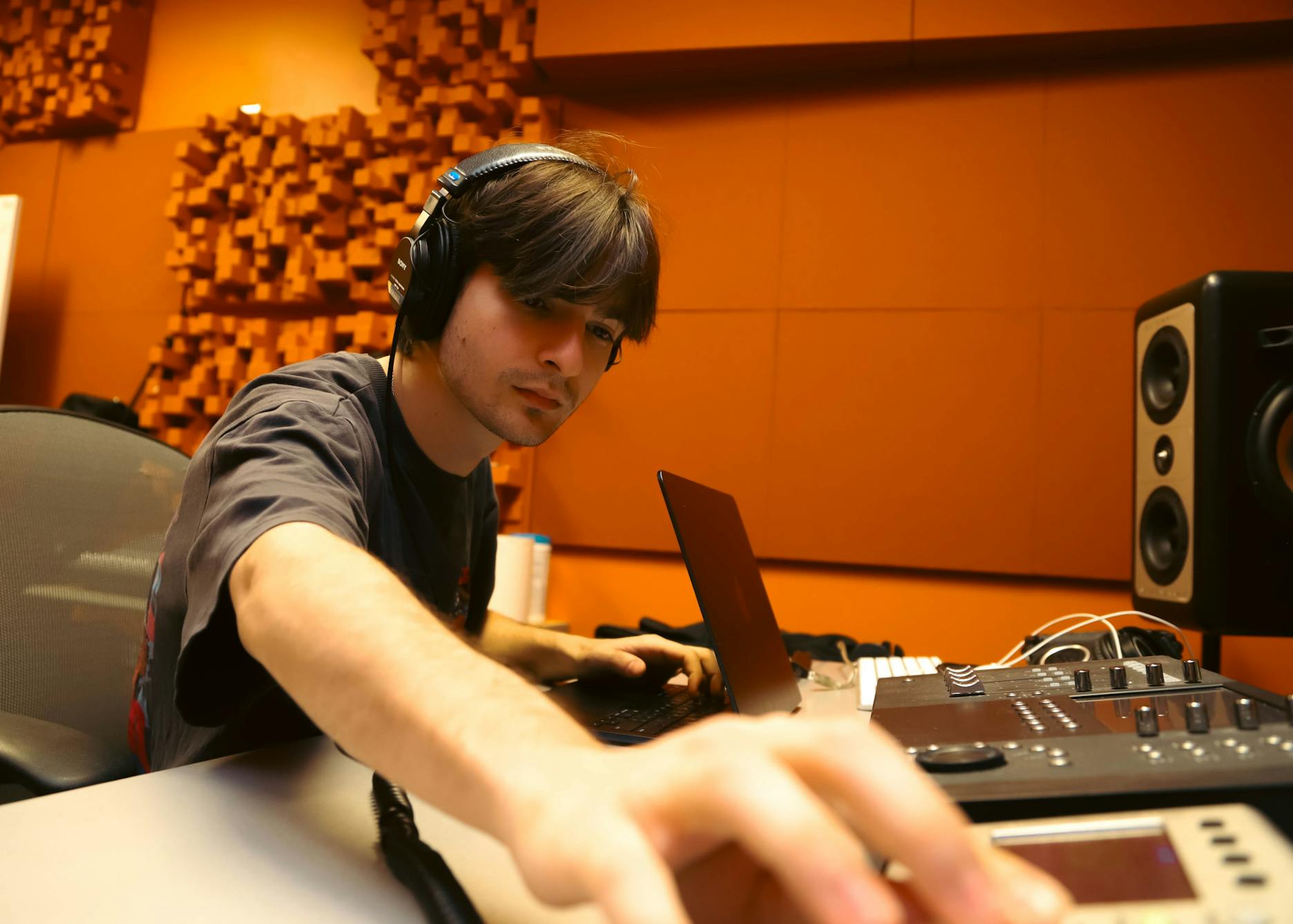
The process that Michael describes is one that combines self–instruction and Penn’s unique course offerings in electronic music production. Although Michael began learning with YouTube tutorials, experimenting with beginner software and “trial and error” techniques, he has since been able to hone his expertise through a variety of classes focused on music production. On top of his two majors, he has recently declared a minor in music, taking courses that have taught him about everything from audio production to the history of electronic music.
“Most excitingly, I took ‘Musical Interfaces and Robotics,’” Michael says. “It taught me how to actually engineer and design synthesizers … That just brought a whole new level of the engineering side to me, and since then, I’ve been working on implementing that into my own music.”
Kevin Li (E ’28) is currently in the “Musical Interfaces and Robotics” course that Michael previously took. The final project for the innovative class—which teaches students how to integrate physical computing into sound–based creative work—is to create a working prototype for a new instrument. Kevin is working on using a software called MaxMSP to generate new sounds, manipulating audio samples that can then be controlled by a joystick.
Although the concept of the class might be novel for many students, it is not entirely new for Kevin, who has been producing music for the past four years under the name Impasta. Kevin primarily uses FL Studio to create loops for songs, constructing melodies that he often sends to other producers and artists to build on top of. He describes this aspect of his work as collaborative, allowing him to work with other Penn students—including Michael—to share audio samples and experiment with sounds and production styles.
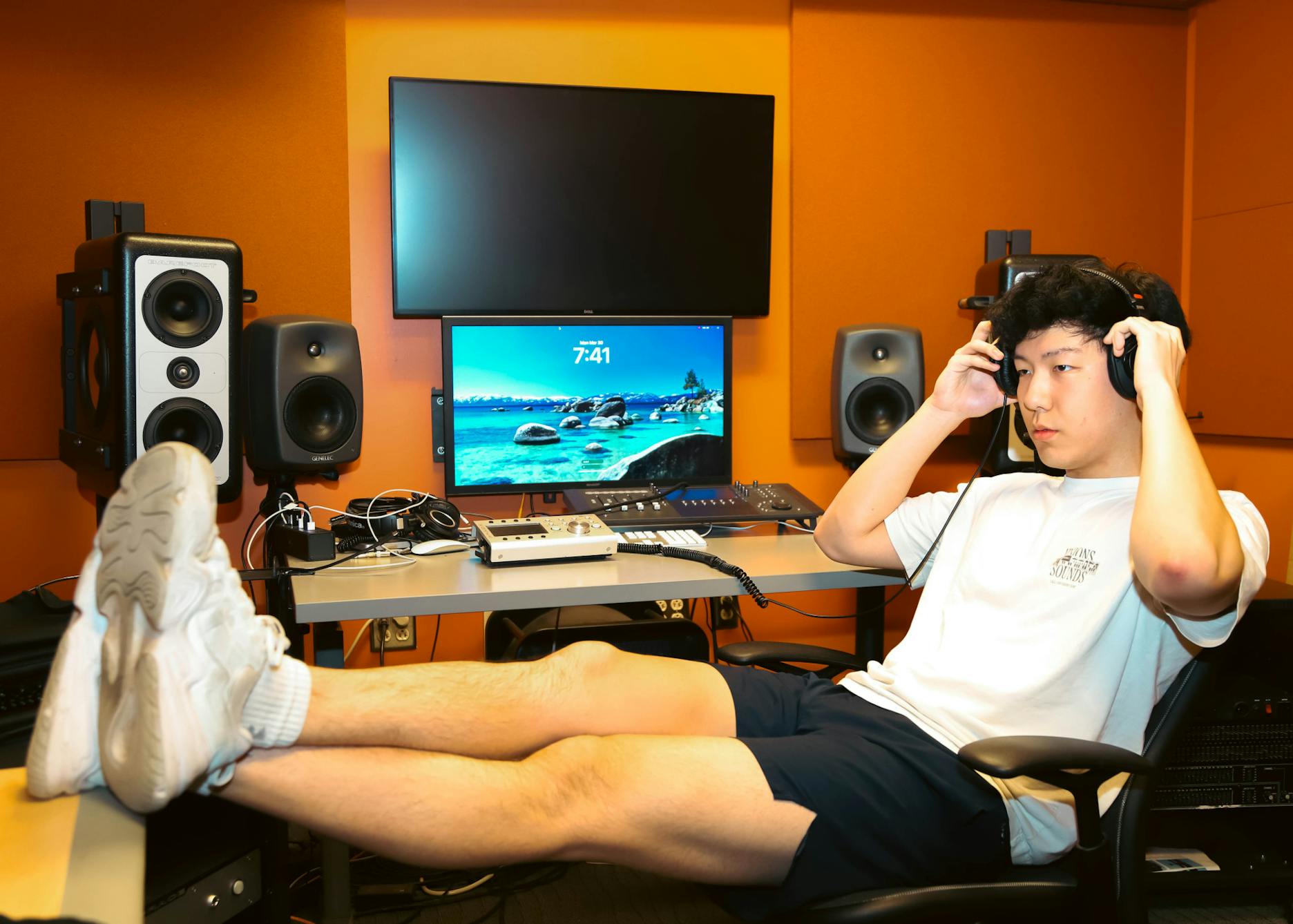
As a computer science major, Kevin is finding ways to combine his professional ambitions with his passion for music. This summer, he will work at the intersection of music and technology as an intern at Suno. Kevin explains that the software is similar to “ChatGPT for music,” where users can input prompts and receive AI–generated audio in return. Kevin has used the platform before in some of his own music, utilizing Suno to generate the vocal samples he includes in his songs.
Like Kevin, music production has also become an avenue for professional development for Michael. In his freshman year, Michael co–founded the student–run record label 215Records. The group assists artists across various aspects of music creation, providing support with studio production, Spotify releases, and marketing strategies.
“It’s just been a big chance for me to not only enhance my own production skills, but also to learn a lot of music communication skills that hopefully could carry into my experience one day,” Michael explains.
Meha Gaba (W, E ’27) is also a part of 215Records. Meha has been writing songs since she was 14, but only got involved with the production side of music over this past year. After joining the student record label, she was inspired to invest more heavily in her own music, working on a single that is set to be released by the end of the semester. In addition to learning from the other producers in the club, she also took “Introduction to Electronic Musicmaking,” which helped her hone many of the techniques she says let her “bring [her] vision to life.”
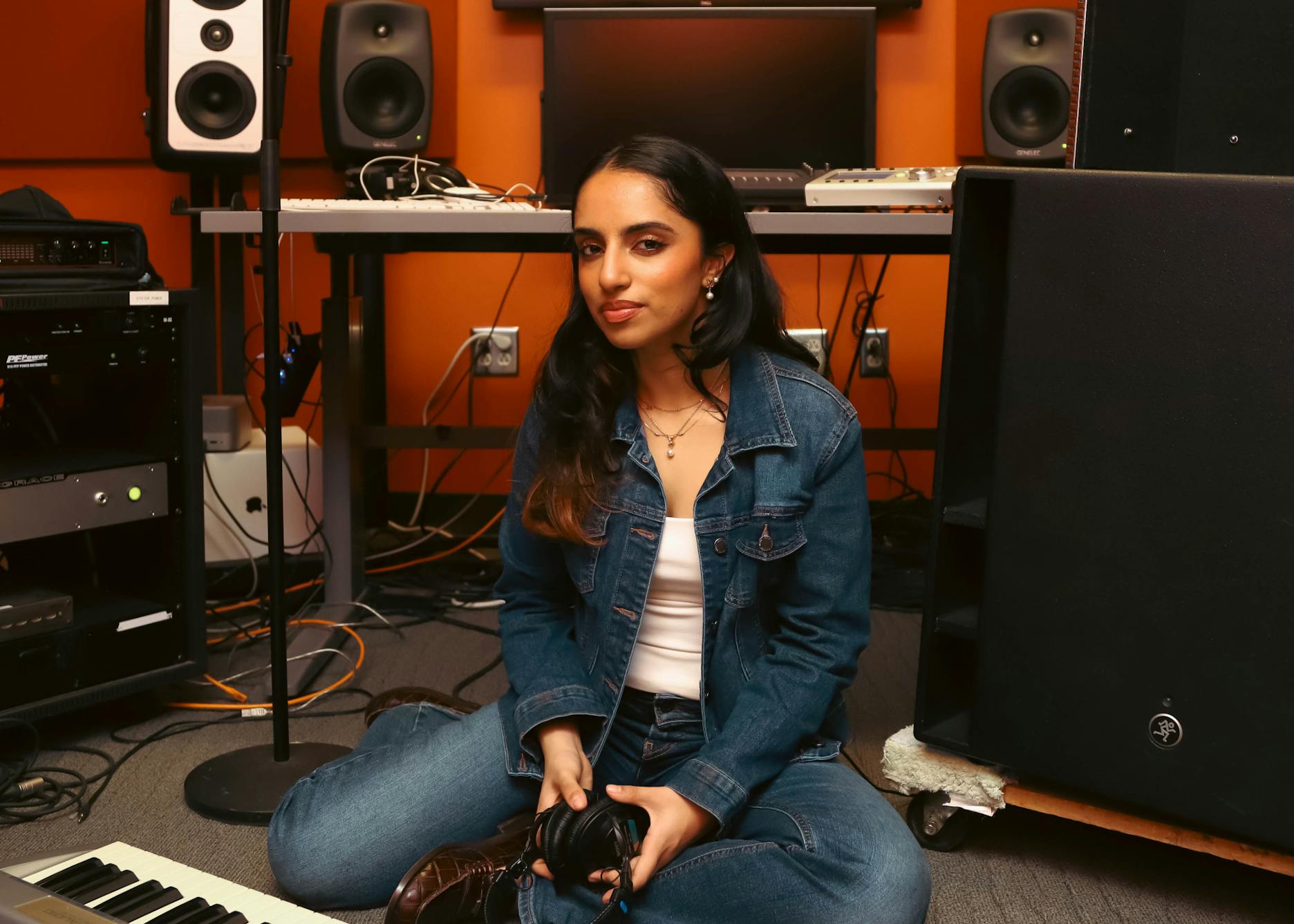
Although she is busy as a dual–degree student studying artificial intelligence and finance, Meha says that, for her, music is more than a simple hobby. “I would say music has always been a really big part of my life and getting my emotions out,” Meha explains. “I’ve always just turned to music as my inspiration.”
Meha adds that she wants to “take it pro someday,” and that she wants to see how her first single performs before making the decision. “I’m definitely open to if something were to take off,” Meha says.
Michael expresses a similar sentiment, stating that his future career goals lie in pursuing music professionally.
“My dream is to do music in the most ideal world,” Michael says. “My dream is really to be my own artist, to make my own songs and put them out into the world.”