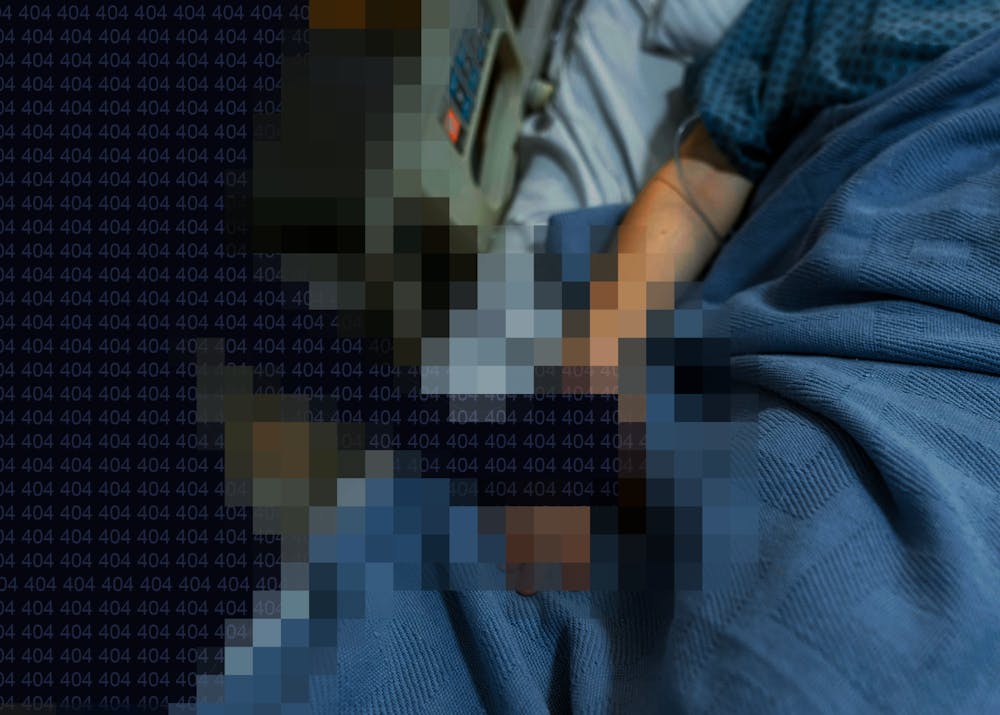
When you say you plan to become a nurse, the first response people give is often “Well, you’ll have a job for life,” or, “There’s always a need for nurses!” When it comes to the impact of artificial intelligence on workers, nurses are often the last profession mentioned in the conversation—despite the fact that patient lives have been directly affected by recent developments in AI.
The American Nurses Association’s official position on AI in nursing states, “ANA believes the appropriate use of AI in nursing practice supports and enhances the core values and ethical obligations of the profession. AI that appears to impede or diminish these core values and obligations must be avoided or incorporated only in such way that these values and obligations are protected.” Many nursing organizations have rushed to declare their positions on AI as investment in this new technology increases across the health care sector.
The rapid pace of AI’s development has people questioning whether nurses could potentially be replaced by advanced machines. “I don’t think it’s ever going to replace nurses. I think that’s a ridiculous claim. Anybody who says that doesn’t know what nurses do,” says Marion Leary, the director of innovation at Penn’s School of Nursing, who works to amplify nurse leaders in health and health care innovation.
Heidi, a new generative–AI platform, is already taking on the role of a medical scribe in patient rooms across the country. You can use platforms like Heidi to transcribe patient histories, ask for help when approaching difficult conversations with a patient, or develop treatment plans. Penn Medicine, along with other health systems across the country, is already using ambient listening platforms like Heidi to give health care workers more time face–to–face with patients.
But AI involvement in health care work is complicated by the fact that nurses constantly have to act as moral agents when it comes to patient care. “This technology must not only protect my autonomy as a moral agent, but also my right as a nurse to make decisions that are in the beneficent care of my patient,” argues Connie Ulrich, a nurse bioethicist at Penn Nursing. “How do we weigh the risks and benefits of this technology as we move forward?” Ulrich asks. “I think that will be the constant question we will have to be asking ourselves.”
In a recent article, Ulrich interrogates how AI will change the moral decisions nurses make every day. Her background as both a nurse and an ethicist gives her unique insight when it comes to examining how AI can be situated in health care. “Some believe that the human judgment that undergirds these qualities cannot be programmed and therefore cannot be executed by an AI algorithm," she writes. "They are qualities cultivated through years of human experience, ethical reflection, and human connection that go beyond surface–level responsiveness.”
A key consideration when approaching the question of AI in health care is the delicacy of human connection. “Nurses are the end users of AI, but [they're] not involved in the initial discussion of development or implementation of AI,” Ulrich says. Shared governance over AI integration in health care is integral when it comes to assessing its impact on patients and health care workers. “As nurses, we have to advocate for where it’s appropriate to be used in our practice,” says Leary. Nurses must be part of conversations about AI use for the “human” in human–centered design to be emphasized.
“23% of nurses have no ethics training or education, which means they are less likely to take moral action,” Ulrich says, referencing her previous work in education research. When nurses are not equipped with the confidence or education to question ideas about the future of patient care, dangerous ideas may be left unchecked. The weight of caring for patients, advocating for patients’ loved ones, and ensuring licenses are protected can be impossible for many nurses to carry as they push forward in their careers.
While the ethical concerns of AI use are numerous, the technology also seems capable of solving many problems facing nurses today. Chief among them is exhaustion—nurses across the world report burnout symptoms at a rate of 11.23%. “There are concerns about staffing or there are concerns about just not having enough resources to provide beneficent patient care. So, it leads to moral distress and nurse burnout,” Ulrich says. Nurse burnout can be linked to administrative burden, poor nurse–to–patient ratios, and emotional exhaustion. Burnout has been a consistent, rising problem in the field of nursing that can decrease the quality of patient care.
Along with her work at the Nursing School, Leary leads the National Nurse Innovation Fellowship Program at Johnson & Johnson. “I’ve been working in innovation and entrepreneurial work for a really long time. The things I saw people pitching back then, [which] we had no idea how to make a reality, can now be a reality because of AI,” says Leary. AI seems able to address many longstanding problems in nursing, and may be able to make some of the most difficult parts of the job much easier. “I have teams that are considering using ambient listening and AI, mostly around workplace violence, [to detect] if patients are becoming agitated and potentially violent to nurses,” reports Leary.
AI has great potential to relieve nurses of the endless labor they often spend charting, delegating tasks, and doing monotonous administrative paperwork. This time can be given back to patients at the bedside, or to the nurses themselves for a much–needed respite from their work. Along with potentially decreasing burnout, AI can be used to empower nurse decision–making and detect patterns in patient tests long before any human might get a “nurse’s intuition.”
But not all health care professionals are sold on the benefits of AI. National Nurses United—the largest professional association of RNs in the United States—has been outspoken in challenging the use of AI in nursing. Over the past year, they’ve held numerous protests demanding better protections for patients against AI. Their position holds that while nurses don't oppose technological advancement, they are opposed to algorithms replacing the hands–on expertise that trained nurses bring to patient care. A 2024 survey created by NNU found that 69% of nurses in workplaces that use algorithmic systems said their assessments don’t match the measurements generated by computers. Nurses surveyed also found that AI models don't take into account many of the complex social determinants that impact patient care.
“There’s something unique about being a compassionate and skilled caregiver that can provide care to a patient that AI cannot,” Ulrich says. The trust patients invest in navy–blue scrubbed nurses has been built over centuries, and AI poses a real threat to the delicate patient–nurse relationship. “I want us to retain our valued position within the health care system and the public, because we’ve been trusted for so many years,” Ulrich hopes.
It’s inevitable that AI will soon have an unshakeable presence at a patient’s bedside. Instead of rejecting it outright, nurses must work with patients to create individualized approaches to AI–integrated care. “I think about it with informed consent—is there transparency about how AI is used with regard to clinical care that the patient received?” Ulrich asks. “Some patients would probably be fine without us, but some perhaps would not.”
Recognizing that patients have a right to control their own care also means that developers and health care workers must create a joint framework for patients to consent to AI use. “I am AI agnostic," says Leary. "If AI is the solution that works for the population, then great. But if it’s not, then you shouldn’t use it."
AI is a train that has already left the station when it comes to health care—now, nurses and patients must rush to catch up to it. We must question AI as it starts quietly standing next to nurses at the bedside. “We are still the humans, and we need to make the decisions,” argues Leary. Humanity is the sacred pillar upon which all ethical health care rests—in the age of AI, it is patients and nurses that must continue the fight to keep it standing.