I started coding when I was 12 or 13, but it wasn't until 15 that I really started liking it.
My friend Samson was just three years older than me and already charging $100 an hour for their freelance software engineering work. They showed me my first real codebase—a little social media app they built called Updately, where groups of friends can write daily blog posts to each other.
It was a Sunday afternoon, and I remember opening up Updately’s files and messing around. I’d change a line of code and see how the webpage updated, then change something else and see how the page updated after that. Through this meddling, I began to learn how this form of coding worked—a few days later, I was able to implement the first four features they had asked me to.
The next night, I logged in to write my daily blog post. I remember thinking, “Wow, that's a button that I made! I can click on the right arrow and it takes me to the next page—I did that!” It just felt so cool. I’d never created something that anyone in the world could just log on and see—even if only the ten people on the platform actually used it.
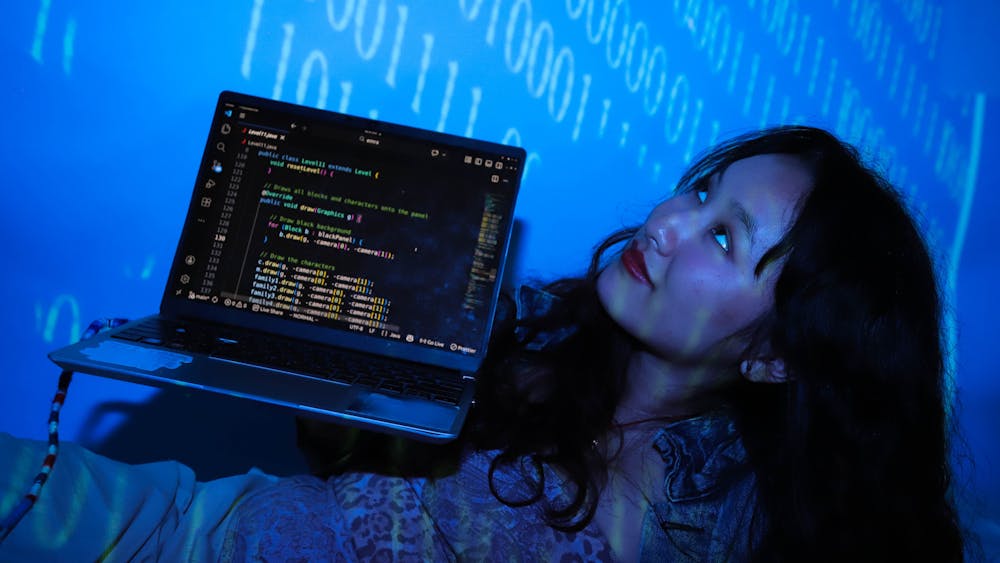
I soon moved on to my own passion projects, making apps from scratch. I was skipping my Zoom classes and my family dinners to sit hunched over Visual Studio Code for 10, 12, 14 hours a day, seven days a week. But programming never felt like work—it just felt like a video game. You change something in the code and you immediately see it reflected on the webpage; you see the fruits of your labor instantly, constantly.
This work better prepared me for the future than high school chemistry; many in technology say that employers care more about your GitHub than your degree. That summer, I got a software internship at a quantum computing startup. I worked on developing and maintaining Python libraries used by scientists and Fortune 500 companies, implementing the latest quantum algorithms into if statements and for loops. I loved the work, and I felt unstoppable. I was a sophomore in high school—the youngest person at the company.
It was also the middle of the pandemic. I had already lost contact with my school friends, and my mom and siblings were stuck in China. Gradually, I fell deeper into the tech space until it became my main community.
In tech circles, there's a certain myth built around San Francisco as the heart of all innovation. I remember an older friend trying to convince me and another 16–year–old to take solo trips to SF so we could meet founders and explore potential collaborations. It would “compound our careers,” he said. He gave us the emails of a few successful tech multimillionaires who had funded other teenagers’ SF trips.
I boarded my first five–hour, cross–continental flight when I was 17. I attended conferences, networked with venture capitalists, and flirted with the idea of starting my own startup. I saw peers my age start companies and easily raise hundreds of thousands of dollars. One friend went to a conference afterparty, made up a term sheet on the spot, and got three drunk VCs to invest in his fake company. Another got half a million for his artificial superintelligence lab and instantly used it to rent a $16,000/month mansion that doubled as his new company’s living and working space.
Throughout my senior year of high school, I kept returning. At my peak, I made the pilgrimage to SF five times in one year. I even skipped a month of school to live in a group house with other solo tech builders my age. I flew back on the day of my graduation and Ubered directly from the airport to my school auditorium.
When Alysa Liu was training for the 2020 Olympics, she’d Uber to the ice rink alone every day, skate for 12 hours, and then go back home. Every day was the same back and forth. “When COVID hit, all those birthdays were alone,” she said in a Rolling Stone interview.
Growing up in the tech space, I found myself internalizing its key scriptures. I spent my formative years living with its anti–institution, pro–self–learning mindset, and I started to apply it everywhere. I applied it to my coding, and I was very efficient at debugging in Python and React. I applied it to my exams, and I aced subjects I knew nothing about just a few days prior. But when it came to interpersonal issues, this mindset began to show its cracks—I had a fair share of conflicts that I wasn’t able to “debug” the same way.
For the most part, I didn’t think about this too much. But then I was sexually assaulted, which forced me to confront these cracks in a way I didn’t have to before. It sent me to hell and back, and what followed was probably the worst pain I'd ever experienced. I pored over all the DSM manuals, feminist essays, and Chanel Miller memoirs I could, trying to find answers to my questions. Of course, nothing I read lessened the pain.
I couldn’t help but feel that the whole atmosphere of tech set me up for this. Besides the clearly skewed gender ratio—I was routinely one of only two women in a room full of men—there was also a certain fetishization of youth dressed up in professionalism. It wasn’t uncommon to hear things like, “Oh, you’re 17? You must be so smart, and school must be holding you back. When are you dropping out to build a startup?”
It was a truism that AI, gene editing, quantum computing, and other emerging technologies would completely revolutionize the world—just like how our current AirPods and instant FaceTimes would be science fiction to a person from 100 years ago. We, here, were the innovators; our generation of young builders was building the future with every step. Of course, my family protested every time I skipped school to go to SF, but they were just too old–fashioned to understand that the industry was changing. I thought that they’d only hold me back, that I was better off alone, and that I was mature enough to make such a decision—I distanced myself from my support network and took on the world.
All this was sold to me as cultivating one’s skills and independence—and maybe it does. But it also brings you into the perfect situation to be preyed upon. My freshman year at Penn was when I began to understand what had been taken from me—suddenly, I had never felt so alone.
When you become Christian, a baptism is a public, unfettered declaration to the world that this is who you now are and what you now believe. There is no equivalent ceremony, however, when it comes to leaving a doctrine behind.
I craved one, though. I picked up a fine arts minor and threw myself into it completely, spending my nights with bristle paintbrushes and linseed oils. “Sure, I’m majoring in engineering,” I’d say, “but my true passion lies in my art minor.” I desperately wanted to redefine my identity around anything other than tech, and I made sure to tell everyone I met.
I appreciated how art treated the unquantifiable, amorphous experiences of being alive as valuable in and of themselves, without needing to be codified in objective terms. For my final project, I painted a nude woman suspended in the clouds, purple paint crawling down the canvas in little droplets around her.
Two years after Alysa quit skating, she went skiing with her friends. It was so fun to be gliding through the snow that she decided to try on her skates again. “I need[ed] to find a way to satisfy this urge to go fast,” she recalled, “and I thought, the rink is right there.”
It’s easy for me to demonize tech, but recently, I’ve mellowed out a bit. I’m currently designing and taping out my first computer chip end–to–end, and I'm reminded yet again of how fun engineering is; it’s like I’m solving one big logic puzzle. How lucky am I to partake in this delight?
Alysa ended up coming back to competitive skating—but this time, it was on her own terms. “No one tells me what I'm gonna wear,” she said. “No one tells me how my hair is gonna be. No one’s gonna try to change me.” If it flew in the face of figure skating norms and standards, then so be it.