As a self–proclaimed folk music fanatic, I’m thrilled to secure press passes to Gregory Alan Isakov’s concert last Thursday. I make the trek (thank you The Daily Pennsylvanian Uber budget) to The Met Philadelphia in sub–freezing temperatures, dressed in a classically impractical outfit. I walk in with an eager skip in my step and am immediately confronted with an unexpected surprise.
In staunch, black Arial font: No photography, videos, or phone use allowed. Huh?
I am immediately skeptical—there is no way that people will actually put their phones away. We’ve all seen it: essentially every concert video, filmed on an iPhone and filled with thousands of similar, tiny screens held up by showgoers. Many of us have been those people—blocking the views of audience members behind us, arm sore and sagging from holding our phone up the entire two–hour show. It’s so common, it’s second nature; our generation might just be physically incapable of living in the moment. And, who was this guy to tell us where to put our phones?
Turns out he knows what he’s doing.
From my perch on the first row of the balcony, I had the ideal vantage point to scour the activities of the crowd below. To my surprise, not a single person pulled out a phone—trust me, I was looking. While the slightly older demographic of the crowd may have been a minor contributing factor, in today’s age of eight–hour screen times, I was impressed. I even found the will to go screenless—although, resisting the urge to secretly record a video was no easy feat. But the combination of sheer embarrassment at being the chronically online teenager and a mild superiority complex that refuses to lose to anyone over 30 in a battle of wills—I persevere.
So while I don’t have any videos to post on my story, I came out of the concert with something even better: a memory.
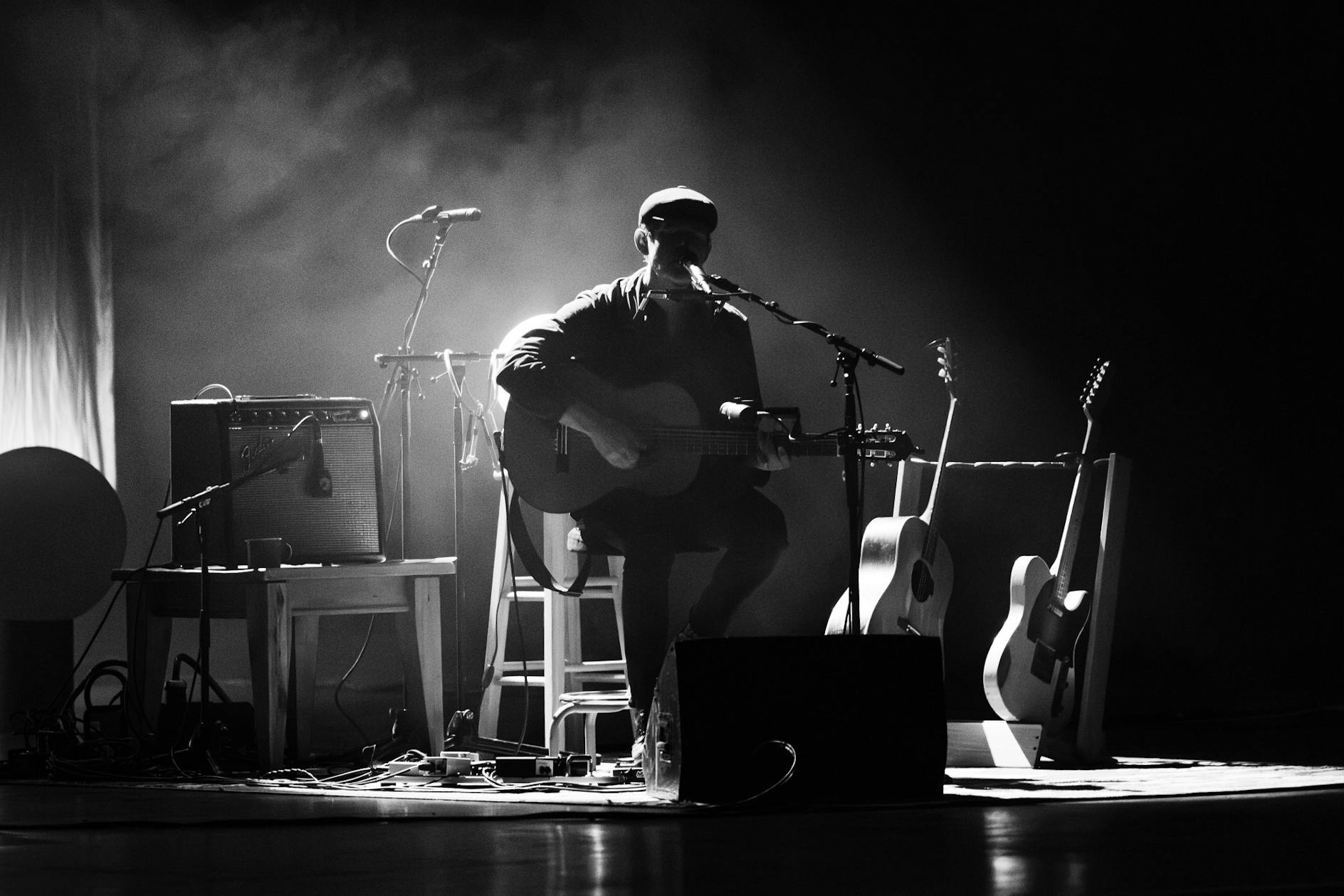
Now I’m sure I sound like a middle school teacher justifying their no–device policy, but it genuinely was a transformative experience.
A unique character for sure, Isakov knows how to host a concert. Philly native, Colorado farmer, and “master of modern folk music,” Isakov is best known for his songs that have been audioclipped for TikTok, including (but definitely not limited to) “Big Black Car” and “Amsterdam.” But Isakov’s music is so much more than that—rich harmonies strung together between smooth harmonica and plunky banjo tell vulnerable stories of classic American folk, straddling the line between vintage and time transcendent. By exploring themes of love lost, grief, and pockets of hope, Isakov speaks to a contemporary audience through the voice of a prophetic chrononaut.
Walking out alone in a classic granola outfit (think Carhartt, flannel, annoyingly pretentious carabiner clip) onto a stage barrenly decorated with an antique rug and a stand holding four acoustic guitars, Isakov brought an air of comfortability. The Met, though a decently sized venue, transforms into an intimate living room, with acoustics so vibrant it feels as if Isakov is singing in your ear. Melodically raw and slightly improvisational, he opens with “Southern Star,” “Miles to Go,” and “The Fall.”
Anecdotes about failed comedic ventures, his love for Philly, and experience touring with Mumford and Sons are sprinkled in between. Though just 46, Isakov takes the place of a grandfather sitting you down on his lap, telling you his wildest exploits during the summer of love with little chuckles of lessons learned and a life well lived.
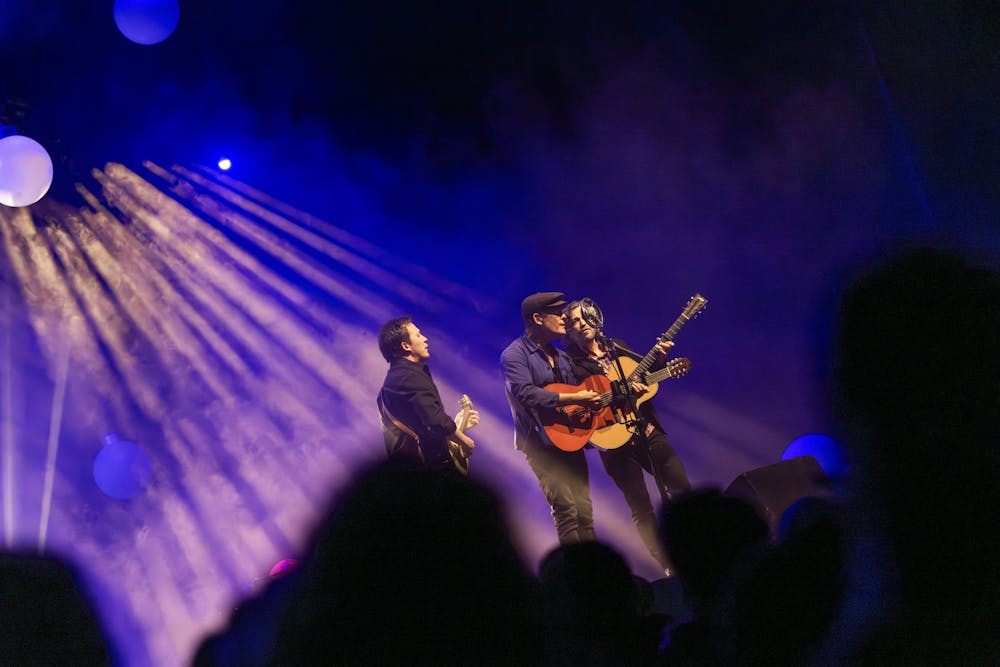
As Isakov joins his close friend and guitarist centerstage for “Big Black Car,” rays of light shine behind them—think Jesus in Divine Mercy. They stand together, acoustic guitars in hand, and harmonize. I’ve heard the song hundreds of times, but it feels like the first time all over again.
The track touches on unrequited love, as Isakov describes a slow burn, Heated Rivalry–esque level of yearning, with lyrics that don’t pull any punches. A young boy secretly in love with his best friend faces how “time has a way of throwing it all in your face.” Filled with metaphors, fantastical imagery, and heavy guitar, the song is famous for a reason.
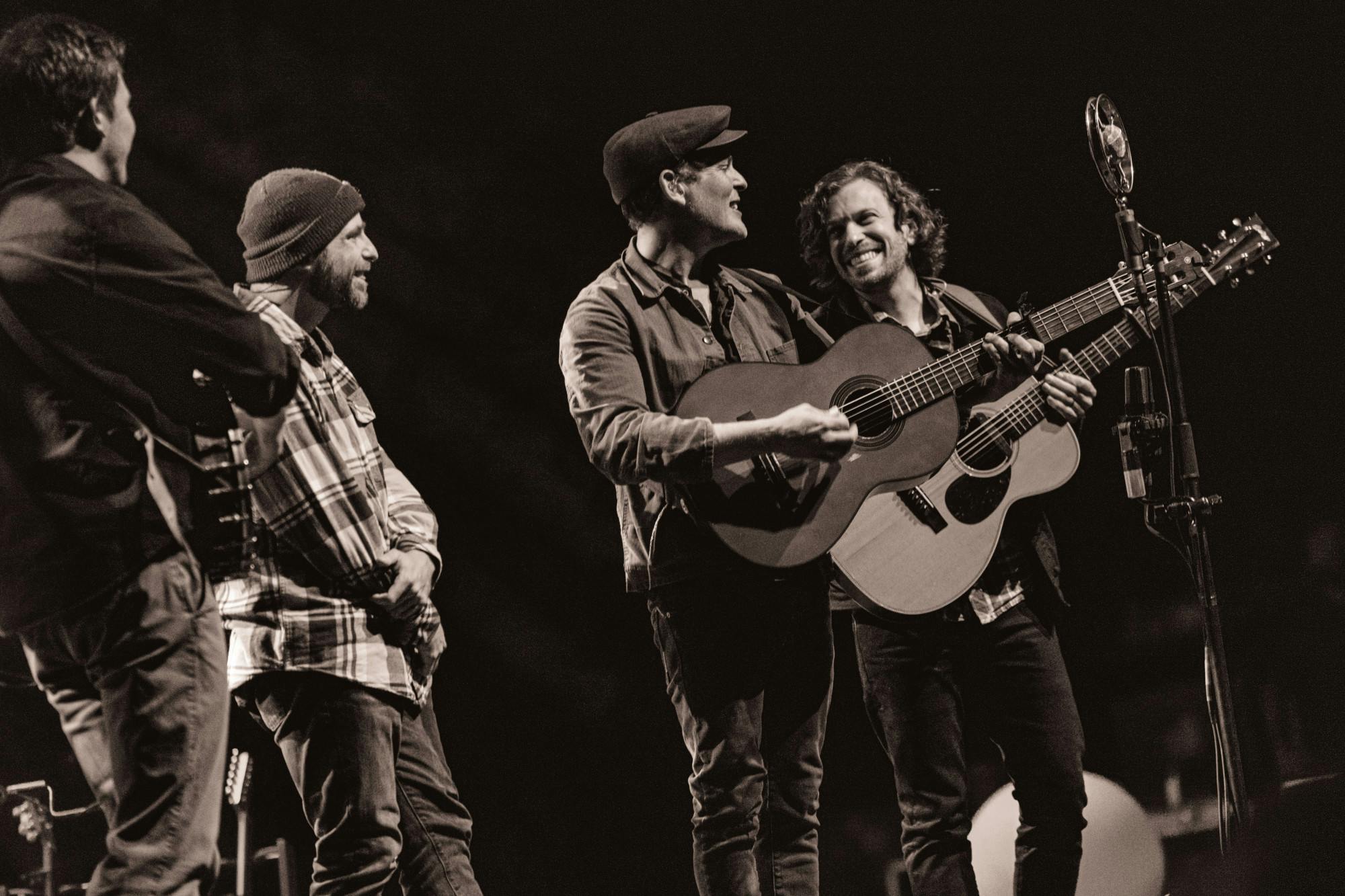
Throughout the evening, various friends of Isakov continue to join him—including his brother who lives in Philly. In a way, it feels like a casual session between friends.
The closing song, “Sweet Heat Lightning,” metaphorizes loss through imagery of an empty childhood home yet gives a glimmer of hope as the “blue crack of light” breaks up the darkness in a sweet realization. Ending resoundingly, Isakov invites the audience to “drive and we’ll see where this ends.”
Now I am one to exaggerate, but I swear I’ve shed a tear.
While Isakov’s talent undoubtedly contributes to the semi–life changing experience, I hate to say this but it might have been the lack of phones crowding the view, no pressure to capture the perfectly postable clip nor obligation to respond to the text buzzing in my pocket. So I’ll say it: just put your phone away.