Male yearning isn’t new. Men are capable of romance–driven longing like the rest of us, but their stereotypical macho, no–feelings demeanor isn’t always broken through on the screen like we want it to be. So many of these fictional men hold back their feelings, shy away from communication, yell at their partners, and offer a half–assed love none of us deserve. However, in romances of the last decade, stories centered on male yearning dominate, and their most emotional moments are endlessly cycled online. From Theodore “Laurie” Laurence’s (Timothée Chalamet) heartbreaking confession to Jo March (Saoirse Ronan) in Little Women to Peeta Mellark’s (Josh Hutcherson) painful devotion to Katniss Everdeen (Jennifer Lawrence) in The Hunger Games saga, women eat male yearning up. Seeing men obsessed with someone—so much that it hurts—reminds us that men too are capable of emotional vulnerability and expressing love.
That’s the appeal Heated Rivalry—the viral gay hockey show—so perfectly taps into, and why women love it so much. As Hudson Williams—who plays Shane Hollander in Jacob Tierney’s TV remake of Rachel Reid’s 2019 novel—put it on BuzzFeed Celeb: “It’s like I’m a Jeff Buckley song in my eyeballs, except I’m gay,” he says as a nod to world famous yearner.
Shane Hollander and Ilya Rozanov—played by Williams and Connor Storrie—embody this aching kind of yearning. The show isn’t all about sex—or Storrie’s ass—no matter how many edits flood your Instagram feed. Where viewers connect, especially longtime readers, is with the emotional journey Shane and Ilya take, from forbidden lust to love. Storrie makes this especially clear in his guest appearance on the LGBTQ+ podcast SHUT UP EVAN, explaining that original fans of the book look not just for the sex but for how the show allows Shane and Ilya’s relationship to progress.
The show, produced by CraveTV, spans the first ten years of Shane and Ilya’s relationship. It starts out in 2008 at the International Prospect Cup in Saskatchewan, Canada and ends in July of 2017 at Shane’s cottage, where the pair are well into their hockey careers. On the surface, the show is gay hockey smut, but when one actually takes the time to explore the progression of their relationship, it’s clear that the rival captains of Montreal and Boston’s fictional hockey teams are in it for far more than hot shower sex.
The pair meet in secret for years, hooking up in hotel rooms and secret apartments, hidden from the hyper–masculine and homophobic world of hockey. The nature of their relationship traps them in a constant state of longing—each wanting and loving the other so intensely it feels almost fatal. However, NHL backlash and potential firing aren’t their only fears. If they were to come out, Ilya, a Russian native, would be deported back to Russia, where he would likely meet a far worse fate than losing his career.
Ilya is forced to act standoffish, pretending that it’s only sex and nothing more, flinching away from forehead kisses and gentle touches as if tenderness itself will expose him. Shane, still unsure of his identity, mirrors this fear differently—running from Ilya the moment things feel too domestic, too real, too close to love.
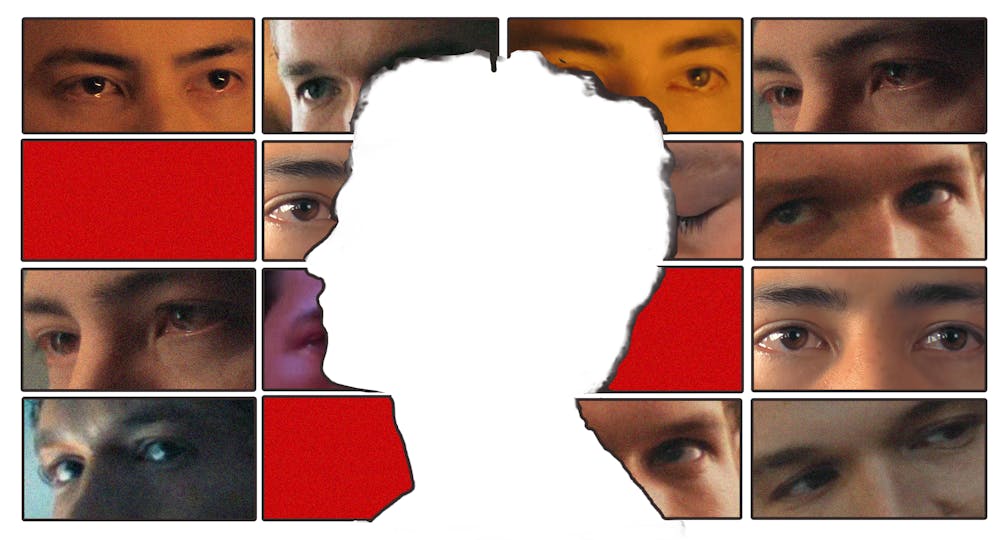
This produces a painful stretch of longing, as the pair reach closer and pull away from each other over and over again. Williams is particularly good at conveying this yearning through his eyes, a constant mention in online compliments of his craft. The pure sadness, love, and devotion shown through his eyes allows women to witness a softer side of male desire. Additionally, Heated Rivalry portrays men interested primarily in their partner’s pleasure, not just their own, something often missing from mainstream heterosexual romance where men finish first and last.
Male desire, both onscreen and in the real world, is often a source of fear for women. The sexual violence that frequently comes with it puts a painful tension of control onto heterosexual relationships. However, when women are removed from the situation altogether, they aren’t forced to relate with the female character, and can witness two individuals fall in love without confronting the risks often associated with male desire.
According to Rachel Reid in an interview with The Hollywood Reporter, a lot of her female readers “prefer to not have a woman in the book because of their own, usually dark pasts with sex with men … they prefer to get lost in a fantasy where there’s nobody there that they can relate to directly. They don’t want to insert themselves into these sex scenes. It just feels safer.” Women are drawn to the safer, softer masculinity that queer relationships like Shane and Ilya’s, which stands in stark contrast to the macho—often dangerous—masculinity many are used to.
In an interview with Them, Storrie offers his own perspective. Quoting a conversation he had with their costume designer Hanna Puley, Storrie shares: “I think that there’s something about this type of story and this type of love and this type of sex that has a lot to do with this almost like prolonged foreplay and yearning, which kind of differs from this pornographic idea of sex.” In this way, he argues, the show is more geared toward the feminine gaze. “That’s why we like romance, you know? It’s not just the sex or whatever, it’s the moments in between where you see desire and this pull towards vulnerability and connection,” he says.
Ultimately, Heated Rivalry works not just because it’s explicit, but because of the soft moments in between. Male yearning, when rendered correctly, is not about domination but emotional vulnerability—a key facet of the female gaze. In Heated Rivalry, their desire patiently aches, and their devotion to one another provides women with a form of masculinity that “feels accessible and interesting to them,” Storrie says on Them. It presents a form of masculinity that is safe and unthreatening. In a world where male desire so often objectifies women, male yearning is proof that not all male desire is dangerous.
At its best, male yearning feels like a Buckley song. It’s restrained, tender, and devastating. It’s desire that aches rather than demands. In Heated Rivalry, Shane and Ilya don’t just want each other—they’re tormented by the love they share. Women yearn for male yearning not because they want to see men in pain, but because they want proof that men can feel that they can choose vulnerability over power. In watching men yearn, women are allowed to remove themselves from the conversation, and feel safe inside the love story unfolding on screen.