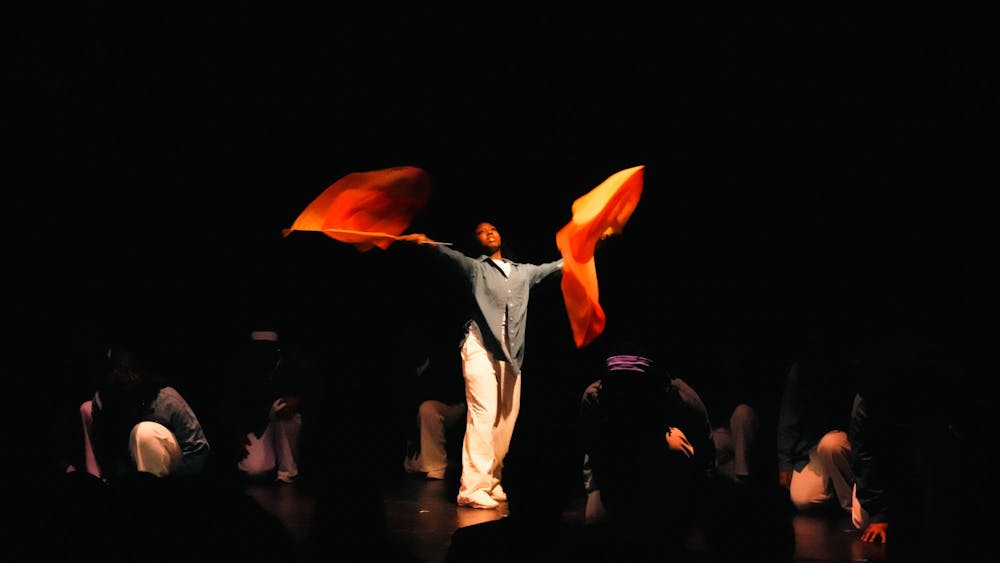
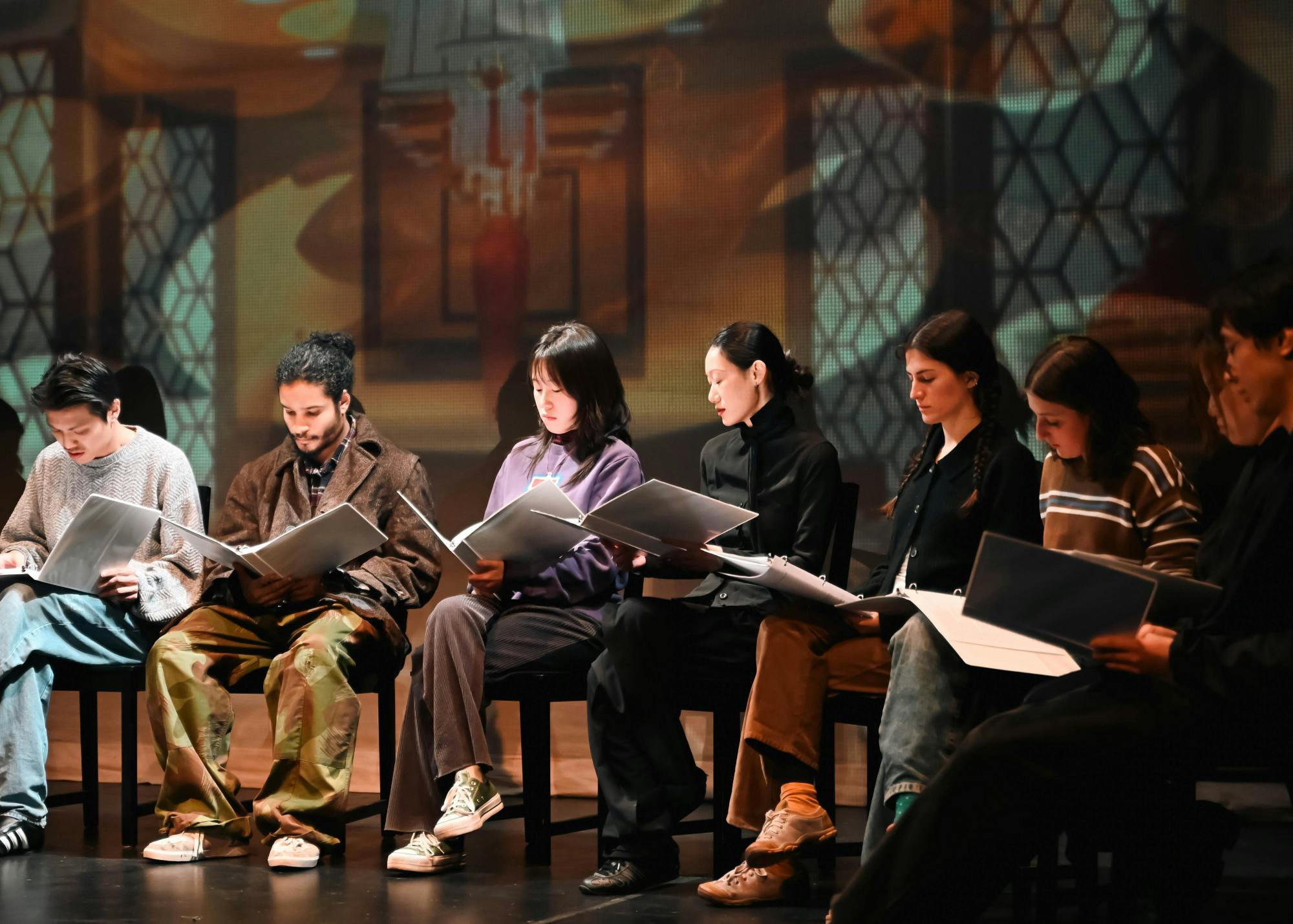
Over the first three weeks in February, performing arts students at Penn spend their precious weekends in the Montgomery Theater for the Out of the Dark Performance Festival. On Thursday, Friday, and Saturday nights, multiple performing arts groups and students showcase their acts in the Annenberg Center.
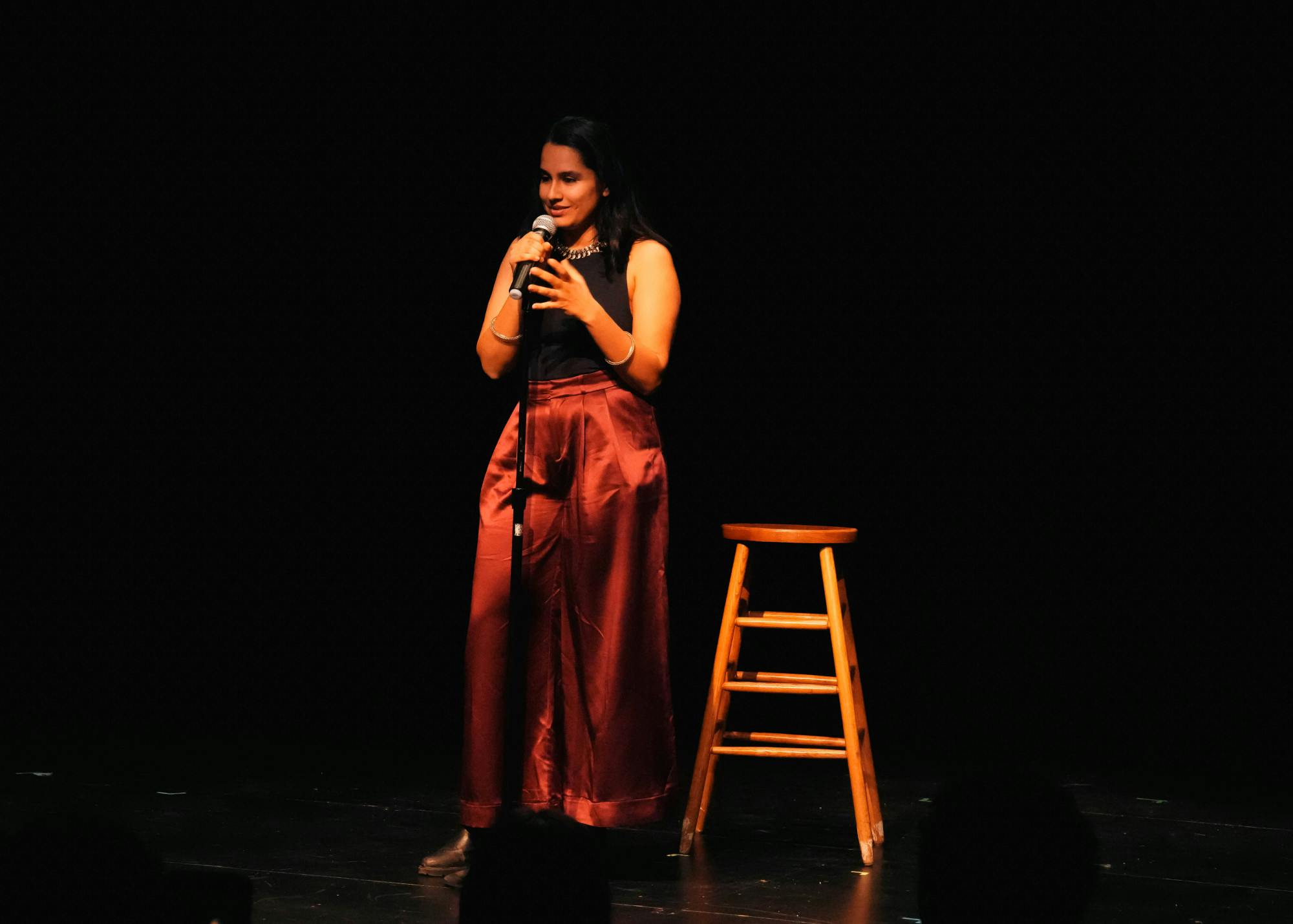
I had the pleasure of seeing Penn illusionist One An (C ’27) blow our minds with card tricks and Jungmin Lee (GFA ’27) make us all think deeply with an experimental performance art piece. The night ended with Ambika Trasi (GFA ’26) opening our minds with a “performance–rant” that framed the intersection of colorism and feminism. My ticket that night was free, and the walk to the Annenberg Center is just about ten minutes from anywhere on campus. The audience was sparse, despite efforts from the entire team, especially the festival’s producer, Molly McCaffrey (C ’26). The seats held a few rows of friends and professors, as well as a straggler or two who had seen posters around campus.
The arts in Philly are underfunded and under–appreciated as it stands, and the effects of COVID–19 have caused the arts community at Penn to struggle to rebuild—without intervention, it’s at risk of possibly disappearing completely. The lack of participation and attendance has been a common theme in recent years for student groups like TAC–e (Theater Arts Council). The issue has gotten exceedingly worse this year, and not for a lack of trying on the part of arts students. And after listening to and participating in many conversations, it’s still hard to put a finger on exactly why.
Rest assured that it is not a lack of talent—after attending the Out of the Dark festival, this is apparent. PhD students and undergraduates alike all poured their hearts and souls out on the stage, each giving meaningful, enjoyable performances. Likewise, other performances around campus, like a cappella shows, musical theater, and dance groups, always garner rave reviews from the audiences they capture. In my three years at Penn, I have never encountered someone who regretted seeing a live performance on campus of any kind.
As college students, our free time is precious and limited. Between balancing a demanding academic workload with job applications and dozens of other club commitments, it can, admittedly, be hard to convince students to go to see a peer–directed play rather than get drinks or dinner with friends—an activity that requires little planning and promises immediate connection and less risk of enjoyment. Seeing a play, especially one with little name recognition, is a leap of faith. Students have to judge if this outing is “worth it,” if their friends will join them, or if they would even enjoy the work. In the pre–professional world of Penn, efficiency is the main priority, making art feel less valuable, and harder to justify spending hours watching live theater.
The pandemic was simply a catalyst for low performing arts attendance. COVID–19 not only kept us locked in our homes, but it also kept us away from all types of live art: plays, musical theater, movies, dance recitals, concerts. As a result, many young people leaned on short form digital content, destroying attention spans and making it impossible to sit through a live show after the world opened back up. So it’s not that Penn students—and college students in general—are incapable of focus, but that we’ve been primed to expect constant stimulation. Watching live theater can be uncomfortable—there are moments of silence, fidgety pauses, and no instant gratification. Where a TikTok tells us a full story in under a minute, live theater feeds us bits and pieces over two hours to keep you engaged and on the edge of your seat the entire time. The irony here though, is that no Instagram Reel can bring a community together like art can. It offers something deeper than dopamine. It offers vulnerability, a lost art in an age of anti–earnestness.
I feel those same urges to scroll social media or go out with my friends, and yet, sitting in the audience last Saturday, it was impossible to ignore the joy I felt after watching. An’s slight of hand drawing audible gasps; the raw emotion in Lee’s piece, leaving the audience lingering in necessary silence; Trasi’s powerful words that sparked conversations throughout the lobby. After the show, I connected with lingering audience members about how moving the pieces were and how excited we all were to return the following weekends. The show made us all feel close to strangers we otherwise would have never met, something that is impossible to replicate online. There was no phoniness in these interactions, no personas put on; just true connection over a shared experience.
The solution to resurrecting the Penn live arts scene cannot rest solely on the shoulders of student leaders and festival producers. It requires all of us to shift our mindset. Attending a cappella shows and Saturday night musicals shouldn’t just be a favor to our friends, but an enthusiastic investment in campus culture. It requires faculty who encourage attendance and an institution that supports students who occasionally choose to spend their Friday nights in a theater instead of a study room or a frat basement.
The Out of the Dark Performance Festival was eye opening. Student performances stepped out into the light with their hearts on their sleeves to create something meaningful in the midst of a world that just keeps demanding more from us. The walk is short, and the ticket is free … yet many Penn students would still rather spend $30 on an Uber and $70 on drinks and dinner than spend their time in a quiet dark theater surrounded by their peers. What’s missing from student performances is not talent. They just need someone to watch.