Philly calls itself the City of Brotherly Love—an earnest piece of civic mythology, and also reverently branded. But in our concrete jungle, much of the love here doesn’t feel so brotherly at all. If anything, it’s exposed. It’s nuanced and handwritten. Love in Philly is unguarded, at times stripped of subtlety, and often spray painted. It’s zip–tied to fences and visible from inside the steel walls of a rumbling train. Sometimes, it’s waiting for someone to stand in front of it to take a picture. But largely, it is that picture—stable and sustained long enough to be admired.
A Love Letter for You by Steve Powers: West Philly from 45th to 63rd Streets
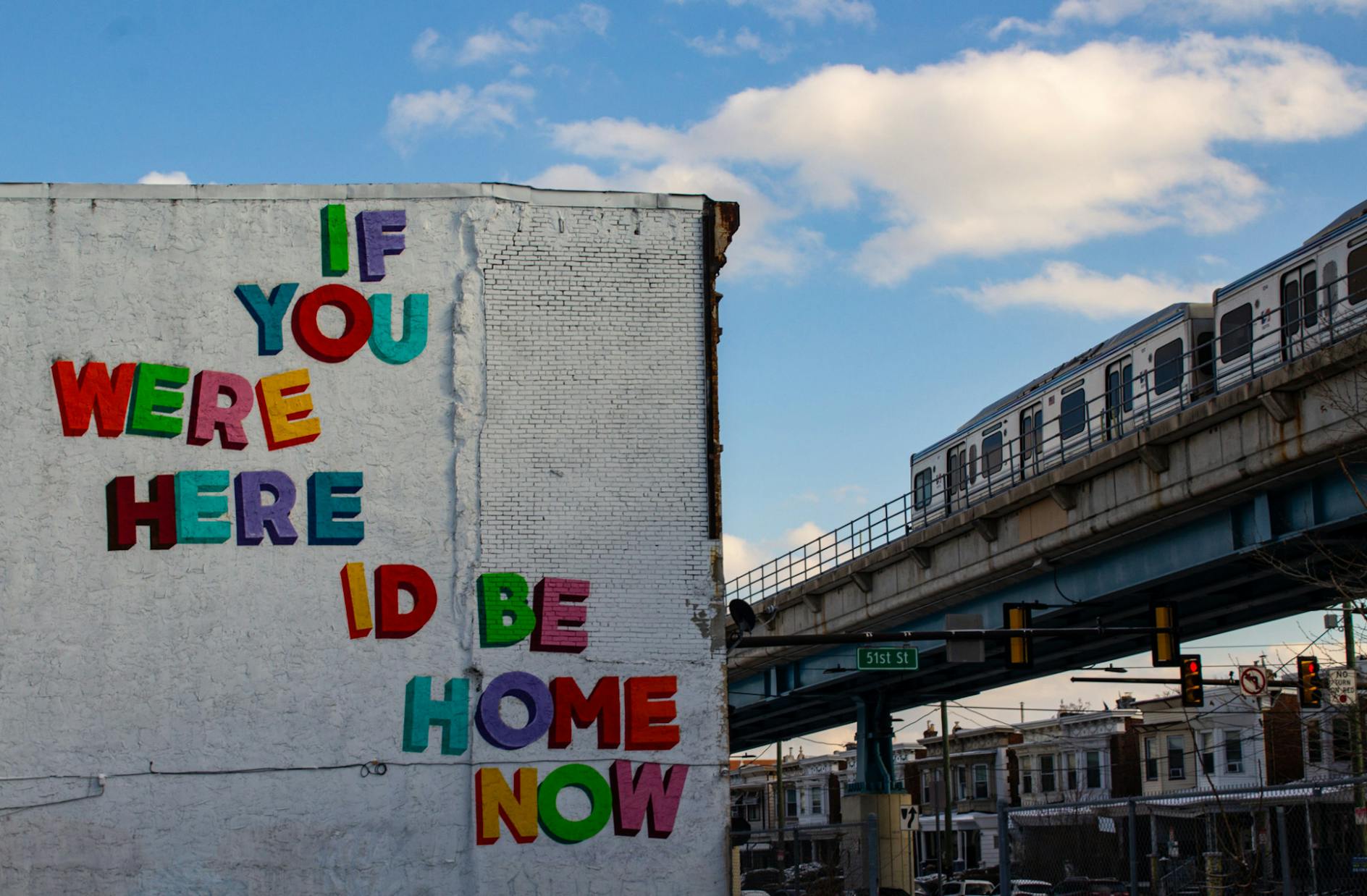
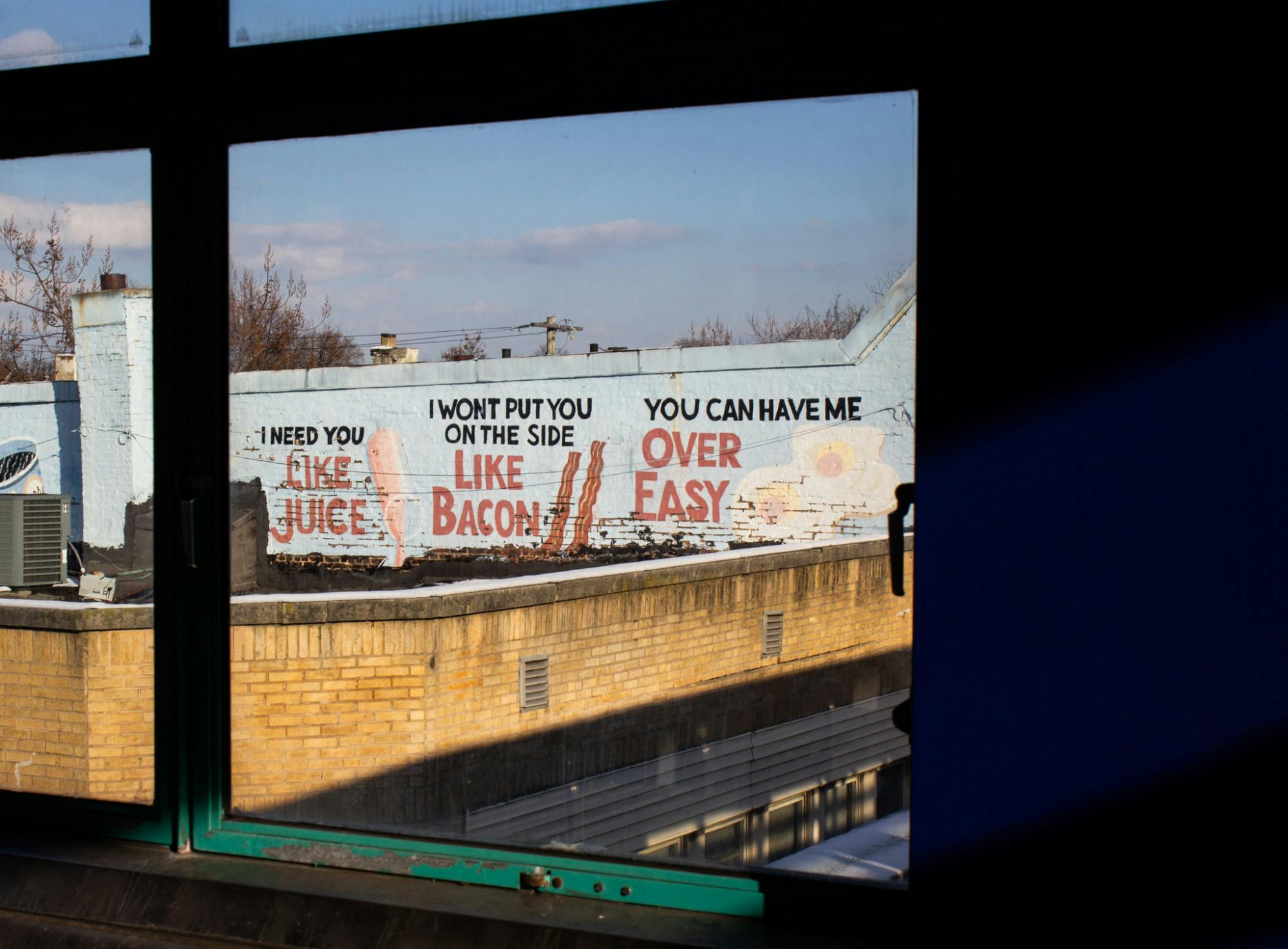
Steve Power’s A Love Letter For You is perhaps the city’s largest piece of love–oriented art. Composed of 50 rooftop murals from 45th to 63rd streets along the Market Street corridor, the project collectively expresses what is maybe (at face value) the most prevailing of romantic expressions: a heartfelt message of wanting from a guy to a girl. More obliquely, it’s a dispatch from an artist to his hometown and from the long–time residents of West Philly to their neighborhood.
The best view is from the from the Market–Frankford Line. As I rode that grinding ribbon of steel on my semesterly trip to the H Mart near 69th Street, I caught glimpses of the bold text, emblazoned on all manner of surfaces, from billboards to apartments, parking lot facades, and outbuildings. Many were written with a kind of defiant sincerity and honest kitch, like, “If you were here I’d be home now,” or, more tenderly, “Open your eyes I see the sunrise.” Everything screams at the viewer in bold, colorful text. Its composition is as equally bright as the message it demonstrates, which can easily come off as not much more than an overdirect, emotionally blunt gesture. “You can have me over easy” stares sheepishly from the side wall of a dance studio, alongside a cartoonish pair of fried eggs—but that simplicity might be intentional. It refuses metaphor, and I chose, at least, to see those outsized words and phrases as a local love, placed insistently where we will see it.
Graffiti River: Port Richmond
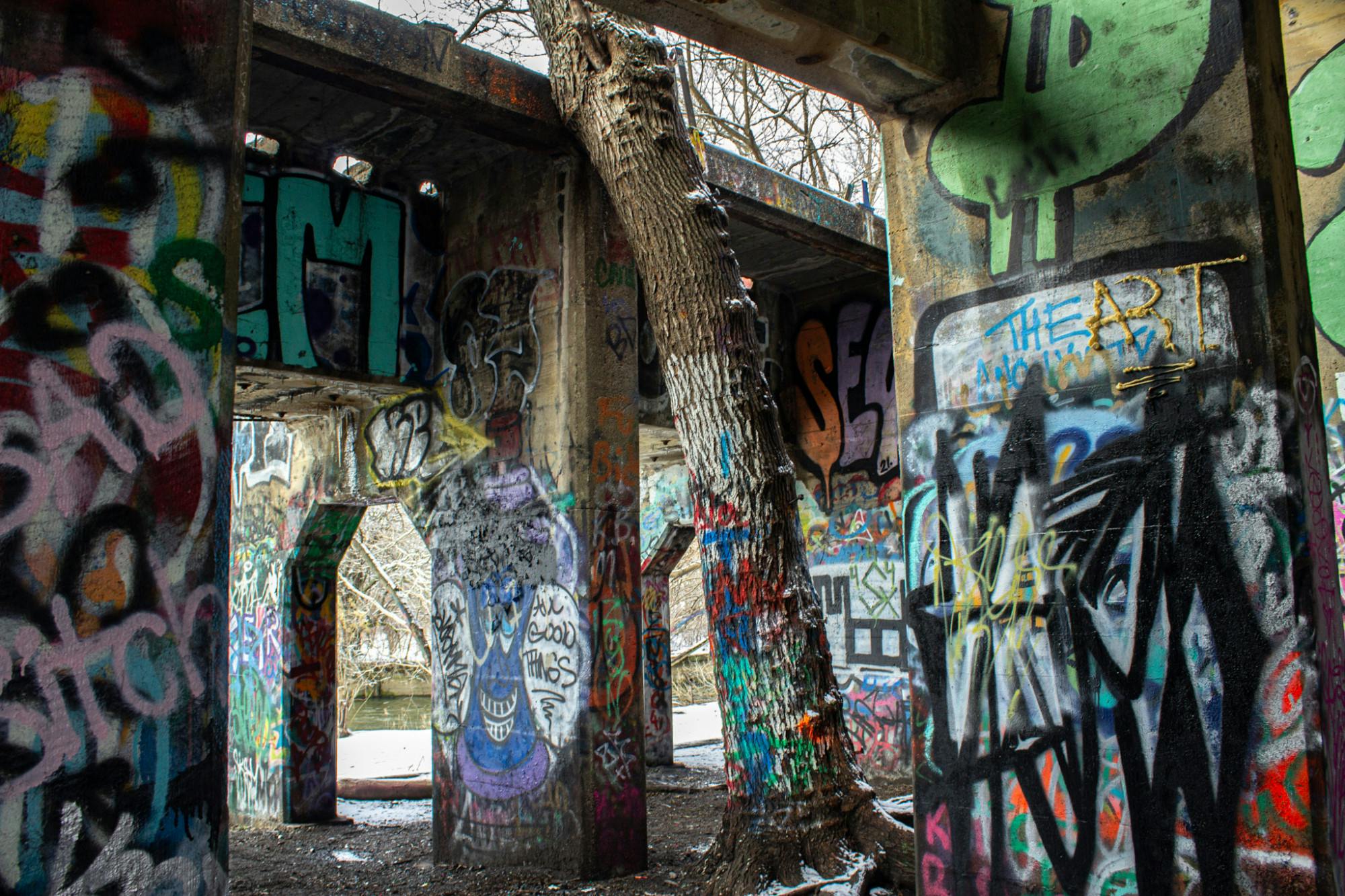
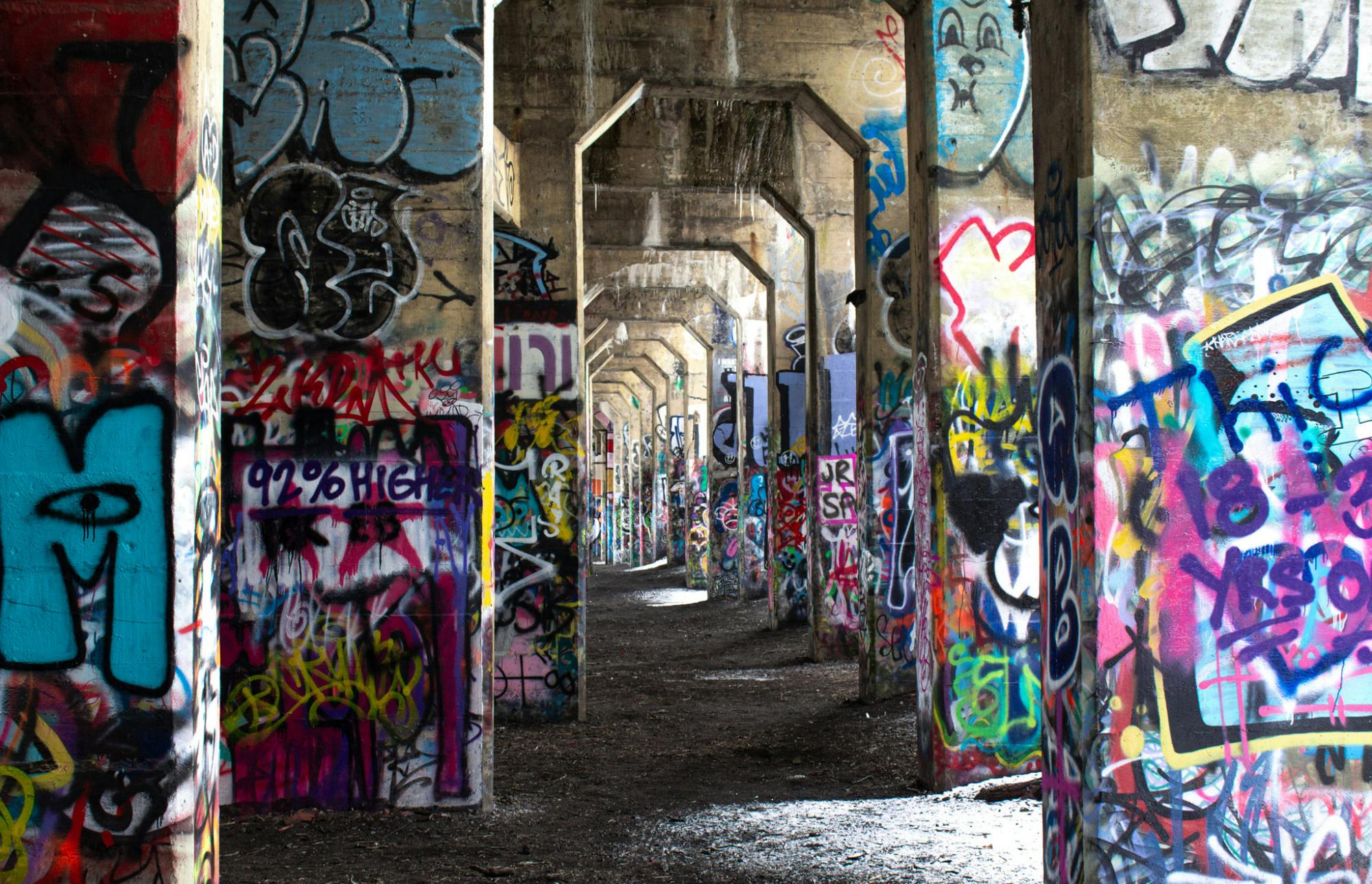
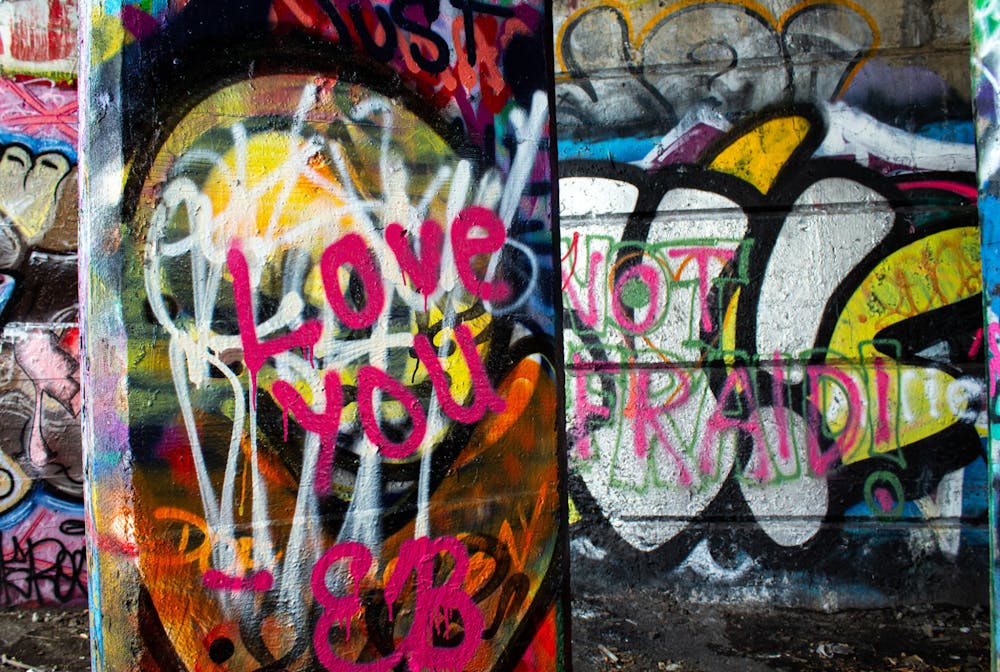
In the northernmost corner of the city sits Graffiti Pier. The former coal loading dock, overlooking the Delaware River, has been transformed into a massive outdoor canvas since the site’s closure by Conrail in the early ’90s. Since then, there’s been a succession of unsuccessful attempts—from the Anti–Graffiti Network to law enforcement—made over the years to curtail the visual noise. And there is … a lot of noise: Every wall in the six–acre area is awash with tags and mural fragments, overlapping and accreting to form one continuous work of color and shape.
At the river’s edge, a once–spurned place is now embraced: In a rough, uncurated way, it screams love. And so does the several bodies of delineated form that span the area. But the relentless beating of spray paint and foot traffic—that’s a form of love. The wear is proof of repeated return, and every hidden layer of pigment is a record of presence. We keep coming back to the river because that accessibility lets us.
LOVE Sculpture – LOVE Park 15th Street & JFK Blvd
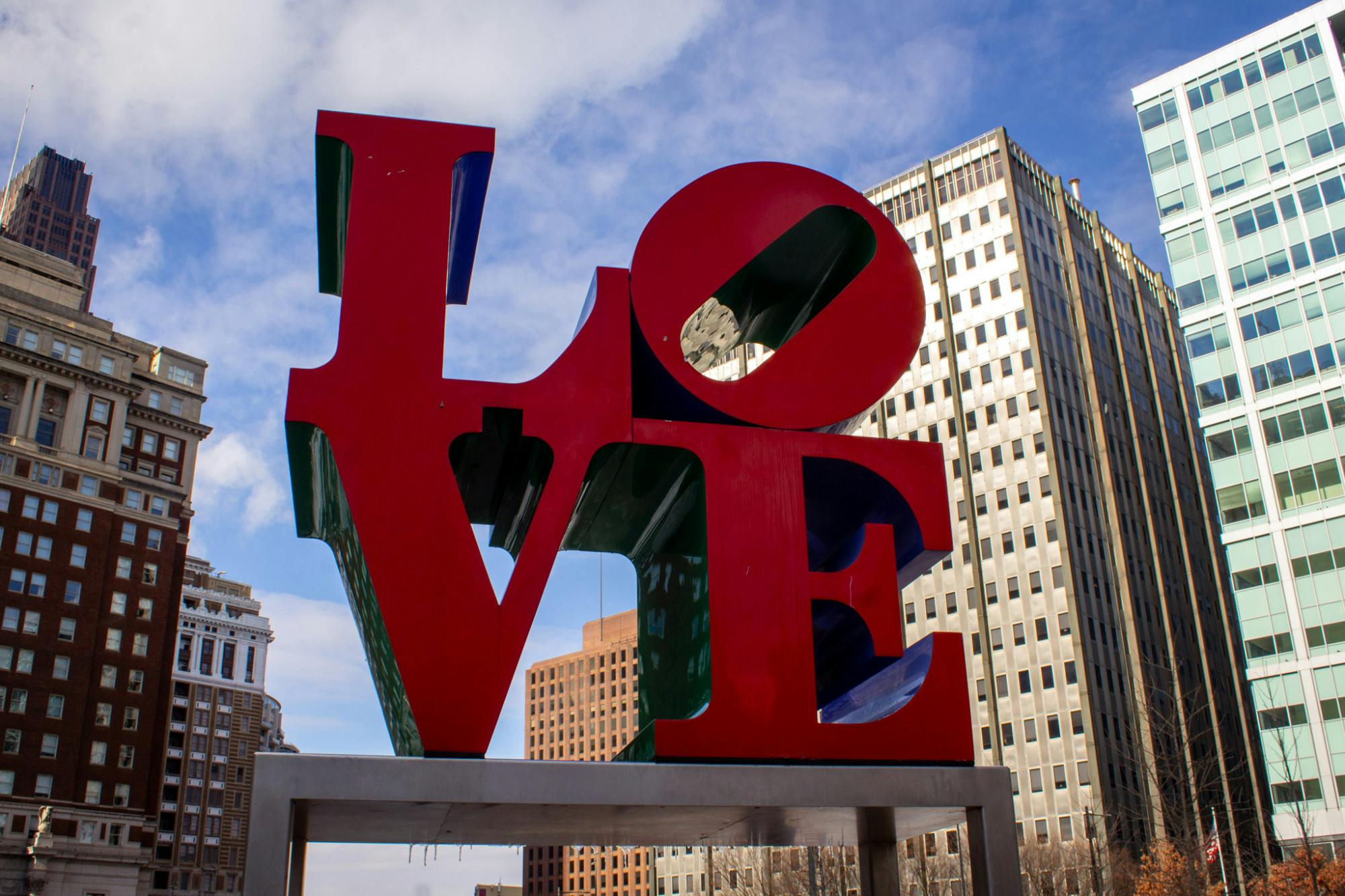
It is hard to visit either love sculpture without first noticing the rotating bunches of tourists waiting to snap a photo with the piece.
Deceptively simple, the sculpture folds graphic design and 1960s counterculture into a compact form that’s held its own against the city’s reinvention. For all its boldness and commercial atmosphere, it’s kind of sweet. Maybe more tender is its afterlife as a token for Philadelphia image, so overfamiliar that it is invasive, surviving in form as Christmas tree decorations and coffee mugs and other mini replicas. The sculpture has successfully come to exist as an idea, at airport terminals and concourse kiosks sure, but also as an ethos.
The AMOR Sculpture is, if you ask me, an underrated (albeit as underrated as commercial iconography can be) companion piece to the original—as well as a concerted effort to speak to a greater breadth of Philly citizens. We can thank Robert Indianna for several things: a canny tourist trap, but also a token of principle.
Philly Hope Fence: Penn’s Landing Promenade
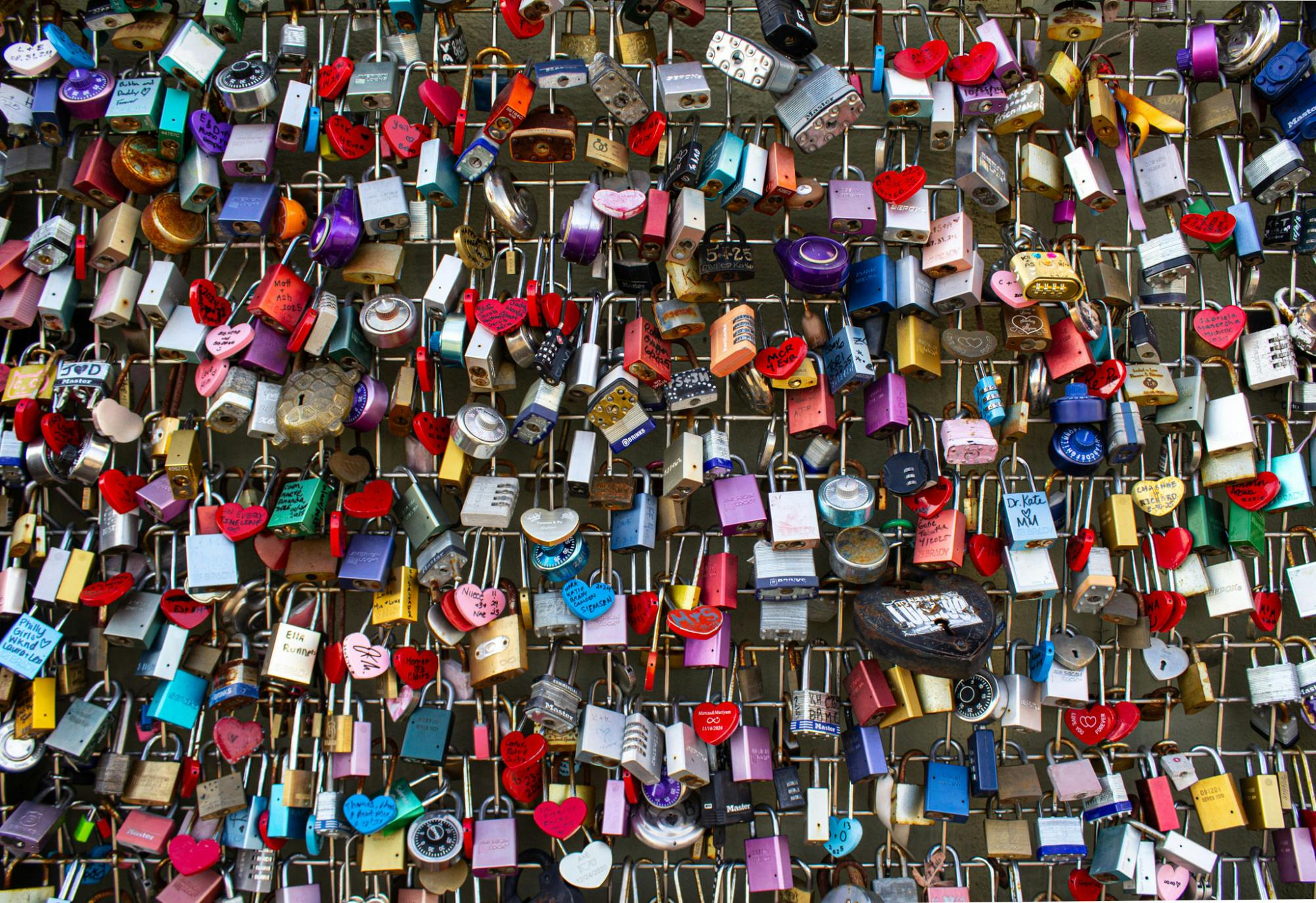
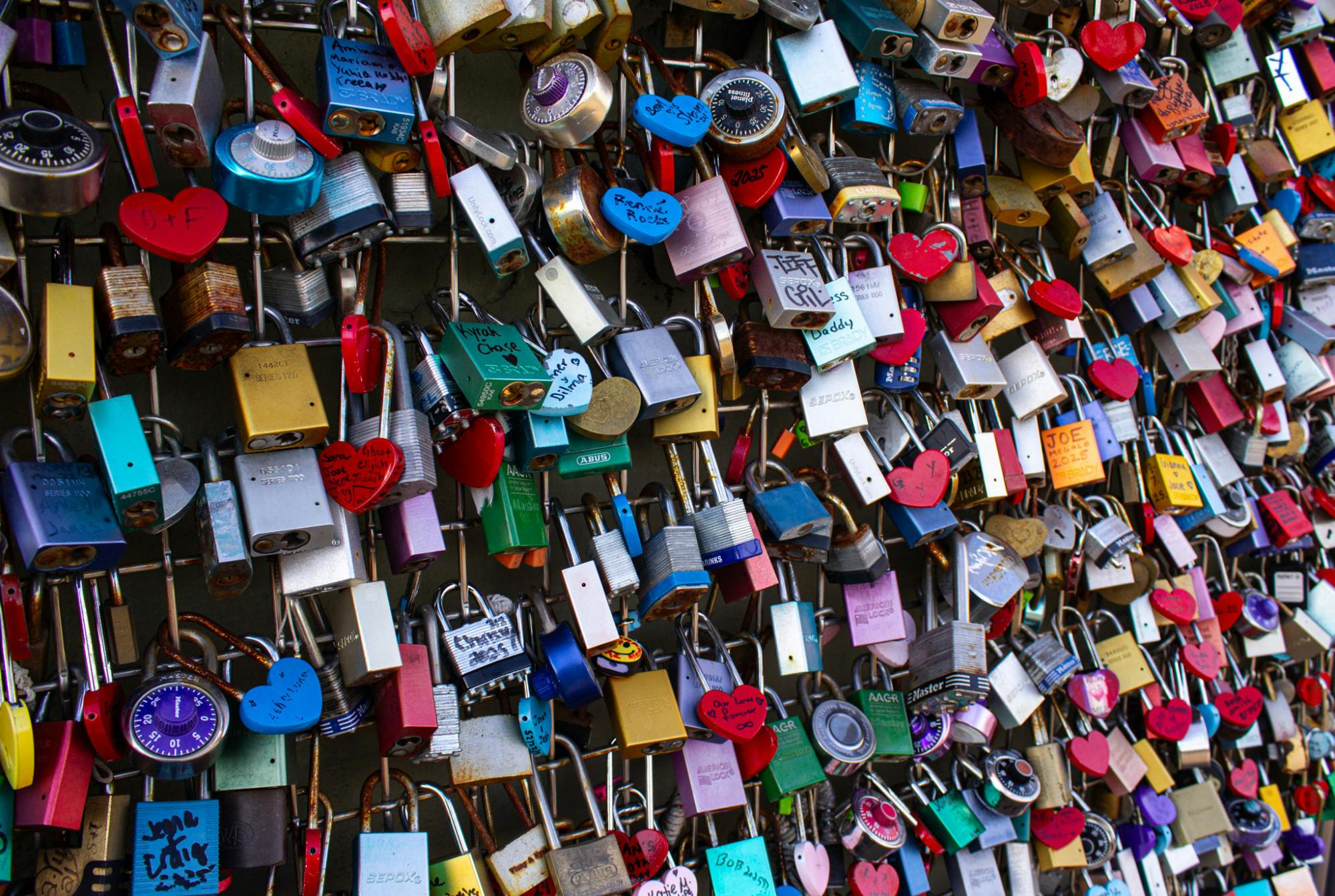
There just might be nothing more ritualistically cliche than a love lock fence. And of course, as a globalized city (and pillar in aestheticized urban romance) Philly’s got one right here in Penn’s Landing. But the Hope Fence is less about spectacle than accumulation. The mismatched and locks are rusting at different speeds, carrying different handwriting; some are new, some already corroding—all are permanent.
What emerges in the visual streetscape is that Philly public art isn’t just a record of affection but a shared behavior: returning, documenting, and communicating to urban audience, regardless of if that audience is temporary.