If I said the phrase “girl horror” to refer to a film sub–genre, it would likely evoke images of early ’90s and 2000s cult classics, such as Jennifer’s Body or The Craft. Notably, it probably doesn’t evoke anything from recent pop culture. However, if you have felt this girl horror shaped hole in the mainstream industry, look no further than the new film Forbidden Fruits.
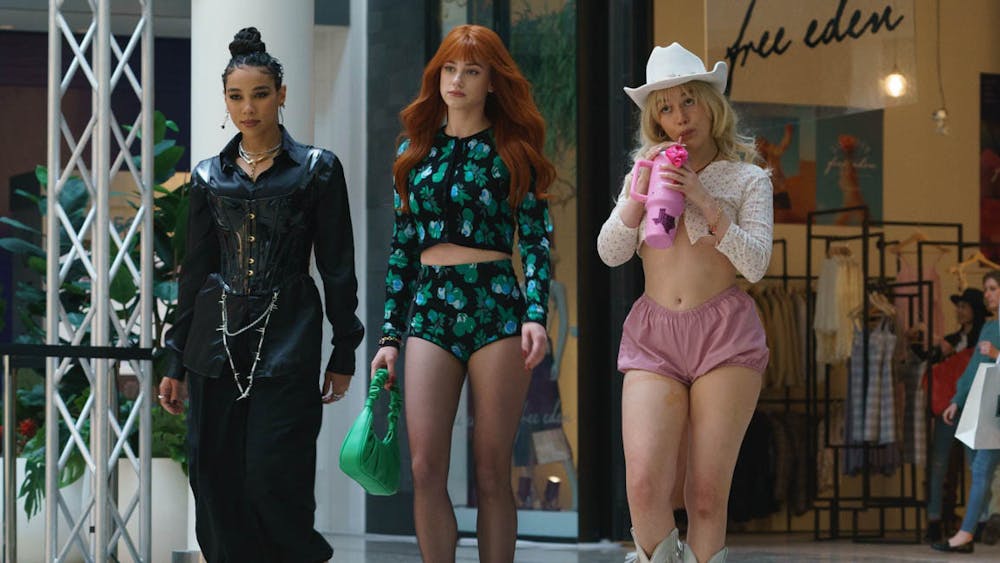
The film opens with a familiar sequence for the teen comedy lover: an introduction to our “Fruits” a la Mean Girls’ “The Plastics.” We have the seemingly ditzy but lovable Cherry (Victoria Pedretti), the kind and intelligent Fig (Alexandra Shipp), and their intense, controlling “Queen Bee” Apple (Lili Reinhart). They’re employees at the Highland Mall’s clothing store Free Eden during the day, but they run a witchy, feminist coven by night.
This devoted sisterhood is held together by the delicate thread of Apple’s strict rules. When new hire Pumpkin (Lola Tung) enters the hidden world of their coven, secrets are uncovered, messy histories resurface, and this toxic, cultish girl group begins to crumble horrifically.
Lily Houghton—the screenwriter and writer of the original play—used the phrase “girl horror” to encompass a particular genre of films that gave her comfort in a period of grief. We are transported completely into the minds and souls of these women, and they are allowed to experience a full range of emotions. Where else do we get the opportunity to see power, ferocity, and control in the hyperfeminine? Forbidden Fruits delivers this concoction with its candy–coloured, raw vision.
A fascinating aspect of the film is its depiction of feminism and femininity as a weapon. As a commentary on seemingly familiar female friendship dynamics, the film asks harsh but likely familiar questions: How much of yourself, your agency, and your life would you sacrifice for community? When you feel like you owe someone your life, is it theirs to control? Is having a boyfriend anti–feminist? This last question might seem out of place until you realize that this group aims to entirely decenter men; the ultimate threat in this feminist coven is not being a “girls’ girl.”
Meredith Alloway named the starting point for her directorial debut as “Mean Girls but a slasher,” and it’s not difficult to see the inspiration. The film is unapologetically referential, reading almost like a love letter to the chick flicks, girl horror, and teen comedies that came before it. Upon a first impression, one could probably map the stock characters we’ve seen before from this genre onto our Fruits, from the Queen Bee to the Dumb Blonde.
Alloway gives these tried–and–true tropes justice and respect while still satirising them. She makes them her own while draping a veil of hyperfemininity over them. Our main characters are getting a placebo high from sequins, repeating a witchy chant about “thigh gaps” and “bitch slaps,” and confessing to their idol of feminism, Marilyn (Monroe).
With such eccentric, ridiculous dialogue, the dedicated performances are what sell the film, particularly those of our leading four. Reinhart delivers some of the most shocking dialogue with the utmost sincerity in her deadpan performance as Apple. Pedretti begins as a classic ditz, then escalates it to a satirical level, going so far as to use a childlike voice. Her emotional depth and range subvert the expectations of such a character, especially in a particularly pivotal confession scene. Shipp’s Fig grounds the audience in this campy, over–the–top world. Especially in a more subdued but honest confession scene, she depicts a fascinating inner conflict between her ambitions and her tight–knit, toxic community. Tung is undeniably likable as the audience’s heroine who disrupts this vicious system.
The film is uncomfortable at times, as Houghton and Alloway attempt to subvert the previous expectations and characteristics of the girl–horror film. We see our main girls experience a wide range of the ugliest, most complex, and horrifically relatable feelings: insecurity, envy, and obsession. Of course, as many anticipated from the trailers and marketing, these feelings also manifest as sapphic yearning, especially in the controlling, devoted, and homoerotic friendship between Apple and Cherry.
While this campy, gory, horrific, ridiculous tone is not for mass appeal, it can be a truly delightful experience for those who have missed it from contemporary film. Forbidden Fruits commits to the promises it makes to its target audience: to revel in chaotic, messy girliness. Girl horror has been revived—its audience still exists and has been eagerly waiting for its return.