
Imagine this: you’ve been having a great night. You and your friends had a blast—you may have also had one too many drinks, but that doesn’t matter. What matters is that now, you’re finally alone with that one person you’ve been wanting to talk to all night.
You’re finally ready to tell them how you feel—until a dark thought creeps in: what if they don’t like me back? Suddenly afraid, you say nothing.
And just like that, your moment is gone, and you’re left feeling hopeless. Will you get a second shot? Probably not.
Except if you’re in the universe of Curry Barker’s Obsession, where second chances come in the form of wishes—and where wishes do indeed come true—but not without a cost.
Obsession follows a hopeless romantic who uses a supernatural artifact to make a dangerous wish: that his crush will love him more than anyone in the world. With heart–stopping jumpscares and an on–screen relationship that may make you grateful (or wish) to be single, Obsession is an endlessly uncomfortable experience. Despite its wild action that makes for prime nightmare fuel, the film focuses so much on disturbing the audience that it distracts from the true horror of its main character, framing the girl he traps in his obsession as the target of our fear.
Obsession premiered earlier this fall at the Toronto Film Festival, selling to Focus Features for $15M against a $1M budget. The film has since made waves in the industry, paving the way for Barker to seal deals with some of the biggest producers in horror and earning critical acclaim—perhaps because Barker’s path in the industry was less traditional.
Barker built his career producing original content on his YouTube channel @thats_a_bad_idea with his friend Cooper Tomlinson (who plays the protagonist’s best friend Ian in Obsession). Aside from their short–form comedy skits, Barker and Tomlinson produced multiple short films and uploaded them on YouTube, including a horror short called The Chair that earned Barker Hollywood representation. The duo also produced a found footage feature called Milk and Serial in 2024, distributing it entirely on YouTube and amassing close to two million views. Now, A24 is tapping Barker to direct a Texas Chainsaw Massacre reboot, while Focus Features and Blumhouse are backing his next feature, Anything But Ghosts.
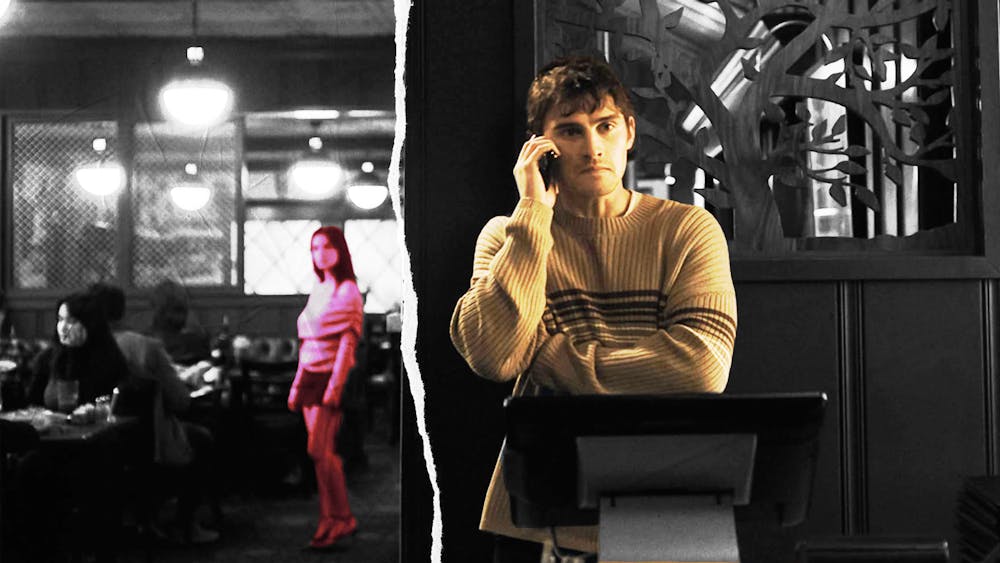
The story begins after Bear (Michael Johnston) uses a One Wish Willow—a supernatural artifact capable of granting its user a wish—to make his long–time crush Nikki (Inde Navarrette) fall in love with him. To his surprise, it works. Nikki becomes instantly attracted to him, and a passionate romance ensues.
But soon, we start to see that this version of Nikki is ingenuine. She won’t leave Bear alone. She grows increasingly emotionally volatile. And she has terrifying moments where she seems to inflict self–harm—when really, it’s her true self trying to break free from the One Wish Willow’s spell. Ultimately, Nikki’s violent behavior escalates, and it becomes easy for us to fear her and feel more empathetic towards Bear.
After the midpoint of the film, Bear’s friend Sarah (Megan Lawless) urges him to meet her alone. As Bear leaves to meet her, the real Nikki takes over and begs Bear to kill her. But Bear doesn’t do it; he resents her for asking him to end her obsession, revealing his true darkness.
But what happens next makes it nearly impossible for us to remember that Bear is to blame for everything. Sarah urges Bear to get out of his toxic relationship with Nikki, unaware that Bear is responsible for Nikki’s disturbing behavior. In a heartfelt moment that provides relief from the film’s escalating tension, Sarah is about to confess her own feelings for Bear—when Nikki brutally bashes her brains out with a brick. Bear watches, shellshocked. Not only that, but Nikki drags Sarah’s body back to Bear’s house and displays her in the living room when he gets back. It’s this type of horror—a kind that relies on pushing an already–unsettled audience beyond their breaking point—that masks Bear’s unethical behavior and his own toxic obsession with Nikki.
From a craft perspective, Obsession is extremely well–made. The performances are phenomenal—Navarrette shines as she deftly switches between inducing genuine terror and making us roar with laughter. Barker builds incredible suspense and keeps the audience at the edge of their seat. He succeeds in escalating our fear from one scene to the next and makes the story’s direction unpredictable and genuinely unsettling.
Only after reflecting on the film long after the credits finish rolling can we realize that what is truly terrifying about Obsession is not Nikki, but Bear’s willingness to keep her trapped. He therefore reveals himself to be the one who is truly obsessed—yet again, Nikki’s terrifying behavior and Bear’s tortured reactions to her dark deeds make it impossible for us to see him as the true antagonist in this story.
Perhaps deep down, beyond the nauseating violence and perpetual feelings of dread, what Barker aimed for us to take from this film is that we should stop wishing and start asking. We may receive rejection. But at least we won’t become monsters and create the unwilling instruments of our own destruction.