
Blockbusters, especially in the streaming era, are no longer allowed to begin quietly. The first act is slowly getting cut, as films are becoming engineered to hook viewers immediately, front–loading noise, destruction, and momentum to grab you before you have a chance to scroll away. The conclusion is clear—if a film doesn’t demand your attention immediately, it risks losing it altogether. But Project Hail Mary pushes against that instinct and chooses patience over urgency, asking a simple yet difficult question that most modern studio films avoid—what can happen if the audience is willing to meet you halfway?
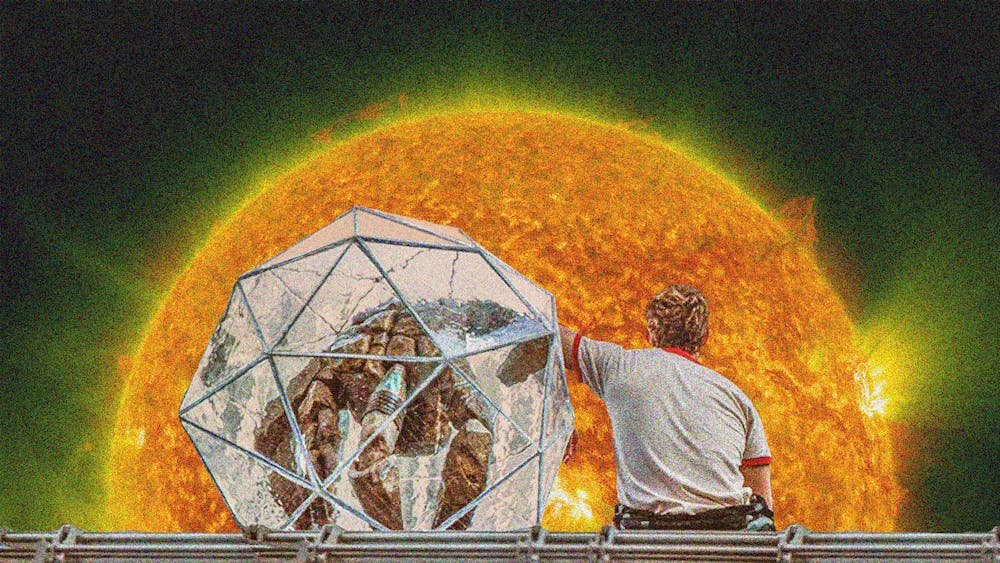
On paper, Project Hail Mary is as traditional as they come. Adapted from Andy Weir’s novel of the same name by screenwriter Drew Goddard and directed by duo Phil Lord and Christopher Miller. It follows Ryland Grace (Ryan Gosling), a reluctant hero sent on a near–impossible mission to save humanity. Grace, a disgraced biologist turned middle–school teacher, wakes up alone on a spaceship with no memory.
The broad strokes are entirely familiar: the ticking clock, the lone survivor, and the ever–present theme of heroic sacrifice. But the film makes little attempt to disguise that familiarity—no ironic distance, no over–the–top urge to undercut its own premise. Project Hail Mary stays sincere where so many blockbusters feel the need to outsmart themselves, whether through cynicism, meta–humor, or franchise baggage. It believes in the structure it’s working within, and more importantly, it believes that audiences will too.
There’s been a growing sense that mainstream movies are designed to be half–watched, built around repetition and over–exposition. Matt Damon’s claim that Netflix wants movies to restate “the plot three or four times in the dialogue” to account for distracted viewers only reinforces that idea. The result is writing that assumes distraction is the norm, flattening its story in advance to accommodate viewers who are never expected to fully engage. But Project Hail Mary resists that easy way out. It’s a film about problem–solving and the scientific method, and it lets those processes unfold in real time, explained just enough to keep the audience oriented but never repeated for safety.
When the audience is expected to follow along, they do. Like Oppenheimer, it proves that audiences aren’t yet allergic to complexity, they’re allergic to being talked down to. That trust is also part of why Project Hail Mary feels so specifically built for the theater.
Movies demand a certain amount of attention, and Project Hail Mary is structured to reward those who meet the challenge. It lingers in places where a streaming cut might tighten. There are stretches of silence, moments that don’t necessarily move the plot forward, and small emotional shifts that only register if you’re fully immersed.
That kind of immersion is difficult to replicate anywhere but a theater. Without a phone, pause button, or second screen, the film can dictate the rhythm and in turn the movie–watching experience becomes less about convenience and more about giving in to the story. It’s not just the sweeping space cinematography or realistic puppetry that benefits on the big screen—movies work differently when nothing else is competing with them.
At a time when blockbuster imagery can feel weightless, Project Hail Mary is refreshingly tangible. It’s not that the film avoids visual effects—it certainly doesn’t—but it uses them to enhance physical elements already grounded in real sets, props, and performances. In an era increasingly defined by AI slop and overprocessed CGI, such craftsmanship stands out.
That level of care extends beyond aesthetics and into the film’s larger impact. On the press run, Gosling emphasized the responsibility that filmmakers have to create work that continuously justifies the theatrical experience. “It’s not your job to keep [theaters] open,” Gosling says, “it’s our job to make things that make it worth you coming out.” Watching Project Hail Mary, it’s hard not to view every practical set, every tactile detail, as part of that effort.
At the center of all this is Gosling, whose star power anchors the film and serves as one of its primary draws. In an industry where recognizable faces often determine whether audiences show up at all, his presence gives Project Hail Mary a kind of gravitational pull from the outset. But what he does within the film is much quieter. For much of the runtime, Grace is alone, and Gosling lets the performance evolve in subtle, internal shifts. Without spoiling the ending twist, it’s delightful to watch Gosling portray a character arc the viewer doesn’t realize is happening, emerging naturally without any announcement.
What makes Project Hail Mary resonate isn’t the story or the performances, it’s the sense that effort. From years spent refining small design details to deliberate creative choices in music and performance, the film reflects a production team deeply invested not only in the fictional world onscreen, but in the real–world experience of the audience watching it.
The writing assumes you’re engaged. The direction allows scenes to breathe. The production prioritizes texture over efficiency. These choices come together to create a blockbuster that isn’t intentionally flashy and isn’t fighting for its audience’s attention.
It’s easy to frame Project Hail Mary as an outlier: a rare, non–franchise hit that manages to break through. But that framing undersells what’s actually happening. The film doesn’t succeed in spite of its choices, but because of them. By trusting its audience and taking its time, it offers something a lot of movies haven’t lately—the film offers a clear reason to show up to the theater.