
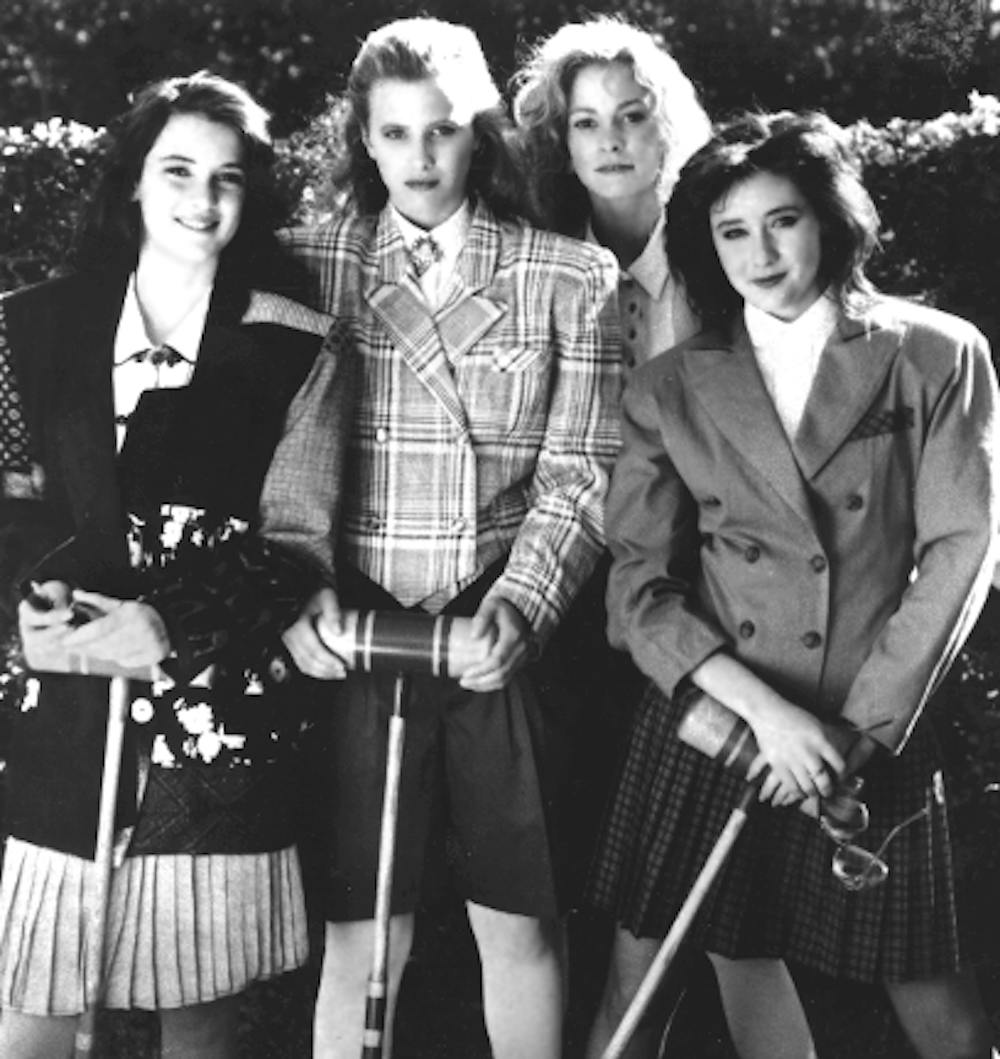
To no one’s surprise, Mean Girls 2 (yes, it exists) didn’t live up to the high expectations set by its predecessor. Luckily, '80s classic Heathers is still here to help alleviate the lasting effects of your deep–seated high school angst.
Pre–kleptomania Winona Ryder stars as Veronica Sawyer, a conflicted member of the most popular clique in school, the Heathers. After a fight with the alpha Heather at a party, Veronica goes to Heather’s house to give her a nasty “hangover cure” of milk and orange juice. But new boyfriend J.D.’s (Christian Slater) idea of a hangover cure consists instead of bleach, which he tricks Veronica into giving her best friend/worst enemy. The pair covers her subsequent death with a suicide note, but J.D. doesn’t seem satisfied. After another similar disposal, hysteria over a suicide epidemic ensues. A particular favorite scene features the yearbook editor making a two–page suicide note layout in honor of the departed alpha Heather that’s “more tasteful than it sounds.”
While an incredibly witty and hilarious skewering of perceptions on teen suicide, Heathers falls under Guilty Pleasures on the quotability of its absurd dialogue alone. On top of that, it’s full of terrible 80s hair, shoulder pads and head–to–toe jewel–toned outfits.




