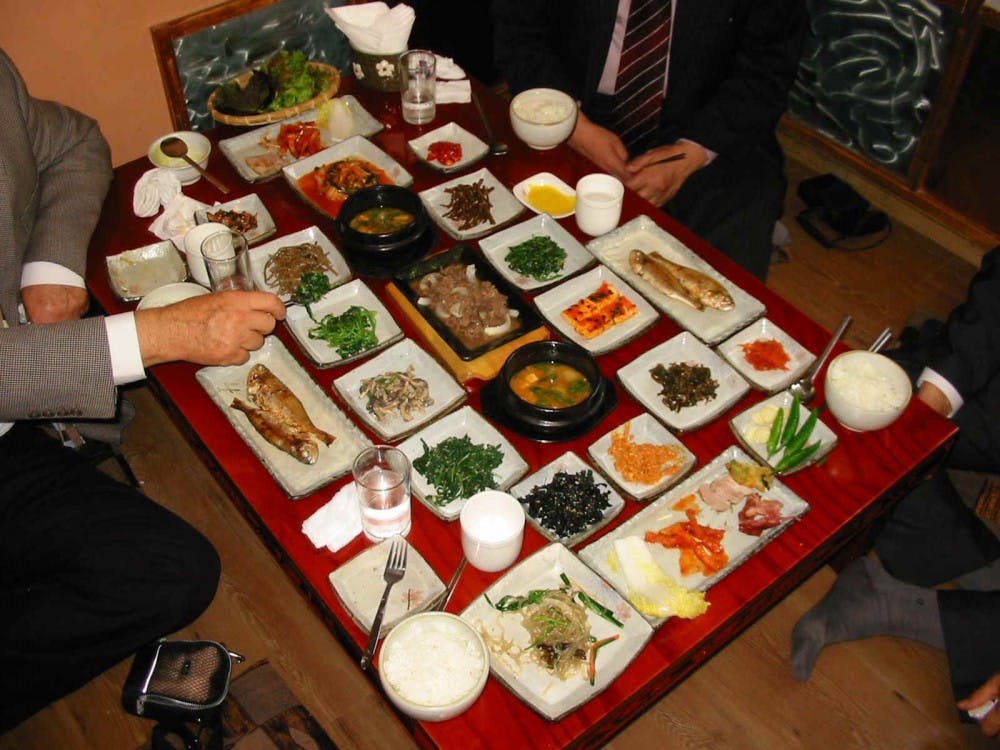
1) Kimchi — Although there are hundreds of different iterations of this dish made of fermented vegetables and a mix of seasonings, the most popular variety features napa cabbage. Most Korean restaurants serve kimchi as a side dish, but it can also be found in kimchi stew, kimchi soup and hundreds of other preparations. How to use: Add some to vegetarian fried rice for an acidic kick.
2) Gochujang — One of the most popular condiments in Korea, this sauce is a blend of chili, glutinous rice, salt and fermented soybeans. Frequently found in popular dishes like bibimbap and tteokbokki, gochujang adds heat from the chili but also carries a distinctive sweetness. How to use: Try subbing it for your favorite hot sauce.
3) Gim — Dried, salted seaweed, gim is eaten on its own or as part of gimbap, Korea’s answer to sushi. Many restaurants serve toasted and sliced gim as a banchan (side dish) during meals, but it is most prominently featured in gimbap, which, unlike sushi, always includes seaweed as a component. How to use: Grind up gim, melt with butter and pour over freshly popped popcorn.
4) Ramyeon — Koreans eat more instant noodles per capita than any other country in the world, and the Korean variety, ramyeon, is traditionally spicy. The most popular brand, Shin Ramyun, features a variety of flavors — like seafood and spicy bok choy — and tastes like ramen’s hotter cousin. How to use: Mix with broth, your favorite steamed vegetables and a little soy sauce for a cold weather pick–me–up.
5) Jeon — These Korean pancakes have a simple base, but can be spruced up with any number of toppings. Usually served as an appetizer or side dish, jeon most commonly feature pajeon (green onions), gamjajeon (grated potato) or kimchijeon (kimchi). When eaten for dessert, the most popular variety of jeon includes edible flowers, like hwajeon (azaleas). How to use: With syrup — just kidding. If it were up to us, we'd eat them as is.
Note: These can be found at nearly every Korean food store, including H Mart in Upper Darby, which is easily reachable via SEPTA’s Market–Frankford line.