
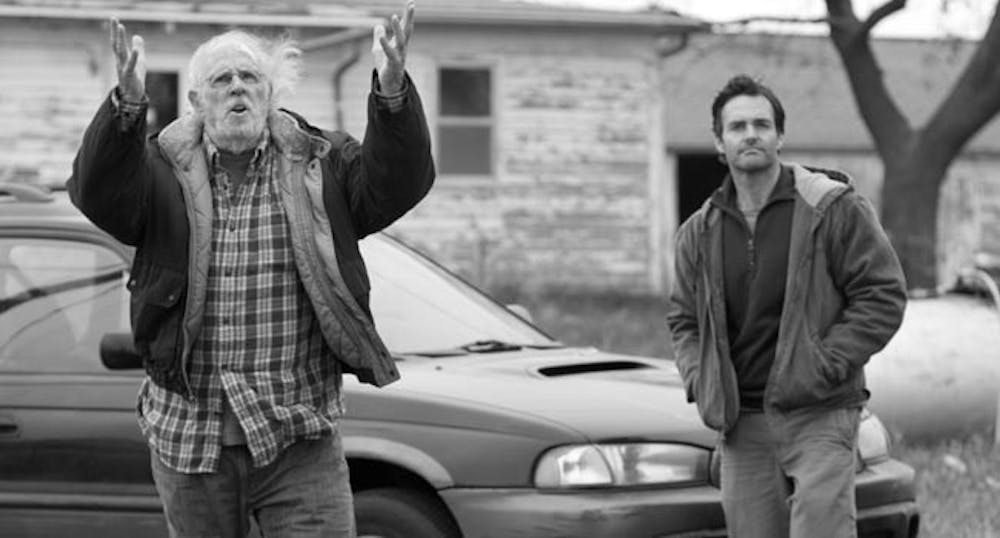
"Nebraska" commences with Woody Grant, a senile, drunken old Montana man (fully-embodied by an exceptional Bruce Dern) being stopped by the police on his doomed mission to walk to Nebraska and collect the millions of dollars he supposedly won from a clear scam. Shooting the film in black and white, director Alexander Payne trades the lush Hawaiian backdrop of "The Descendants" for a subdued, idyllic vision of the American Midwest, successfully capturing the absurd but heartfelt tone of Bob Nelson’s witty, nostalgic script. Woody doesn’t say much, but Dern makes his lines count, with his crazy looks and brusque gestures truly fleshing out the deranged character and his antics. Opposite Dern is a reserved David (Will Forte), Woody’s grown son who ends up being the only one to help his father travel to Nebraska just so that Woody can learn that there is no prize. David simply wishes to do something nice for his dad, but an extended pit stop in Woody’s hometown, where his old friends actually believe his delusional story, allows his son to understand how his parents’ history with this strange place has shaped their family.
Soon accompanied by his mother (June Squibb), and brother (Bob Odenkirk), David awkwardly has to navigate an impromptu family reunion at their deadbeat cousins’ home. Payne is wildly successful at wringing every ounce of comedic tension from Nelson’s occasionally sparse script, using long, static takes to show how uncomfortable David is while Woody remains blissfully ignorant of their insane circumstances. The confused, complicated relationship between Woody and David drives the film, which is ultimately optimistic about being able to effectively move forward by first stepping back into the past.
Grade: A- Rating and Runtime: R, 115 min See if you liked: "Sideways"