
When pre–teens scratch their goals for their lives onto a piece of scrap paper, it is bound to be marked by green tea stains and develop creases from folding it onto itself multiple times. It is a well–loved document, collecting years of dust in a sacred desk drawer; only the owner of the document knows its location but never really expects it to be completed. Just the idea of creating the list is most compelling, because it reflects individuals’ aspirations for their future selves, while also demonstrating the kind of person you were at the time. A bucket list like this is not necessarily only for checking off all the things you want to accomplish; it can be used to reconnect with family members, fuel self–discovery, and even bring love in the most unexpected way.
In The Life List, Alex (Sofia Carson) is a young woman in New York City who, while mourning the recent passing of her mother, suddenly discovers an unexpected line in the will: Her mother, Elizabeth (Connie Britton), has assigned her the challenge of completing the bucket list that she wrote for herself as a teenager. But the catch? If the goals remain incomplete by New Year’s, Alex loses the right to her inheritance.The film follows her as she performs at comedy shows, camps out in her backyard, and learns how to play the piano, while also witnessing her learn to face grief and rediscover herself. Along the way, happenstance leads her to find true love with the lawyer that is facilitating her journey.
I am someone who has seen many Netflix original romantic comedies. Homesick? Rom–com. Want a movie to watch with friends? I will turn on any single movie that stars Lindsay Lohan set in a beautiful landscape. Whenever I see a new movie appear on my “Your Next Watch” feed, there is no doubt that I will be watching it within a couple of days. Despite providing temporary entertainment, the plot lines often repeat very similar patterns: individuals who are not looking for love meet, they fall in love, the peace is disrupted by miscommunication, they end up back together again, and a satisfying epilogue follows the couple of years later. Granted, it is really difficult to create unique romantic comedies because of the number of the films produced within this genre each year—and if it ain’t broke, why fix it?
That being said, when I turned on The Life List in my warmly–lit dorm room, I was simply hoping for the movie to clear my head after a busy week of exams. What I didn’t expect, though, was for it to be thought–provoking and offer a more realistic insight into what it means to fall in love.
At the beginning of the film, Alex is introduced as an individual who has lost her footing in life after graduating from college. Although she originally aspired to be a teacher, she is currently working for her mother’s cosmetic business, and while once an outgoing and extroverted individual, she has slowly grown more fearful and cautious. This particular film tells a broader story about individuals beyond their relationship by exploring human experiences other than love. Alex is a paradox of selflessness—a character who loves fiercely, yet loses herself in prioritizing others. While defined by this trait, it also traps her in a cycle of missed opportunities, where the weight of others’ needs eclipses her chance to live her own life. She is also dealing with the immeasurable pain and sadness that comes with losing her mother, who was by far her greatest supporter and role model.
One of my favorite aspects of the film is how both the physical and metaphorical presence of Alex’s mother is integrated throughout the story. She records videos to be played for Alex after she completes each goal on her “life list,” and after her death continues to be the catalyst behind Alex’s journey of self–discovery. Even though she has passed within the timeline of the movie, audiences get to know her character. Although viewers might be frustrated with her because her challenge interferes with Alex’s life plans, they grow to understand her motivations and how deeply she understands her daughter.
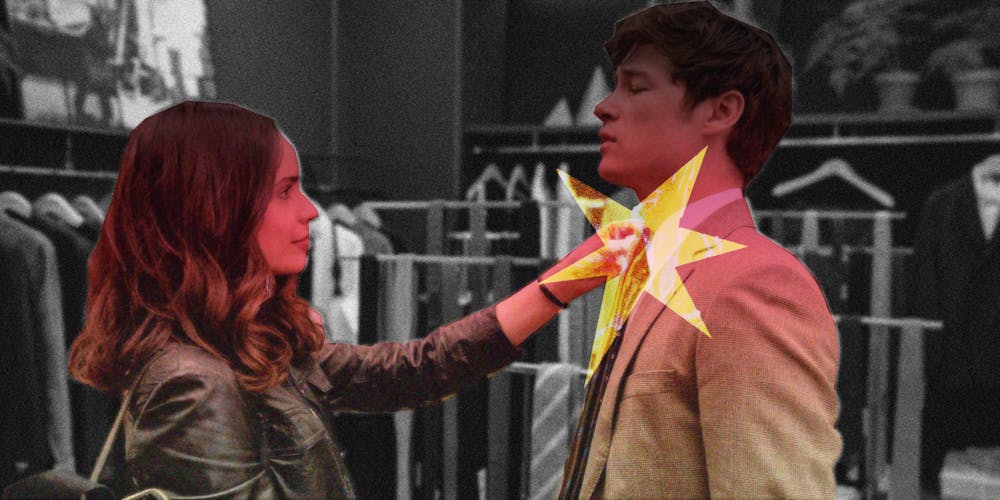
Something else that I found really interesting is the fact that the love story between Alex and Brad (Kyle Allen) bloomed quite late in the film. In fact, the two didn’t get together until the last 36 minutes of the two–hour movie. There was little indication of a potential romance; their relationship started out rocky, and even as they slowly became closer over the course of The Life List, their dynamic could have easily been nothing more but friendly. This meant that the audience primarily followed Alex’s growth from completing the “life List,” learning more about her aspirations for her future and her interpersonal relationships.
This slower, more realistic shift beautifully reflects how organic love blossoms between two people. Usually in romantic comedies, the main focus is put on the two main characters as they immediately jump into a budding romance with one another, sometimes sparked by love at first sight. This creates the false belief that romance has to feel immediate between two people. The Life List extinguishes this expectation for the audience and really pushes the idea that an individual must know themselves before they are ready to understand and love others.
Not everything about the movie portrayed a positive perspective on love and relationships. One aspect in particular that I found to be troubling is how open communication is posited as toxic by the writers. During the climax of the story, Alex and Brad spend a night together while in Vermont. In the scenes following their encounter, the two attempt a heartfelt discussion in the car about a shared intimate moment. Brad reveals that he had broken off a long–distance relationship with his girlfriend before they hooked up. Alex suddenly gets frustrated that Brad had lied to her as he initially claimed that his ex–girlfriend left their trip earlier that day. The two begin arguing about Alex’s love life and she storms off angrily back into her apartment. In this moment, it almost felt like Brad’s attempt at honesty and openness only pushes the two characters further apart. This moment could dissuade viewers from open communication because it appears to be the catalyst for the argument; the blowup was portrayed as seemingly worse than lying to one another. While the tension feels real, the framing could imply that openness was the problem, not timing or context.
Despite this misstep, by the end of the movie—which does follow the traditional storyline structure—both characters are able to own up to their mistakes and grow through personal self–reflection. What begins as a blossoming romance in The Life List unfolds into a testament of how our society loves and how real–world experiences of self–discovery shape who we are and the relationships we hold. When we look into the past and see ourselves scribbling in notebooks about our future selves, it’s not only about planning our ideal professions or life goals. It’s also about the kind of people we want to be—the ones who are unafraid to explore the world, one step at a time.