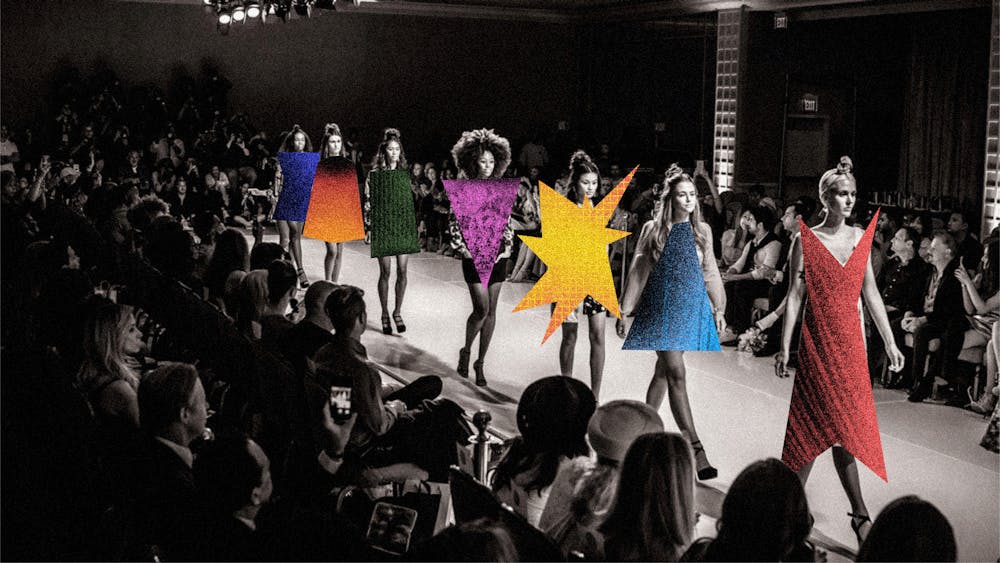
London Fashion Week—one of the fashion world’s “Big Four,” alongside New York, Milan, and Paris—has always been the most rebellious of the quartet. While New York prizes polish, Milan celebrates glamour, and Paris radiates pedigree, London thrives on risk, experimentation, and wit. The Spring/Summer 2026 season (held Sept. 18–22) reaffirmed London’s reputation as the most subversive of the Big Four, blending conceptual bravado with commercial realism.
Part of that revival was structural: Under newly appointed British Fashion Council CEO Laura Weir, main–calendar show fees were waived for the first time. The move opened the door to independent designers who once couldn’t afford to show, creating a richer and more democratic lineup. At the same time, the Council’s decision to ban exotic animal skins made London the first of the Big Four to take that sustainability leap—a symbolic statement that ethics and experimentation can coexist.
Burberry, under Daniel Lee, stood at an inflection point. Since Riccardo Tisci’s exit, the house has struggled with an existential question: how does a century–old trench–coat maker stay relevant in a world of quiet luxury and digital fast fashion? Tisci’s tenure brought logo mania and celebrity baiting, but often felt disconnected from the brand’s origins. The pandemic only deepened this disconnect, flooding the market with monograms while the firm's creative direction drifted. Lee, formerly of Bottega Veneta, was tasked with reimagining “Britishness” itself—making it less about nostalgia, more about nuance.
For S/S 2026, Lee pivoted towards grounded sophistication. He recut classic trenches with slouchier shoulders, deepened the color story with hunter greens and stormy neutrals, and leaned on tactile materials—waxed cotton, technical gabardine, soft leather—to evoke both countryside pragmatism and city poise. The press release spoke of a new direction that “flies the flag for Britishness and for the UK and for culture,” a nod to Burberry being synonymous with Britain. The result wasn’t radical, but restorative—a confident reclamation of purpose that traded spectacle for substance.
If Burberry was rebuilding, Dilara Findikoglu was summoning ghosts. Her S/S 2026 collection transformed the runway into a gothic ceremony: corseted silhouettes, bishop sleeves, and lace veils drifted through crimson light. The emotional tone was grief and defiance at once, creating a dialogue between repression and release. Findikoglu cited Victorian mourning rituals and early British punk as inspirations. Her fabrics ranged from deadstock velvets to biodegradable coatings on silk organza, underscoring her sustainable craftsmanship. This was fashion as theater, fashion as exorcism—the woman she dresses is a priestess of decadence, aware of the gaze and in command of it. Her show reminded audiences that London still produces uncompromising visionaries in the vein of Alexander McQueen and John Galliano.
KNWLS, the London–born label designed by Charlotte Knowles and Alexandre Arsenault, made its Milan Fashion Week debut this season. Having built their reputation on London’s underground glamour, the duo took their signature cocktail of fragility and ferocity to a new audience. The Spring 2026 collection leaned into post–apocalyptic romanticism: shredded denim, distressed leather, and corseted bodices crafted a survivalist femininity. Its themes—erosion, endurance, and eroticism—were filtered through a Milanese lens, but the brand's London imprint remained. A surprise collaboration with Nike cemented the brand’s global expansion, while the silhouettes stayed true to their roots in subversive, body–conscious armor.
Yuhan Wang’s collection was the season’s softest yet most sinister statement. Inspired by David Lynch’s Mulholland Drive (2001), she explored the line between fantasy and fear. Her ruffled chiffons, crocheted lace, and fractured floral prints captured the film’s eerie femininity and tension between illusion and identity. The press release mentioned Wang’s desire for the women of Mulholland Drive to claim ownership of their own stories, and that sentiment permeated every look. Her models appeared like dolls mid–awakening, faces glazed with melancholy. The technique of layering sheer and opaque fabrics suggested a desire to reveal while still guarding the self. Wang continues to redefine romanticism for the 21st century—delicate, yes, but never passive.
Priya Ahluwalia’s Spring 2026 show “Affinity” explored the many phases of love—infatuation, heartbreak, and healing. Drawing on her Nigerian–Indian heritage, she merged archival family photographs with modern AI–driven textile patterns. Patchwork denim, deadstock knits, and hand–dyed prints evoked a tender fusion of memory and innovation. Ahluwalia teased that “Love is red. Love is blue,” hinting at both the emotional and physical palette of the show. Color was used emotionally: warm saffrons and turquoises for connection, deep navy for reflection. In a season obsessed with identity, Ahluwalia offered a reminder that joy, too, can be heritage. Her silhouettes balanced sharp tailoring with streetwear ease, crafting a vision of identity that was neither East nor West, but something new and global.
It’s impossible to discuss the London fashion world without acknowledging one of its most enduring icons, Lesley “Twiggy” Lawson. In the 1960s, her androgynous pixie cut, wide eyes, and boyish frame defied the hourglass ideal of the previous decade and turned her into a global symbol of mod rebellion. This season, Twiggy’s shadow was everywhere: in Yuhan Wang’s girlish innocence, in KNWLS’s defiant youth, and in Burberry’s attempt to modernize nostalgia. She embodied the London spirit—irreverent, democratic, and brimming with character.
Ultimately, London Fashion Week 2026 proved that the city’s creative core is as electric as ever. Its designers aren’t chasing trend cycles—they’re challenging what fashion can mean in a time of climate anxiety and identity flux. From Burberry’s renewed British stoicism to Findikoglu’s camp rituals and Ahluwalia’s diasporic futurism, the message was clear: the future of fashion is plural, personal, and political. The Big Four may each claim to set the tone, but London continues to write its own rules. Rebellion still makes the best heritage.