“There’s nothing more satisfying than the intricately curated playlists Spotify cooks up for you—sometimes, I feel like my Spotify knows me better than I know myself,” my roommate confessed when I asked her about the platform. She gushed about how Spotify has become a kind of emotional companion for her, but as a proud Apple Music user, I was skeptical about this “friendship” users feel with the app—is it truly as good of a friend as we like to believe?
This summer, the glossy image of Spotify finally cracked. A wave of artists pulled their catalogs from the platform in protest, setting off a small but mighty boycott. The catalyst: Spotify CEO Daniel Ek’s investment firm, Prima Materia, pouring almost 700 million dollars into Helsing, an artificial intelligence military startup developing real–time battlefield mapping tools. In June, Helsing's announcement of their new AI–powered products—military strike drones, aircrafts, and submarines—sparked an artist–led stand against Spotify that snowballed in the following weeks. Bands like Deerhoof, King Gizzard & the Lizard Wizard, and Hotline TNT led the charge, bluntly expressing their contempt for Ek. As band Massive Attack put on their Instagram, “the economic burden that has long been placed on artists is now compounded by a moral & ethical burden, where hard–earned money of fans & the creative endeavors of musicians ultimately funds lethal, dystopian technologies. Enough is enough. Another way is possible.”
But the Helsing investment wasn't the first event to create artist frustration; it just ripped the lid off the long–simmering anger of artists who have lost ground while Spotify gains influence. In 2020, Spotify launched its Discovery Mode program, which pressures artists into accepting lower royalties in exchange for algorithmic promotion. With this, Spotify forced the hand of artists, making a blunt proclamation: take a pay cut or risk becoming invisible.
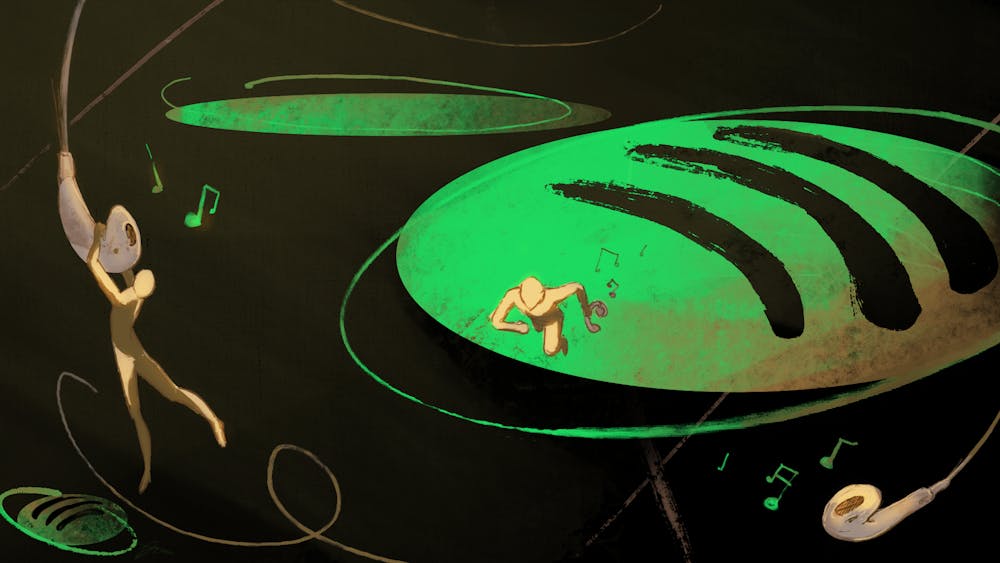
While this should have been enough to spark outrage, Spotify went a step further, working in the shadows with their Profitable Fit Content program (PFC). For the last few years, this program has been seeding popular playlists with music from “ghost artists.” These tracks, produced by a handful of anonymous songwriters under hundreds of fake artist names, dominate high–traffic playlists like Deep Focus—a study classic with over 4.5 million subscribers.
The program targets playlists that act as background music—study beats, dinner parties, jazz—in hopes that listeners will not notice the difference between authentic artists and low–quality stock music. Spotify strikes cheap deals with ghost labels that churn out stock material typically heard in ads and TV programs, filling popular playlists with faceless, mass–produced audio fillers.
The result? Real artists are bumped off playlist slots, lose exposure, and get undercut by corporate filler. Music journalist David Turner has shown how Spotify’s Ambient Chill playlist (which has since been deleted) was almost entirely stripped of well–known artists like Brian Eno, Bibio, and Jon Hopkins and instead replaced by anonymous stock tracks. As author of The Ghosts in the Machine Liz Pelly says, PFC “puts forth an image of a future in which—as streaming services push music further into the background, and normalize anonymous, low–cost playlist filler—the relationship between listener and artist might be severed completely.”
“It feels pretty weird,” one of the ghost–artists told Liz Pelly. “My name is not on it. There’s no credit. There’s not a label on it. It’s really like there’s nothing—no composer information. There’s a layer of smoke screen. They’re not trying to have it be traceable.”
The end product is a listening experience where music becomes faceless and transactional, severing the relationship between artists and audiences. When the artist is erased, is the result even music, or just sound masquerading as art? Music isn’t background noise: it’s human expression, which is messy and emotional and acts as a language that transcends words. When we lose that sense of who the artist is, though, we lose the soul of sonic creation and are left with a mass–manufactured product.
Eric Drott, professor in music theory at the University of Texas at Austin, believes that musical boycotts like this one mark a turning point in the industry. With artist payouts shrinking, reliance on opaque algorithms growing, and Spotify’s CEO using the revenue he takes from artists to help build weapons for war, the breaking point for artists may already be here.
While the artist may be rightfully fed–up, how does the listener feel? Are we alright with the craft of this industry being lost to factory–produced sounds if they sound similar enough to our simple ear? Do we care enough to make a change? Most of us like to think we do, but as long as our “Discover Weekly” keeps delivering on–point recommendations, we are happy to look away from what is happening behind the scenes. The genius behind Spotify’s program is how invisible it makes its own manipulation of the listener.
For now, the revolt is still small, but the meaning of its message is loud—it’s a wake up call to listeners that Spotify isn’t just changing the music industry but erasing the artist altogether. The question is no longer whether Spotify mistreats artists; it is whether we, as listeners, are willing to admit that our own listening habits sustain the system that harms the artists we love.