When will Jordan Peele run out of those distinct one–to–two–word film titles? Nobody knows, but one thing’s for sure: his previous listings (Nope, Get Out, and Us) are hard to forget, and their successes indicate that he isn’t slowing down anytime soon. These films are all widely considered to be era–defining works in the history of Black filmmaking, so there's really no reason to expect a bad film from Peele at present. Hopes were high and held strong when the latest installment in his repertoire, Him, was announced. Except—it wasn’t his film. And the reception of it made clear that people realized that all too late.
While the film received modest support from audiences, criticisms of the film were far more widespread. What a lot of these critiques come down to, though, is a fundamental misunderstanding of what this film is actually supposed to be. Jordan Peele is a master at navigating the horrorscape and integrating Afro–centric narratives within it. But again, it must be said that this is not a Peele film. So whose film is it, exactly?
Directed by Justin Tipping, the highly–anticipated Him shocked audiences when an initial Rotten Tomatoes score of a mere 30% hit the internet days before the film’s public release. Audiences’ fears were only confirmed when a mass of videos featuring various content creators lambasting the film were released soon after. Since the film’s initial theatre run, audience opinions on it have been heavily split, with some praising the film’s inspired and niche storytelling conventions and others agreeing with the already–circulating criticisms.
The criticisms are not without merit, especially after a first–time watch, but perhaps they’re not completely warranted. After all, it was Tipping’s job to make a good film—and make no mistake, it is good. But the job of managing audience expectations falls to those heading the film's marketing campaign, who oversee not only its trailers and press tours, but also its social media advertising, an avenue of increasing importance in the digital age. There is a case to be made that the film’s split reception was a product of a misleading marketing campaign.
The campaign itself was actually wildly successful in generating buzz. The trailers showcased a variety of aesthetics and themes, emphasizing religious iconography and traces of the supernatural. But like the rest of the campaign, the trailers failed to capture what the film was actually about. Instead, it chose to emphasize topics that the film barely touched.
The film follows a practice significant to the Black populace—in this instance, football—and attempts to provide a soft pedagogical undertone to the story of Cameron ‘Cam’ Cade (Tyriq Withers)’s week–long tryout with his childhood hero and current mentor Isaiah White (Marlon Wayans). The contrast of the training compound's brutalist architecture and the barren wastelands of San Antonio outside sets an appropriate tone for the trials and tribulations Cade endures. With the film coming in at a tight 96 minutes, many critiques of Him draw attention to its short runtime and unexpectedly conservative thematic undertones.
The film certainly makes an effort to connect with audiences on a subliminal level; Isaiah’s compound is littered with suggestive imagery, and Whithers’ portrayal of Cam feeds into a familiar feeling of dependence for Black student athletes. Critics mention its weak contextualization, lack of subtlety, and missing ‘fear factor’—fair, given that it is, after all, a horror film. Content creators have said much of the same, noting the film's overreliance on visual effects throughout and calling special attention to its unique, but disappointing use of x–ray effects à la Mortal Kombat.
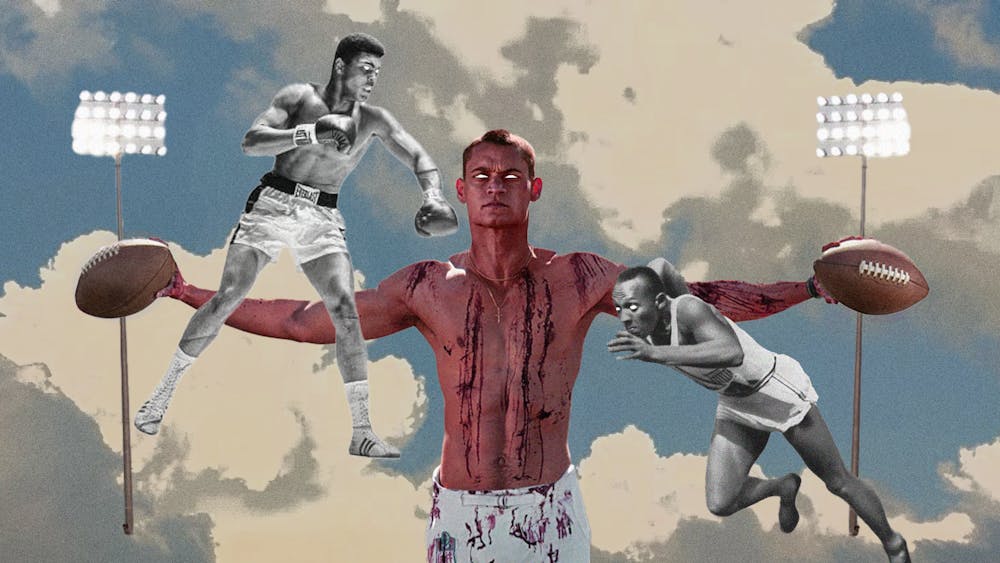
“Greatness demands sacrifice.” These words are the engine behind the film’s marketing campaign, driving much of the conversation in the lead up to its release. For a football film, one could imagine this phrase being substantiated through extended training clips, a glimpse into the college season, or perhaps even some of Cam’s professional campaign. Sadly, the actual football amounts to very little and contributes just as much to the plot. It would seem that rather than making a football film, Justin Tipping has made a film about a football player. It’s a choice weakened by the fact that the other parts of the film, such as its supernatural elements, are not strong enough to substitute for the football that audiences expected.
A second point of contention was the overemphasis on Jordan Peele’s involvement in the film's marketing. Marvel's Thunderbolts* is a quintessential example of a film that used big name associations sparingly, with the sum total of mentions being a single trailer with quick references to each prior project. In contrast, every bit of advertising for Him—posters and video ads included—has Peele’s name listed first (“From producer Jordan Peele”). Tipping’s name is usually the third or fourth listed, a highly unusual snub for the director of a major studio film. The campaign’s aggressive use of Peele’s name to generate buzz worked, but ultimately backfired, as some of the first warnings from early filmgoers were reminders that Peele was the executive producer, not the director.
But some blame must go to Tipping—this is, after all, his film. For starters, Him’s ‘horror’ genre tag isn’t an accurate description. The supernatural elements, like the influence of ‘the devil’ and the Saviors’ overreaching influence on Cam’s life, were largely surface–level and undeveloped, and the horror categorization misaligned people’s expectations of this film, especially given its proximity to Peele. If anything, the film could really be described as ‘uncanny,’ as it does well reflecting the less ‘human’ and more cult–ish aspects of fan and sports culture.
With all the noise, it’s difficult to remember that the film isn’t actually as bad as people think. Despite its shortcomings, this film has a lot to say, and provides meaningful commentary about the Black body in sports. Films like Coach Carter and The Blind Side speak to difficulties on the road to athletic success for marginalized groups within America, and Him continues a filmic dialogue in its depiction of the struggle to maintain that success.
In spite of Him’s box office flop, its redeemable 57% Popcorn meter rating shows a large difference in opinion between industry critics and general audiences. When looking past expectations, what viewers find is something inventive and conceptually dense, detailing the pursuit of excellence and all the good and bad that comes along with it. The plot highlights many key issues in the sports world—colorism and racism, parasociality between fans and players, and the undue sacrifices expected of those who try to reach the pinnacle of their practice. Although the film’s execution left much to be desired, it also shows the promise of new directors like Tipping—as long as they’re not afraid to advertise their films as their own.