
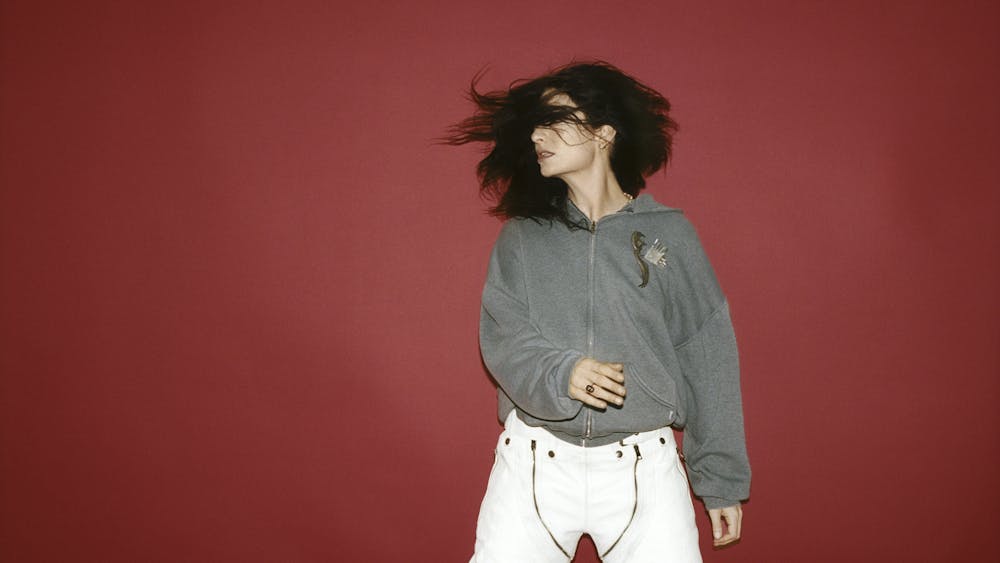
While walking down Locust Walk last week, I came to a blood–chilling realization that stopped me in my tracks: there were several people wearing the exact same outfit as me. It’s truly the worst nightmare of someone who prides herself on her niche, Pinterest board–curated fashion repertoire, but I only had myself to blame. Like a significant number of Penn students, I found myself at the Xfinity Mobile Arena on Sept. 30 and fell victim to the allure of an overpriced polyester t–shirt I would only later realize was not as cool as I believed—but isn’t that the definition of being a Lorde fan? Cultivated, audience–tested, and thoroughly–vetted nicheness is the manufactured rebellion we as a society revere.
Lorde is by definition a popstar. Singing to crowds of thousands in sold out stadiums and sporting millions of Spotify monthly streams, she is thoroughly integrated within commercial popular culture. She is frequently captured sitting front row at Paris Fashion Week next to a whole host of characters in the ephemeral cultural zeitgeist or ducking cameras at the Met Gala afterparty in a tailored suit that headlines Vogue the next morning. Despite this, she’s not “caught up in your love affair.” Lorde is different—or at least she tries to be. Lorde and her team have always strived to create an anti–mainstream persona for her, from her debut song “Royals” to concerts where her behavior can be described as … odd (you know what video I’m talking about). Lorde defines her brand in opposition to the very popular culture she seems to embody. Unlike other major celebrities who attempt this strategy (we have seen one too many anti–fame marketing strategies fall flat on their face), Lorde manages to navigate this contradiction with surprising success. The difference is her all–encompassing commitment to this image. Lorde has turned the label “alternative” into a vertically monopolistic fashion with a punch, distinguishing herself from her tepid peers. Her irony just makes her more appealing to her elite listeners—she’s proof you can be a millionaire misfit. Her popularity stems not from her leading role as pop culture’s slightly quirky fixation, but her defiance of it—listeners don’t turn to Lorde to keep pace with trends, but to set themselves apart from (and above) them.
Lorde—really Ella Marija Lani Yelich–O’Connor—hails from a conventional family of five in Auckland, New Zealand, but she didn’t have an upbringing typical of many popstars plucked from suburbia. Signed by Universal Music Group at just age 12, O’Connor was thrust into the spotlight early—and she thrived. From the very beginning, O’Connor knew she wasn’t your average popstar; adopting the mononym “Lorde,” she sought to differentiate herself from the masses, stating that she “didn't feel [her] birth name was anything special” and that “‘Lorde’ had this grandeur to it.” The grandeur of a noble title—although hers comes with an extra “e,” just to make sure you notice. In 2012 Lorde released her first single “Royals” on SoundCloud, which catapulted her to pop–stardom. At just 16, Lorde became the second–ever solo female artist to top the Billboard Alternative Songs chart, the youngest person to win a Grammy for Song of the Year, and was lauded as the new pioneer of the music industry with her album Pure Heroine—but don’t worry, you’re doing great too.
Lorde’s “pioneer” appeal stems from her use of lyrical flow to counter dominant popular culture—the same culture that also lifts her to stardom. On Pure Heroine and “Royals,” Lorde takes on the glitzy, often gaudy, allure of the music industry. She comments that every song has become a laundry list detailing the artist's extravagant lifestyle—one of “gold teeth, Grey Goose, tripping in the bathroom.” She “doesn’t care,” and “craves a different kind of buzz,” simultaneously attacking the frivolity of the music industry and flaunting the joy that comes from detaching oneself from it. Lorde appeals to the youth who lived in towns “unworthy of postcard status,” apathetic to a lifestyle which heralded the newest “thousand–dollar shoe” as the pinnacle of happiness. The contradiction inherent in someone who will “never be royal” yet crowns herself the “queen bee” of this anti–mainstream group epitomizes Lorde’s approach to being alternative—she creates a cult around anti–cultism. Later on the album in her song “Team,” Lorde details how “everyone is competing for a love they won’t receive,” highlighting the obsessive quest for approval and fame prevalent throughout the music industry. But she’s different—she lives in a “city you’ll never see on screens.” Lorde is on your “team”—but she still gets to go to the Grammys.
Four years after her first album and characteristic post–release hiatus (essential to the anti–fame brand), Lorde released Melodrama. Rather than sporting a heavy lyrical focus on counterculture, the album signals its subversive nature through dejected tones that differentiate it from the bubblegum pop that dominated the 2010s. Powerful synths build to an overwhelming cataclysm that perfectly encapsulates the feeling of sitting on a curb outside a party, 18 and heartbroken. Piano ballads featuring Lorde’s layered vocals feel like a window into her soul. Melodrama creates an emotionally raw experience in the listener, paving the way for the “sad–dance pop” genre. Touching on topics typical in the music industry—namely the end of her long–term relationship with photographer James Lowe—Melodrama’s unique vulnerability stands out in a pop world that focuses on the euphoric feeling of youth. The album isn’t about the party, it's about the hours after.
Following another four–year disappearance (I told you, it's essential to the brand), Lorde’s third album Solar Power took on West Coast influencer wellness culture. On “Mood Ring,” she laments the capitalist corruption of Eastern earth–based practices that have been co–opted and colonized by the L.A. wellness–industrial complex. On “California,” she distances herself from the fame she gained early in her career, stating that she doesn’t “want that California love.” On “Dominoes,” yoga–going pot smokers become the butt of the joke. But there is a dissonance between the album's countercultural lyrics and its broader messaging. In attempting to revive '70s counterculture, Lorde shifts her musical tone away from the synths that dominated her early career to a Joni Mitchell guitar sound and a message that regurgitates Laurel Canyon California love. When discussing the record with Billboard, Lorde described it as “a sun–worship album,” stating that her “experiences in nature in the last couple years were as close to what [she’s] experienced as religion.” But trust her, it's a problem when white influencers appropriate other cultures to achieve a faux enlightenment.
In her fourth studio album, (yes, another four years later) Lorde returns down from the clouds with a visceral, corporeal sound. Virgin explores gender identity, body politics, and fame. The album cover—an x–ray of her pelvis showcasing her IUD and jeans zipper—initiates this deeply honest exploration. In “Current Affairs,” she critiques our society's parasocial relationship with media figures, wishing that we could ignore “voices through the open door.” By using an open door as a metaphor for the public’s unprecedented access to celebrity lives, Lorde comments on the effects of public narratives and mass obsession with media figures. If you think you’ve heard that line before, you’re spot on. From Lana Del Rey to Taylor Swift, popstars of all stripes have regurgitated the anti–fame rhetoric that “Current Affairs” is predicated upon. This fame averse brand is not new—but Lorde manages to avoid triteness with an agility that sets her apart from the industry.
In the grand tradition of irony, Lorde has built a career out of critiquing the very culture she embodies with remarkable success. Unlike her celebrity peers—whose half–hearted anti–fame rhetoric rarely exceeds a moody lyric, well–placed interview soundbite, or teary five second clip in a documentary—Lorde integrates this aversion to dominant culture throughout her entire brand. She doesn’t just reject mainstream culture, she packages that rejection, stamps it on a t–shirt, and sells it in limited edition colorways. From meticulously crafted lyrics that scream subversion on Spotify and YouTube to artfully undone outfits that signal “I don’t care” at couture prices, Lorde has perfected the performance of rebellion—and monetized it, as well. Listeners don’t queue “If She Could See Me Now” to stay current. They do it to prove they're different. Lorde has built an empire on the fantasy of nonconformism, and her listeners are happy to pay for membership in the club of tasteful outsiders. When I strut down Locust wearing my sky blue concert shirt, I project to the world that I, as a Lorde listener, am distinctly tapped into a niche aspect of music culture—alongside the five others I'm matching with.




