
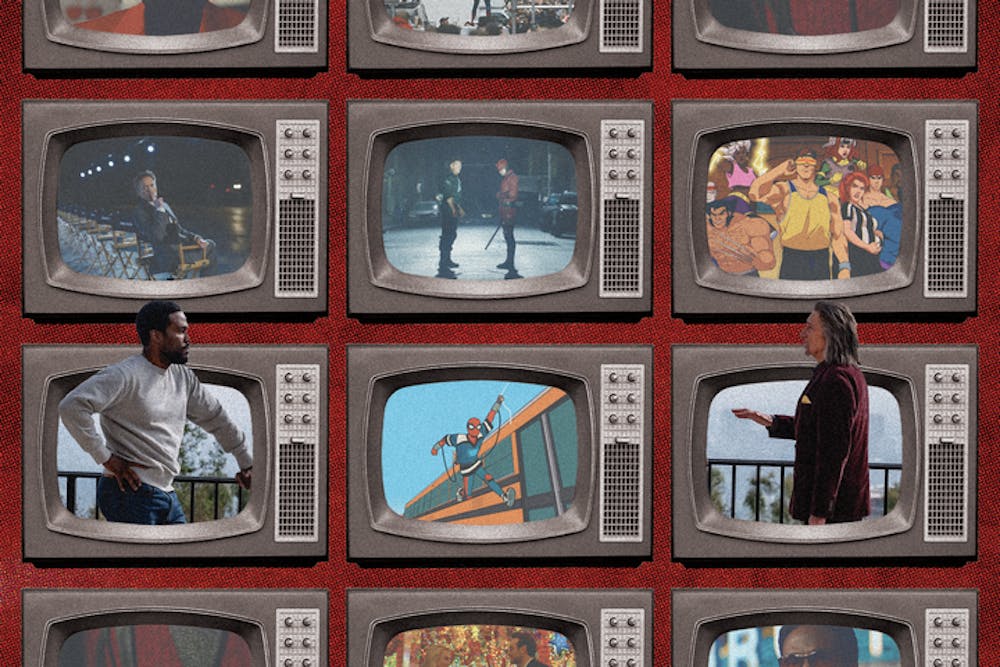
Marvel’s upcoming slate reads like both a comeback attempt and a confession. After a stretch of uneven projects and shrinking box office returns, the studio’s 2026 lineup looks like an effort to prove it still knows how to build anticipation. But whether these titles function as a genuine reset or a carefully arranged apology will depend on how much of their ambition translates into coherence.
If nothing else, the schedule is crowded. Spider–Man: Brand New Day hits theaters in July, Avengers: Doomsday follows in December, and between them, Marvel will fill Disney+ with half a dozen shows, new and old. Some are safe bets: X–Men ’97 and Daredevil: Born Again already have loyal audiences. Others, like Wonder Man and VisionQuest, feel riskier—they're experiments in tone and genre that could either refresh the Marvel brand or vanish into the noise.
For a studio once defined by its precision, that variety feels both promising and unstable. Brand New Day seems to mark a deliberate retreat from the multiverse extravaganza that’s become Marvel’s bread and butter. Tom Holland has publicly said that the team wants to return “to old–school filmmaking,” using real locations instead of soundstages. Early set photos emerging from Glasgow show city blocks, streets, tanks, and physical environments—not just extended green screens. The film’s title is a nod to the 2008 Brand New Day comic arc, in which Peter Parker resets his life after loss and chaos. It's a narrative about guilt, identity, and smaller, personal stakes in a world fixated on big ones. If Marvel leans into that premise rather than forcing more convergence, this could be an MCU film that values emotion over spectacle.
And the cast is as loaded as it is risky. Mark Ruffalo returns as Hulk, Jon Bernthal joins as Punisher, and rumors swirl of Florence Pugh reprising Yelena Belova. Sadie Sink and Tramell Tillman will both appear in undisclosed roles. On the (known) villains’ side, Michael Mando is back as Scorpion (from his brief appearance in Spider–Man: Homecoming), and Marvin Jones III is confirmed as Tombstone, a character he previously voiced in Spider–Man: Into the Spider–Verse. Fans are excited to see so many corners of the Marvel universe coalescing, but there’s anxiety too: will all this diffusion distract from a simple, focused Spider–Man story? Part of what made the earlier trilogy work was how closely it stayed tied to Peter’s perspective—his neighborhood, his losses, his constant struggle to balance the two halves of his life. Expanding the canvas risks losing that intimacy. The presence of Hulk—or even Punisher—carries weight, especially given how Iron Man’s shadow loomed over earlier films, turning Spidey into “Iron Boy Jr.” in many eyes.
The scale of Avengers: Doomsday is even more dizzying. Already confirmed are appearances from the Avengers themselves and legacy MCU icons—Thor, Black Panther, Loki, Captain America, and many more—but they won’t sail this ship alone. The Fantastic Four enter the fold: Pedro Pascal as Reed Richards, Vanessa Kirby as Sue Storm, Joseph Quinn as Johnny Storm, and Ebon Moss–Bachrach as Ben Grimm. Thunderbolts* characters Yelena Belova (Florence Pugh), Bucky Barnes/Winter Soldier (Sebastian Stan), John Walker/US Agent (Wyatt Russell), Bob/Sentry (Lewis Pullman), and more are also set to make appearances. The 20th Century Fox X–Men legacy actors return too—Patrick Stewart, Ian McKellen, James Marsden, and Kelsey Grammer, among others. Even Channing Tatum returns as Gambit after his fan–favorite appearance in Deadpool & Wolverine, a redemption for the Gambit solo movie that never happened. His comeback, paired with rumors of Ryan Reynolds and Hugh Jackman joining the fold, has only fueled speculation that Doomsday will serve as a multiversal collision of every Marvel era. Fans are thrilled to see so many corners of the Marvel mythos coalescing, but that excitement comes with unease—the bigger the cast, the greater the risk of losing focus on any single story.
Those concerns aren’t imaginary. Alan Cumming, reprising Nightcrawler for the first time since 2003’s X2: X–Men United, admitted he “did the entire film in isolation”—lots of green screens, face replacement, and fake character names. Cumming even said he often didn’t know who he was acting with. Meanwhile, Rebecca Romijn, returning as Mystique, confessed that filming proceeded while the script wasn’t even finished. Add to that a villain with little buildup—Doctor Doom stepping into Thanos’s shoes without the same groundwork—and Doomsday begins to look as much like a logistical experiment as it does a story. The film might serve as the kind of operatic culmination Marvel needs, but if it falters, it won’t be from lack of talent—it’ll be from excess.
Meanwhile, television keeps expanding the edges of the Marvel universe. Your Friendly Neighborhood Spider–Man returns next fall, teasing the symbiote arc. Its first season surprised many, myself included, with its ability to pivot away from strict MCU canon and tell a self–contained, character–driven story with a fresh take on an old pop culture icon. X–Men ’97 brings back the original X–Men: The Animated Series series’ creators, promising the same mix of nostalgia and serialized chaos that made the revival a surprise hit. Daredevil: Born Again returns in March with familiar cast members Charlie Cox and Vincent D’Onofrio, now joined by Marvel/Netflix alum Krysten Ritter reprising her role as Jessica Jones. Season 2 promises to maintain a darker, street–level arc that intersects with Brand New Day. Behind the scenes, Season 1 was radically reworked: original showrunners Matt Corman and Chris Ord were replaced, and new showrunner Dario Scardapane, alongside directors Justin Benson & Aaron Moorhead, reshot/reframed material for Episodes 1, 8, and 9—and the show was better for it. Luckily for fans, the new creative team will be the ones spearheading the future of the show. And VisionQuest—Paul Bettany’s first lead role since WandaVision—sounds more like a philosophical experiment than a superhero show. Bettany describes it as a story about “intergenerational trauma … fathers and sons and denial of pain and denial of your own truth and coming to terms with who and what you are.”
That blend of introspection and bombast has always defined Marvel at its best—the challenge now is maintaining focus. The early years of the MCU worked because every project felt like a step toward something larger. The multiverse era fractured that momentum; stories expanded sideways instead of forward. This coming year offers a chance to narrow the scope again.
Still, Marvel fatigue lingers as a threat. The studio’s visual style remains predictable, and its reliance on serialized plotting often drains tension from individual stories. A show like Wonder Man, starring Yahya Abdul–Mateen II as an actor navigating Hollywood’s obsession with superheroes, sounds refreshing precisely because it acknowledges the absurdity of Marvel’s own machine. So does VisionQuest, with its lineup of sentient AIs and returning villains. The most interesting projects here are the ones that seem least concerned with selling the next crossover.
Whether Marvel's 2026 becomes a turning point or sticks to the studio's formula will depend less on spectacle than conviction. Audiences have learned to spot obligations—movies that only exist because a calendar demands them to. What they miss is passion, the sense that a film was made because someone needed to tell that story. If Brand New Day delivers intimacy and Doomsday delivers clarity, Marvel might find its footing again. If not, it’ll prove what many already suspect: that even the most powerful universe can lose its gravity when it forgets why it started expanding in the first place.