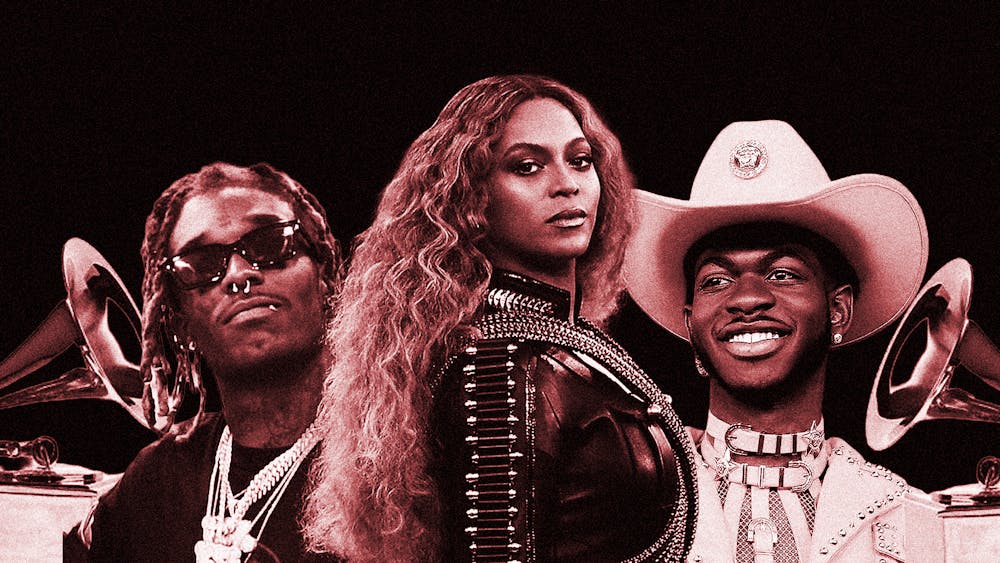
It’s been quite a tumultuous time for country music. It seems that, in the past few years, the genre has been pushed into a moment of reckoning. While artists like Beyoncé and Shaboozey continue to spotlight the genre’s Black roots, the industry has met this increased culture awareness with an odd mix of defiance and disruption. Earlier this year, breakout country star Shaboozey stood on the AMA’s stage as a presenter while a whitewashed history of our country was espoused on stage. In 2024, Beyoncé received no nominations for the Country Music Awards, despite her unapologetically country record COWBOY CARTER being one of the most successful albums of that year. The explanation? That her album somehow lacked “authenticity” because of its less traditional sound, and that Beyoncé simply was not a real country artist, despite having produced music in the genre. Country artist Luke Bryan even justified the CMA’s choice not to nominate Beyonce for any awards by stating, “if you’re gonna make country albums, come into our world and be country with us a little bit.”
Even though Beyoncé was shunned for not having a country background and leaning into a more experimental country sound, artists like Post Malone, who made a similar transition to the genre from rap, and Morgan Wallen, who creates country–trap songs, have been welcomed into the country community with open arms.
With so much controversy surrounding the recognition of Black artists in the country genre, you’d hope we could count on the Recording Academy to do right by them … right? Because they’ve always historically done right by Black artists … right? In light of the controversy surrounding whether COWBOY CARTER was “real” country music or not, the Academy decided to break up the Best Country Album category into Best Contemporary and Best Traditional Country Album, effective next year. The Academy claims they are simply “creating space for where this genre is going.” But the timing of this split, amidst ongoing conversations that downplay Black impact within the country genre, makes this move yet another way for the Academy to discredit Black talent through pigeonholing artists—and that's something they are no stranger to doing.
The division of the Best Country Album category leaves a lot of room for interpretation. What exactly are the criteria for a contemporary or traditional country album? Additionally, how will the Traditional Country category be differentiated from Best Americana (or other American Roots) categories? This ambiguity can be used to relegate Black country artists into the contemporary label. Many artists—including Shaboozey, Beyonce, and even Lil Nas X at one point—draw on R&B and hip–hop influences, even though country music’s roots already include a blend of blues, gospel, and folk. Labeling their work as “contemporary” overlooks how blending genres has always been central to country’s heritage. After the controversy surrounding Beyoncé’s Best Country Album win last year, it feels like the Academy is just moving the goal posts.
It all feels uncomfortably reminiscent of the Best Urban Contemporary Album category, which was retired in 2020. According to Tyler, The Creator, the award was a lame excuse to divert any good album made by a Black person from a major category. Shortly after his first–ever Grammy win, he told Rolling Stone, “It sucks that whenever we—and I mean guys that look like me—do anything that’s genre–bending … they always put it in a rap or urban category.” His 2019 release IGOR, for which he won Best Rap Album, is arguably the furthest thing from a traditional rap record in his entire catalog.
Tyler points out a very clear trend the Academy has kept up over the past few years—steering exceptional, often commercially successful, bodies of work by Black artists into R&B and hip–hop categories. Because these genres are dominated by Black musicians, the pattern subtly suggests that while Black artists can excel in certain spaces, they cannot be the best across genres. Some recent examples are “Saturn” by SZA last year, and Lil Uzi Vert in 2024 with “Just Wanna Rock.” SZA took home Best R&B Song at the 2025 Grammy Awards, but was omitted from major categories. Despite the inescapable cultural presence of “Just Wanna Rock,” the tune was nominated only for Best Rap Song—it could have competed for Song of the Year. The bifurcation of the Best Country Album category immediately after Beyoncé’s historic win contributes to this notion that Black artists must have their own segregated, “separate but equal” award, rather than standing in genuine competition for major categories.
This lack of integration is a problem, but the Grammys also has a poor track record with recognizing Black talent in the first place. The Weeknd famously boycotted the Grammys after failing to receive a nomination in 2021 for “Blinding Lights,” despite it being the most–streamed song of all time on Spotify. Frank Ocean and Kanye West have expressed concerns in the past over the Grammys’ lack of representation, with both also boycotting the award show. If Black artists aren’t being snubbed by the Academy, then they’re being steered into lanes that shut them out of major categories.
It feels like for every step forward that the Academy takes towards inclusivity, it takes three steps back. Only last year have we seen real change—the Grammys successfully recognized the Black artists who deserved their flowers. Beyonce became the first Black woman (and second Black person) to win Best Country Album. Kendrick Lamar won major award categories with his album Not Like Us, and in a surprise twist, the Academy finally gave a formal apology to the Weeknd for snubbing him in 2021. In 2025, he made a triumphant return to the Grammys stage.
There was obviously some effort put in this year too, with SZA and Kendrick Lamar being nominated for “luther” (Record of the Year) and “30 For 30” (Best Pop Duo/Group Performance). “Anxiety” by Doechii was nominated for Record and Song of the Year, while MUTT by Leon Thomas vies for Album of the Year, alongside Bad Bunny’s DeBÍ TiRAR MáS FOToS. It’s notable that DTMF was nominated despite being a non–English album, a rare occurrence for the category. FKA Twigs’ EUSEXUA and PinkPantheress’ Fancy That are both nominated for Best Dance/Electronic Album to boot.
However, there is a still a lot of work to do. It’s time that the Grammys embrace more Black artists as major category contenders rather than just niche subsection winners. This doesn’t mean getting rid of Black–dominated categories altogether. But as Black R&B and hip–hop acts become more and more mainstream, the major award category nominations should match that trend. Anyone can create the all–around best country, pop, or R&B album.