“Oh to be a high schooler from 2015–2019.”
Last September, creator Spencer Hunt discovered a TikTok with the above caption. Despite its nostalgic undertone, the reel’s Pinterest–esque moodboard pictured moments from a fairly recent, almost painfully relatable era: bathroom mirror selfies, Friday Night Lights pictures, and the hottest dance challenge. Upon watching the video, shock and disbelief overcame me. Had today’s teenagers unironically historicized my childhood? Had I officially reached “unc” status? Likewise, Hunt was appalled. “Stop aging us like we’re some relics from the Tumblr archives,” he demanded. “What’s next, are you going to start calling Kylie Jenner’s lip kit ‘vintage?’”
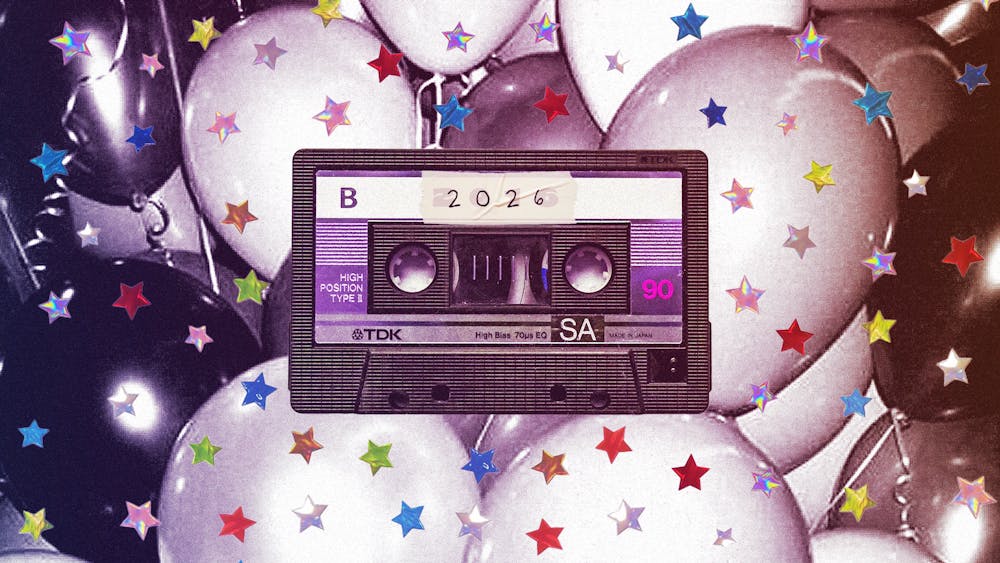
Yet, on January 26, Jenner herself did just that. Within a casual dump of photos from a decade ago, the socialite included pictures of every Kylie lipstick shade—paying homage to the brand’s launch in 2015. “you just had to be there,” her post read, evoking grief for the year’s bygone aesthetics. The same week, Hailey Bieber flocked to the Snapchat archives, revisiting the oversaturated selfie; others such as Billie Eilish posted the ultimate emo monochromatic edit. Less than one month into the new year, its first internet–breaking trend had already unfolded: 2026 had officially become the new 2016.
2016’s comeback represents the youth culture’s growing obsession with reminiscence. Arguably, the last wave of nostalgia this severe came from millennials. Historically, this generation’s childhood was during a period of relative prosperity: “[Their] upbringing was relentlessly positive, with the strong economy, the computer revolution, and Cold War’s End,” says social psychologist Jean Twenge, in her book Generations … What They Mean for America’s Future. Years later, the 2007–09 recession weakened the those prospects. Entering adulthood during intense social instability, individuals revitalized memories of ’90s adolescence, reconstructing the ’90s as one of “simpler times.”
Fervor for the Y2K lifestyle has also affected Gen Z. Similar to millennials, this generation’s idols view the same era through a rose–colored lens: “If I had loved you in the ’90s / Back when life wasn’t a blur,” Tate McRae sings in “wish i loved you in the 90s.” For the digitally native Gen Z, however, this nostalgia plays a slightly different role, one of escape from tech saturation. Through AI–generated videos, creators like Jack Jerry have romanticized the smartphone’s analog predecessors—creating highlight reels of video store visits and mixtape creation sessions. With social connectivity weakening among young adults, such content allows for living vicariously.
However, 2016’s revival extends beyond the generational cycle of nostalgia as seen in ’90s romanticization. It reflects something deeper about the past decade: Content creation has declined in intellectual and innovative value.
Forbes’ Dani Di Placido says 2016 constituted a “golden age of memes.” Primarily, users uploaded fails videos: Vine compilations showed people faceplanting on cement. Others created GIFs through using symbols from films—for example, the Evil Kermit meme, showing internal battles between pettiness and maturity, features a character from Muppets Most Wanted (2014).
However, the popularization of brain rot transformed meme culture into a contest of degeneracy. Last October, for instance, groups of middle schoolers launched “6–7”: Solely from lacking concrete meaning, the gesture went viral—even receiving recognition as Dictionary.com’s 2025 Word of the Year.
Since 2016, authenticity within content has likewise diminished. “In our current age, we’re thinking a lot about algorithms, and not engaging with our actual communities and friends. We’re just getting fed advertisements and influencers, so it feels less [genuine],” says Lucy March, a postdoctoral fellow at the Annenberg Center on Digital Culture and Society. Contrasting 2016’s flower crown selfies, today’s highly–edited posts have normalized fabrication—a process further exacerbated through echo chambers on social media feeds.
Most significantly, 2016 constitutes a threshold of artificial intelligence’s clasp on content production. From this year onwards, the “Dead Internet Theory” gained traction: Proponents have theorized “the internet becoming just being bots talking to each other,” March explains. 80% of creators use AI as part of their work, typically for visual and audio design when drafting posts. Simultaneously, deepfake accounts have accelerated the circulation and believability of misinformation—such as political campaign endorsements. When you can no longer tell what’s real and what’s fake, 2016 suddenly feels like a stronger period for intellectual engagement within online sources.
Truly, 2016 offered a unique landscape for coming of age. For today’s young adults, it makes content creation feel enjoyable and inspiring. As 2016 grows more distant chronologically, its fads and quirks must remain memorable. Although we cannot be kids again, unicorn frappuccinos, Adidas Superstars, and the mannequin challenge offer a spirit helping us understand the value of entertainment.