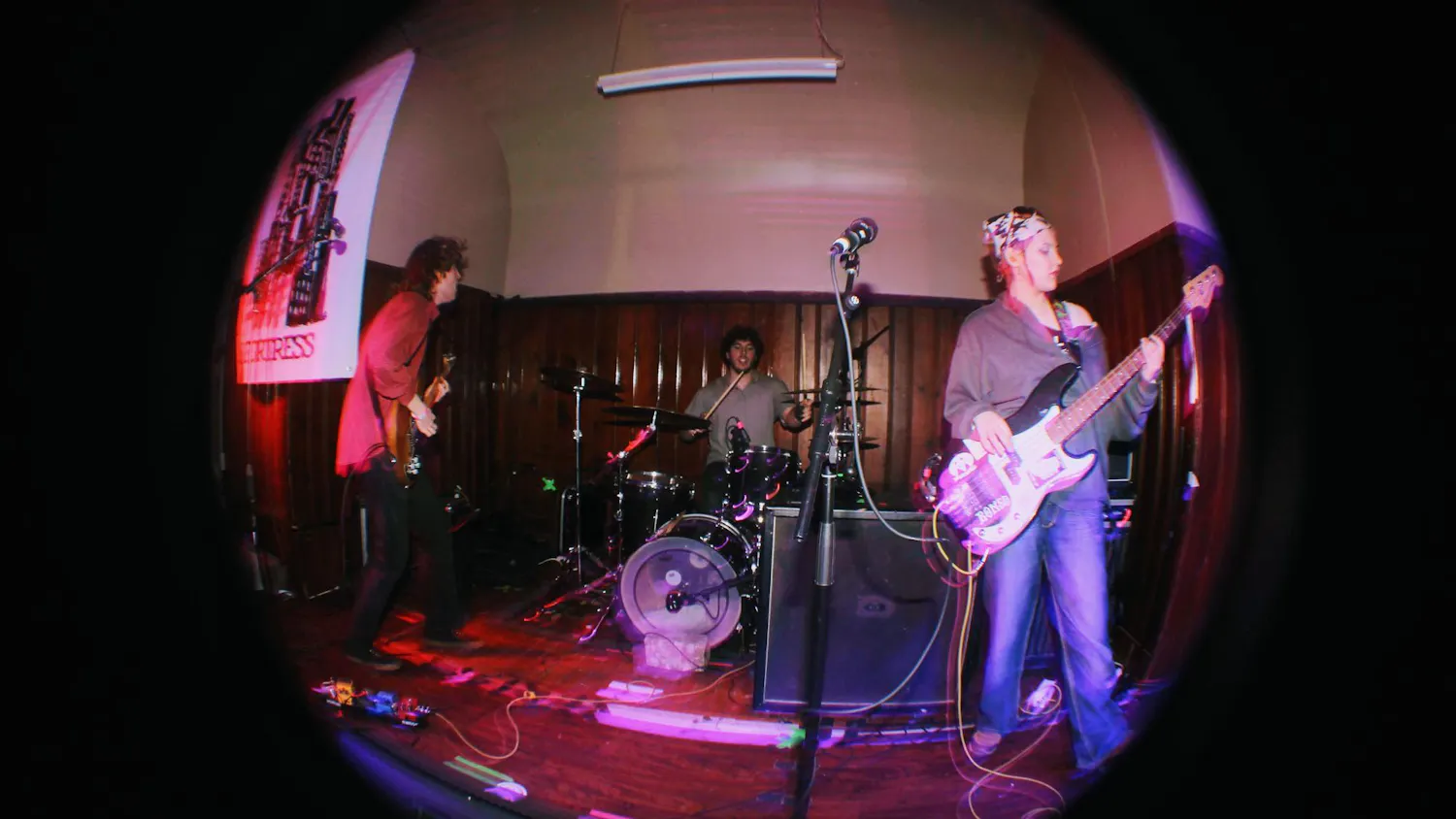
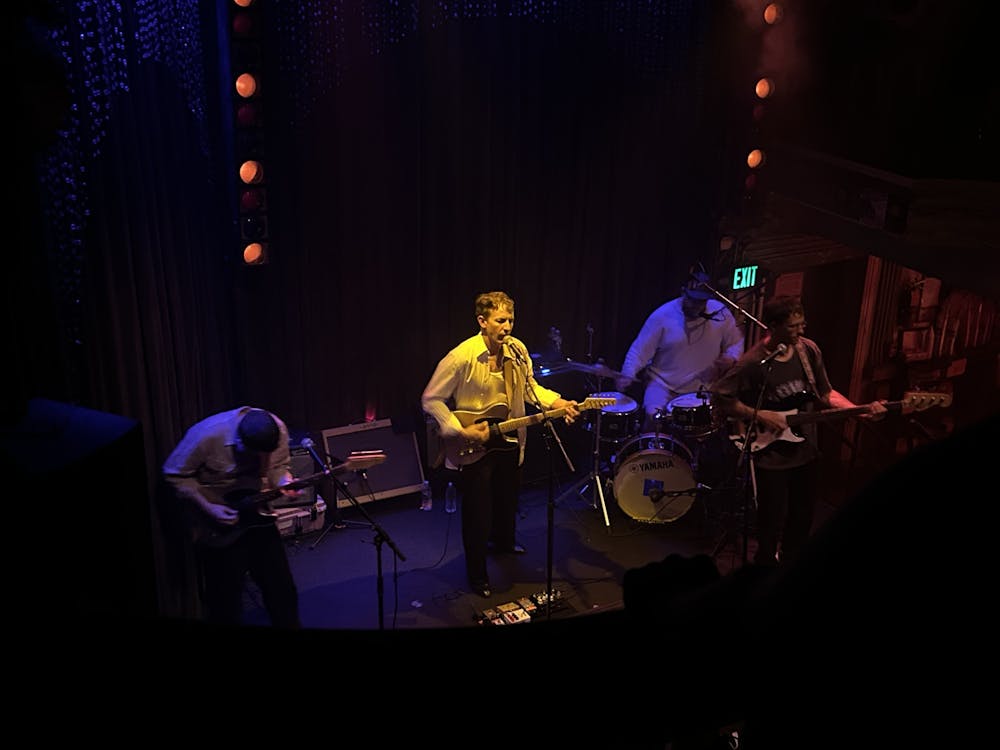
Johnny Brenda’s is, in the shortest possible description, a bar with a disco ball. In the haze, it has never seemed particularly interested in disguising itself as anything grander than that. The room is compact—stubbornly so—and by the time drapes of purple light hang over the stage every unclaimed stretch of wall has become somewhere to lean on; every high–top table is an island of elbows and glasses. The evening begins in an unusual fashion: Buck Meek is already onstage.
Before his appearance as headliner, he spends the opening set alongside the young Los Angeles soundpipe that is Kisser. The band features a quartet of indie experimentalists, and, funnily enough, includes Meek himself in their troop. Best known as the long–time guitarist and co–founder of Big Thief, he’s spent the last decade building an equally steady solo catalog. If anything, the night’s transition feels only more natural this way, almost reinforcing some curious fact that Meek has become a collector of bands, some vessel for the crooked, indie–country–folk–pop presence of the last decade.
Kisser’s music inhabits familiar territory. Their lead vocalist, Germaine Dunes, sings with a voice whose weathered, semi–shrill cadence inevitably recalls Adrianne Lenker. Even the group’s twirly, elliptical sound bears a conspicuous resemblance to the folk machinery that is Big Thief—only roughed at the edges by something punkier, more abrasive. The music isn’t bad, and for a crew so new to the indie circuit—in some respect, the group released material for the first time together just months ago—the loose crooning behind layers of steely guitar and percussion works for a crowd of by–association devotees. But perhaps whether the Big Thief resemblance is an offprint, absorbed through proximity, or simply evidence of how influential that sound has become doesn’t matter. The language that Meek helped construct, over a decade in the making, speaks through other mouths.
He himself, of course, is hardly exempt from the resemblance. Every solo record arrives within earshot of Big Thief and their unmistakable musical grammar, every guitar figure and vocal quiver inviting comparison to an iconic body of work. Maybe it’s an inevitable standard; Meek has a hand in making the sound in the first place. Still, it makes his small departures all the more noticeable.
The Mirror, the musician’s latest trick, was released this February, and it’s his best solo work yet. The 11–song record is still rangy and recognizably Meek. His opening track, “Gasoline,” is a feverish love song; the song barrels forward on frantic acoustic strumming and skittering drums. What follows keeps that fuller register, slipping between the bluesy heft of “Soul Feeling,” the nervous movement of “Outta Body,” and the playful “Worms.” It’s an easy atmosphere, and one that differs from his earlier records which echo a sparser sound. Meek’s previous work felt almost austere, content to survive on little more than acoustic guitar, simple arrangements, and the tenderness of his voice. They possess a certain beauty, sure, though I’ve occasionally wished they would stop admiring their own restraint long enough to discover momentum. The Mirror, on the other hand, allows itself that density.
Meek experiments with a kind of ornamental button–pushing on this record, present in subtle modular synth and electronic flickers, lilting through the arrangement in an unobtrusive way so as not to take away from its folk–country tradition. This is a balancing act: if this record carried any less weight, there’d be no departure to speak of. If it were any more synthetic, it just wouldn’t work as well. The realism, the conservatism with which he embraces the change in tempo works as well as it can—prodding and rewiring, following the fault lines as he writes of isolation, desperation, shame, and all the other private calamities to be discovered in a country song. Yet this time, he arrives there a little more himself.
At Johnny Brenda’s, that old familiarity sits there waiting for him. The sold–out room greets Meek with the ease of an old acquaintance; his set met immediately by a crowd already fluent in his vernacular. The night moves through his latest record with ease (“Deja Vu,” “Demon”) before wandering backward through a couple of older favorites, briefly returning to the thinner, stranger sound he has spent the evening filling out. Meek does little to disturb the arrangement. By the time he’s folded Big Thief’s “Certainty” into the end of his set, the line between influence and instinct is hazy. He basks in it a little.
“I love Philly, and I love Johnny Brenda’s,” he says, “I feel like I’ve been here a million times.” In a way, I really couldn’t have said it better myself.