The Toy Story movies are the greatest films of all time.
Perhaps not the “best.” Maybe not the most profound. But certainly the greatest.
At their peak, Pixar makes films that overflow with humanity. The Toy Story series represents the studio at its absolute best. And yes, that sounds like a wildly biased opinion, but you’d be hard–pressed to find someone who has watched these movies and genuinely disliked or thought ill of them. Woody (Tom Hanks) and Buzz (Tim Allen) are, strangely enough, two of the most human protagonists ever put on screen. They’re stubborn, prideful, occasionally selfish, and constantly make mistakes. But they are also defined by their unwavering care for others and persistent desire to give meaning and purpose to the lives of the toys around them.
Which is why Woody’s farewell at the end of Toy Story 4 was the first movie moment to make me cry in a decade.
To those who argue the franchise “should have” ended after Toy Story 3, I vehemently disagree. It “could have” ended there—Andy passing his toys on to Bonnie is a perfect ending for many reasons. But so is Toy Story 4. Woody, the series’ main character, finally realizes there is a larger purpose for him beyond sitting in a closet hoping for playtime. Instead of endlessly chasing affection from a child who has largely moved on from him, he chooses to spend his life helping lost toys find the love and belonging he once cherished himself. Woody decides that giving others that happiness matters more than experiencing it himself. It is a selfless decision, and to me, the perfect fate for the character.
So when Toy Story 5 was announced, I felt something I had never really felt toward this franchise before: worry. Not because I thought the movie would be bad—Pixar has earned more trust than most studios ever will. But because one question immediately lodged itself in my brain: Can this movie justify its existence without undermining what came before?
And the answer is a resounding …
Kind of.
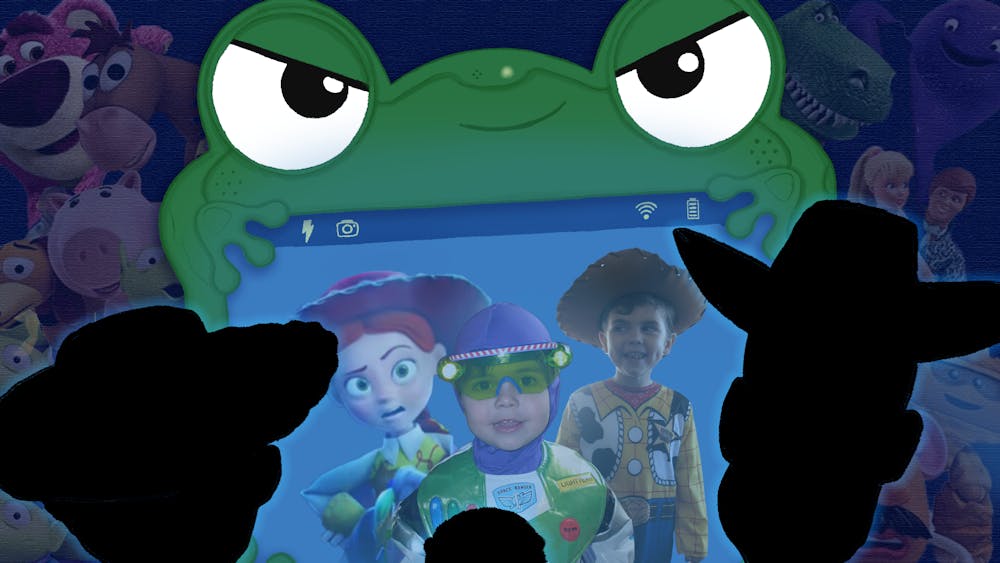
To start with the positives, Toy Story 5 is undeniably a good time. It’s funny, visually perfect, and contains a sincere, albeit not especially groundbreaking, idea about the role technology plays in a modern child’s life. To say that I walked away with a new outlook on life would be a lie, but only because I already agreed with the film’s message before I ever saw it.
If Toy Story 4 was “the Woody movie,” then Toy Story 5 is unquestionably Jessie’s (Joan Cusack). Her fears of abandonment and purpose have followed her ever since Toy Story 2, and this film finally places those anxieties at the center of the story. Pixar remains the funniest studio in animation (maybe in media overall), and while this installment never reaches the comedic highs of the franchise’s best entries, it still delivers plenty of laughs. A lot of that credit goes to newcomer Smarty Pants (Conan O'Brien), whose brand of potty humor consistently skirts the line between childish and clever.
And somehow, the series remains undefeated in one very specific, yet personally important, category: making me cry.
One reveal near the end of the second act hit me surprisingly hard. It’s a simple moment, but incredibly effective—I’m tearing up just thinking about it. Jessie’s fears about failing Bonnie collide with a discovery that demonstrates just how misplaced those fears truly are. The emotional payoff feels earned (almost 30 years in the making), and for a few minutes the movie briefly reaches the level of sincerity that made the franchise so special in the first place.
But I still found myself wanting more.
Yes, I cried. Jessie’s arc works. In fact, it may be the best thing Toy Story 5 has to offer. But that moment alone doesn’t feel substantial enough to justify creating an entirely new Toy Story movie. Nothing that follows feels especially profound, unexpected, or transformative. And that becomes especially noticeable regarding Woody’s role in the story.
Despite my concerns, Woody’s return doesn’t diminish the ending of Toy Story 4—in fact, Pixar deserves credit for avoiding that trap. The problem is that he doesn’t do much of anything—and, frankly, neither does Buzz. He doesn’t significantly alter the story, he doesn’t meaningfully challenge the other characters, and he doesn’t experience meaningful growth himself. Bo Peep (Annie Potts) even asks Woody at the end if he helped, and I thought to myself … “not really.” He largely feels present because, well, it’s a Toy Story movie—you kinda need to have Woody.
And that brings me back to the question I entered the theater with. No, Toy Story 5 does not retroactively ruin any previous films. But it also barely justifies its own existence.
That may sound harsher than I intend. Viewed in isolation, Toy Story 5 is a perfectly enjoyable family movie. I even enjoyed it more on a second watch, perhaps because my expectations had settled from their initial sky–high levels. The problem is that no one watches a fifth installment of one of the most beloved franchises ever made in a vacuum. Comparison is inevitable.
And compared to what came before, this movie lacks the spark (not to rip off Soul’s language) that the rest of the franchise possesses. Beyond the emotional highs feeling less impactful, it isn’t nearly as funny as Pixar’s previous film, Hoppers. That may be an unfair comparison considering Hoppers is (in)arguably the studio’s funniest movie, but it serves as a reminder of what Pixar is capable of. I chuckled consistently throughout Toy Story 5, but never full–on belly laughed. Sitting here now, I struggle to recall a single joke or gag that immediately demands retelling. That has never been true of the earlier Toy Story films.
What separates this film from the four before it is that every previous Toy Story fundamentally changed the lives of its characters. Woody and Buzz never ended a movie in the same emotional (and sometimes physical) place they began it. The franchise was built on growth, separation, and change. Toy Story 5 is the first installment that feels content to mostly maintain the status quo. The characters learn lessons, but their lives are not meaningfully different when the credits roll. Jessie’s fears are finally put to rest, but beyond that, remarkably little changes.
And perhaps that’s the simplest way to explain my disappointment. The issue isn’t that Toy Story 5 is bad—it certainly isn’t. It's that this doesn’t feel like a Toy Story story that absolutely needed to be told. “Kids shouldn’t be on iPads 24/7.” Yeah. I know.
All of this probably makes it sound like I disliked the movie. I didn’t.
Am I happy it exists? Yes. Kids will love it. Parents will probably get something out of it, too. My mom really enjoyed it, and I certainly wouldn’t take that experience away from her. And no, I don’t think I’m simply “too old” to love a new Toy Story movie; I’d be very surprised if I am the only one who believes Toy Story 5 is easily the weakest entry in the franchise, so I don’t think it’s a “me” problem. The important caveat is that being the weakest movie in an otherwise perfect series is not an indictment of the film itself. If anything, it’s a testament to how extraordinary the previous four movies are.
Director Andrew Stanton has already mentioned that ideas for future installments have been discussed. And honestly, I’m not opposed to the idea. How could I be? The first four are my all–time favorite movies, Woody is one of my favorite characters ever, and his pairing with Buzz is my favorite duo in fiction. But simply watching these characters I love go through another whacky and chaotic adventure—like Toy Story 5—won’t cut it anymore.
A sixth movie would need something bold. Something surprising. Something that genuinely changes how we see these characters or their world. More importantly, it would need to leave the franchise in a spot that makes it feel almost impossible there could be another one, just like Toy Story 3 and 4. Toy Story 5 doesn’t have that quality. I can already imagine Toy Story 6 being announced tomorrow, and I don’t think that’s necessarily a good thing.
For the first time in its history, Toy Story delivered a movie that was merely good. And for almost any other franchise, that would be more than enough. But for this one, it feels a bit disappointing.