
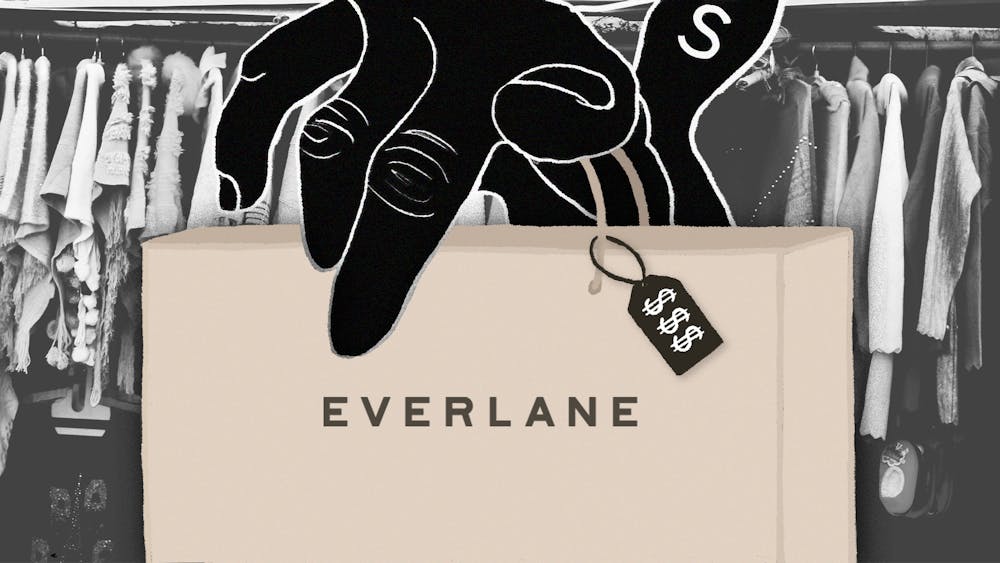
And so another brand bites the dust. Resounding shockwaves were sent across the fashion industry upon the news of major fast–fashion company Shein’s acquisition of Everlane confirmed as of May 2026. The recent corporate move has sent consumers, fashion experts, and sustainability advocates into an uproar as they argue that it demonstrates the death of consumer–conscious and sustainable fashion in place of mass–production, consumption, and fleeting trends. Ultimately, Shein’s acquisition of Everlane is not only illustrative of the challenges facing sustainably–driven fashion brands, but the overall struggle for smaller brands to maintain their ethos, missions, and overall authenticity as fast–fashion giants continue to grow their dominance over the industry.
Co–founded in 2010 by Michael Preysman and Jesse Farmer, Everlane is a San Francisco–based sustainable apparel brand striving to promote cleaner fashion. From 100% organic cotton sweaters, jeans, and relaxed box–cut t–shirts to stretch linen tailored shorts and tank tops, Everlane specializes in high–quality, timeless pieces that long outlast fast fashion fads. The company is also widely known for its unique ethos of what it calls “radical transparency.” Unlike the majority of apparel brands, Everlane promises to provide its consumers with open insight about how their products are made, ranging from types of materials and how they’re sourced to labor and cost. As the company proclaims on its own website: “We believe our customers have a right to know how much their clothes cost to make.”
For over fifteen years, Everlane has been a breath of fresh air for consumers—particularly millenials—and sustainability advocates alike. The fashion industry not only makes up 10% of global carbon emissions each year, but is also the second largest consumer of water globally. In an industry riddled with trend–focused, mass–produced items that are in style one moment and out of style the next, Everlane’s mission–driven innovation and openness behind its practices from process to product stood out.
But if Everlane is a brand founded on principles of sustainability and radical transparency, then Shein is its complete and utter antithesis. As one of the largest yet most controversial global fast–fashion retailers, Shein has been heavily criticized over the years for its harmful, unsustainable mass–production of apparel and exploitative labor practices.
As Yale Climate Connections reported, Shein’s carbon dioxide emissions had doubled from 2022 to 2023. Known for its quick turnarounds when it comes to on–trend product offerings, the article notes, Shein designs can become full–on garments in a matter of just 10 days. Nearly 10,000 items are added to Shein’s website daily, contributing to almost 600,000 items that are typically available on the site.
So why would one of the most prominent fast–fashion companies acquire a small, innovative, sustainable brand like Everlane? Perhaps the primary reason for the $100 million deal was to relieve Everlane of the $90 million of debt that the brand had accumulated to keep the company afloat.
When Everlane first launched, it was a brand that epitomized an exciting era of “millennial optimism.” Its emphasis on authenticity, sustainability, and transparency presented a promising ideal for a new generation during the 2010s that was hopeful for a progressive future. But with ethical brands such as Everlane now crumbling under corporate pressures, the dream of sustainable, ethical fashion seems to be far more bleak. While sustainability was once a strong, stand–alone selling point in today’s hyper–trend focused industry—competition is fierce.
Direct–to–consumer models have been crumbling under the pressures of rising consumer acquisition and supply chain costs. Furthermore, while consumers still value sustainability and purpose–oriented brands, they also care about factors such as cost and convenience. Their buying habits, though still strong, have been impacted by decreases in income, leading some to pivot to cheaper and more affordable items.
Vogue notes that Everlane’s very own CEO Alfred Chang, attempted to reassure consumers by insisting that the brand’s original values would remain untainted despite the major acquisition, stating “I want to be clear: Everlane remains Everlane … we’ll continue operating independently, with our design standards, brand philosophy, and values intact.”
However, many don’t seem to be buying the idea that Everlane can remain what it once was. Consumers have been taking to social media to express their disappointment in the apparel brand compromising its ethics. But Everlane is just one example of a larger trend, as sustainable, mission–driven brands are moving out of the industry’s focus.
Take the brand Allbirds, for instance. Founded by Tim Brown and Joey Zwillinger, Allbirds is a mission–driven sustainable shoe company. Beginning with its launch of the Wool Runner in 2016, Allbirds has since been revolutionizing the shoe industry through producing environmentally–conscious footwear with natural materials.
But the company that was once a pioneer of sustainable sneakers quickly morphed into something that no one had anticipated: an artificial intelligence company. According to The New York Times, Allbirds had sold to a brand management company in a $39 million deal due to issues with securing a broader customer base and earning enough to be financially sustainable.
Since shifting its focus towards AI infrastructure by rebranding as NewBird AI, the company's stock has already surged by 600%. This indicates that while sustainability was once an innovative, revolutionary business model, such ethical brands are crumbling under the pressures of mainstream industry trends. Clean, consumer–conscious fashion is competing with AI, fast–fashion giants, and social media trends, making the viability of sustainability as a niche uncertain.
From AI startup morphings to acquisitions by fast–fashion giants, it seems as though the small, mission–driven fashion company is now under attack in today’s industry. While such sustainable brands claim that their original values and ethics will remain intact, as many continue to sell out, the mission–driven, eco–conscious model that was once a business success, may not be enough of a differentiator in today’s industry. People are losing their faith and trust in the same sustainable brands that once ruled the 2010s, leaving the viability for conscious–consumerism in a shaky place.