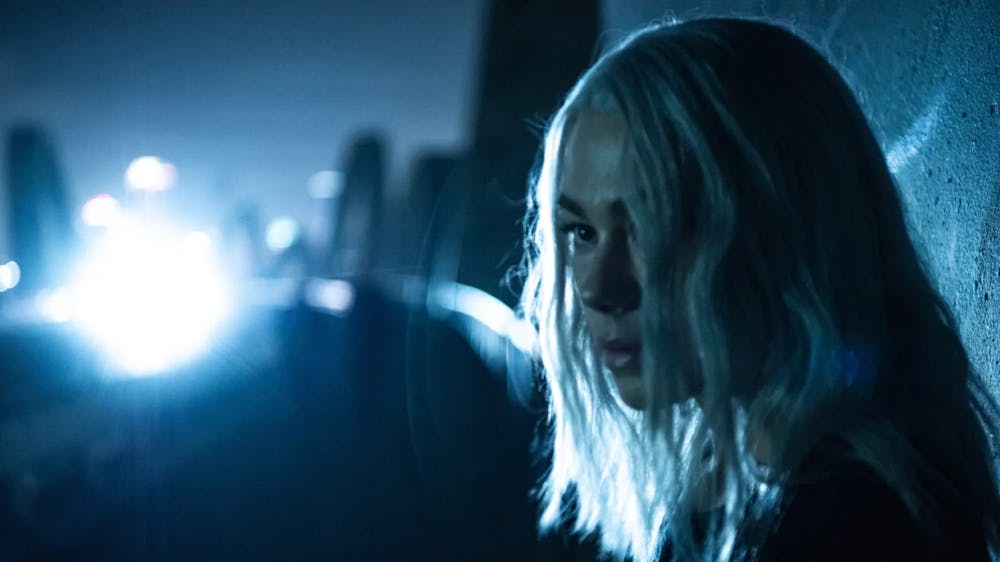
Phoebe Bridgers has done it again. The singer released her third studio album, Lost Weekend, on August 14, with all the trappings of a classic Bridgers work: introspectiveness, vulnerability, that unique ability to craft a song so universally relatable it feels like she wrote it just for you. This particular album weaves into one gorgeous tapestry two of humanity’s most universal experiences: falling in love and losing a loved one.
Lost Weekend, headed up by Bridgers’ incredible expertise both in songwriting and songmaking, also has a star–studded cast of people from the sad indie space. Most notably, her partner of four years, Bo Burnham, a comedic musician whose 2021 Netflix special, Inside, garnered widespread critical and popular praise. The two collaborated on several songs, including the album’s fifth track, “Bobby,” which is named after him. Other notable voices include indie musician Alex G, boygenius members Lucy Dacus and Julien Baker, Caroline Shaw, and Cameron Winter of Geese (credited as Son–John Johnson). This level of collaboration is a notable departure from previous albums, which largely center her voice alone. On Lost Weekend, the community she has built over the past six years becomes audible within the music itself. The album offers a compelling counterpoint to earlier songs “Demi Moore,” where Bridgers admits she “[doesn’t] wanna be alone anymore.” The shift reflects not only a change in the album’s musical makeup, but a Bridgers who has grown into a fuller, more assured sense of connection in the six years since Punisher.
The album opens with easily one of the most creative songs on the album: “The Outside.” This song combines haunting sections recorded with a mechanical–sounding vocoder with stunning, piano–forward melodic sections. The first verse describes her father’s funeral, turning the surreal experience of watching a loved one’s casket being carried away into a sonic derealization, the vocoder serving to underscore the pure realization that she has to learn to live in a world without her father. The piano contrasts this discomfort, almost pulling the listener back to reality the way knowing you are not alone in grief pulls you out of the hole grief puts you in. The chorus, which knits together this first verse with her second about performing, describes her feelings of dissociation with her emotional and physical state, while simultaneously defining her realization that while her father has passed away, she is still here.
Her lead single for this album, “Lost Boys,” tends to go over a lot of people’s heads, especially when it comes to lyrical interpretation. This song, which has a much more upbeat sound reminiscent of her song, “Kyoto,” off of her second album Punisher, was criticized online for not being “sad enough” for Phoebe’s usual sound. The song features an incredibly strong brass section with a progressive melody that could inspire a euphoric feeling in the most depressed of people. But that brightness is deceptive. Much like “Kyoto,” whose upbeat instrumentation belies Bridgers’ complicated relationship with her father, “Lost Boys” uses the tension between sound and subject matter to its advantage. Beneath its buoyant production is a meditation on young men sent to fight wars they had no part in starting and never returning home, a theme Bridgers makes personal through references to her late father, who served in the United States Army. This song, although sonically different from the rest of the album, demands attention beyond its melody, rewarding listeners who engage with its expertly crafted lyrics.
“Bobby,” centered on her relationship wifth Bo Burnham, is one of the album's only purely happy tracks, with banjo and drums undercutting the lyrics and creating a song that envelops you in a warm hug, letting you believe in love for just a minute, too. Notably, the track on streaming platforms differs very slightly from the track on physical formats such as CD and vinyl: the lyric “a thing in a box I don’t fuck anymore” is changed to “a thing in a box I don’t touch anymore,” a tongue–in–cheek joke about how her new relationship with Burnham has fulfilled not only her emotional needs, but her physical needs as well. Her assertion that “this could be the end of wanting” represents the fragile hope new love brings: that maybe, possibly, this person could be the end of her quest for love.
Although many of these songs still stand strong on their own, Lost Weekend is particularly poignant when listened to from start to finish. In the era of streaming and singles, Bridgers makes a case for intentional sequencing, transitioning from the loss of her father, to the reprieve of newfound love, to that extra punch of grief before arriving at tentative acceptance and realizing that she will, in fact, be alright.
The thematic elements are encapsulated so perfectly they feel as though they’ve been bottled for you to drink. The pure gut–wrenching grief seen through this album, even in songs that do not prominently feature the theme, reminds us that grief is not a process that ends after the funeral, or even in the months following. Grief shows up in the most inane of situations, weaving its way into everything we do and all we are. Although it certainly dissipates somewhat the longer time moves, it will always be part of who you are. On the flip side, the portrayal of love, perhaps the other most universal emotion, is soft and whole compared to the hard edges of grief. We feel the innocence, the hope, the catharsis that comes from finally being loved and known. And, after albums in which she has expressed the devastation of feeling unknown and unloved, this album feels like a breath of fresh air.
Lost Weekend is a triumph of an album that was absolutely worth the wait. Phoebe Bridgers, like all of us, has changed a lot over the last six years. She has gone from the stripped–down, quiet sound of her youth to the more heavily produced, grounded, but still sad sound of her thirties. Although there are still sonic traces of the old Phoebe, especially in the brass sounds of “Lost Boys” and the interpolation of “Graceland Too” into “Still Standing,” this album in general lies on a sturdier foundation, with stronger rock motifs and thicker harmonies supporting the same incredible vocals as always. The album presents not only a more mature Phoebe with a more mature sound, but also asserts that, even though the world is a scary, sad, punishing place, things will get better.