


| 1740: | The University of Pennsylvania is established. |
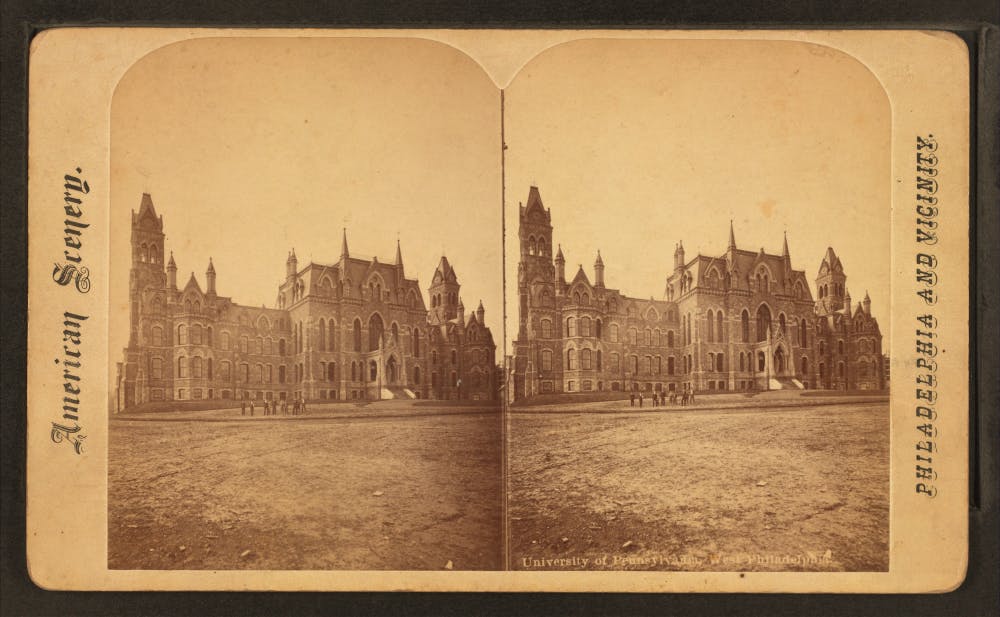
| 1872: | Penn moves its campus to West Philadelphia. |
| 1876: | The first female students enroll in the Towne Scientific School (present–day School of Engineering and Applied Science.) |
| 1879: | The first male students of color are admitted to the university. |
| 1882: | The graduate school is created, and male and female students of all backgrounds are admitted at its inception. |
| 1890: | Emily Lovira Gregory, of the biology department, becomes the first female faculty member. |
| 1914: | Undergraduate schools begin officially admitting women, starting with the establishment of the School of Education. |
| 1949: | William Fontaine, a philosophy lecturer, becomes the first fully–affiliated African-American faculty member. |
| 1963: | William Fontaine becomes the first black tenured faculty member. |
| 1971: | The Afro–American Studies Program was created. Its name was changed to the Africana Studies Program in 2002. |
| 1973: |
Penn Women’s Center is created. |
| 1982: | What is now Penn’s Lesbian Gay Bisexual Transgender Center began. |
| 1992: |
Asian and Middle Eastern Studies department is established, which then divided into two departments in 2005. |
| 1993: | Claire Fagin becomes the first female president of the university when she serves as Interim President for one year. |
| 1995: |
The Center for East Asian Studies was established. |
| 1999: | President Rodin inaugurated the Center for Hispanic Excellence (now called La Casa Latina). |
| 2000: |
Makuu, the Black Cultural Center, is opened. PAACH (Pan–Asian American Community House) opens the same year. |
If you liked this timeline, you should check out "Why Black Lives Don't Matter to the Criminology Department" and Eight Ways to Celebrate Black History Month.