If I should make the claim that Adam Sandler may not be the greatest actor that ever lived, would anybody argue against me? Paul Thomas Anderson’s Punch–Drunk Love might change your mind.
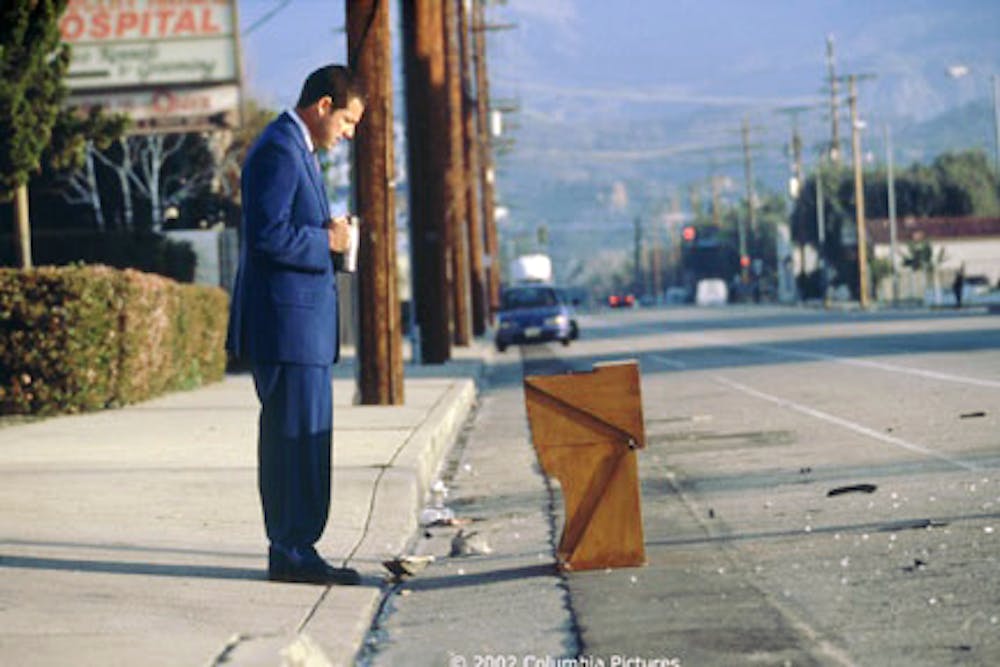
Each of PTA’s films has its own distinct flavor, though a majority of them are epic in scale, from There Will Be Blood to Boogie Nights; Punch–Drunk Love differs from its directorial brethren by about an hour and a half in length. Indeed, Anderson manages to tell a detailed, quirky tale (almost Gondry– or Coen–esque) in about half the time. Focusing on struggling bathroom supply salesman Barry Eagan, Punch–Drunk Love meanders through its too–short run–time with a mundane surrealism; nothing explicitly bizarre happens, but Barry’s life is complicated by myriad weird events, including blackmail, an excess of pudding and the film’s trademark harmonium.
An excellent character study of an emotionally–fragile, socially awkward male, Punch–Drunk Love is a tour de force, supplemented by a beautiful, harmonium–pockmarked soundtrack. Want to feel good? Check it out. Want to laugh? Check it out. Want a dose of culture, self–reflection and talent from the great mind behind Jack & Jill? Then … check it out.