Are you really a Tate McRae fan if you can’t recall her YouTube days; an image of her playing the keyboard in her bedroom, singing a song from the perspective of an angsty teen butting heads with her parents? What do you know about the Troye Sivan and Tyler Oakley collabs? Have you ever watched meticulously as Conan Gray taught you how to make a five–minute microwave mug cake? What looming connection exists between Joji and chaotic internet persona Filthy Frank? Or maybe you caught a glimpse of Shawn Mendes during his Magcon days?
While these may sound like scattered trivia about today's chart–toppers, they point to an awkward truth: many of our favorite artists have their roots in early to late 2010s influencer culture. While today the musical ventures of influencers like Dixie D’amelio and Chase Hudson, also known as Lil Huddy, are frequently dismissed as desperate cash grabs, something just seemed to “click” for past aspiring internet personalities, successful in their transition to “serious” artists. In fact, their unfledged digital footprints have become ignored vestiges to current audiences, who hardly associate these artists with their previous online presence. So, why were they able to ditch the influencer image, while so many current creators seem to be unable to?
Ever since the early days of YouTube, there have been lovers of music seeking to leverage their online presence into something … more. Perhaps the most prolific case is that of a twelve–year–old Justin Bieber, posting covers of his favorite songs beginning in 2007 and shortly thereafter becoming a global sensation. In a way, Bieber invented the online star to artist pipeline—others have evidently been able to follow his footsteps, transforming into chart toppers and Grammy nominees. But for every Mendes hit there is a D’amelio song ready to be forgotten and pushed into internet oblivion.
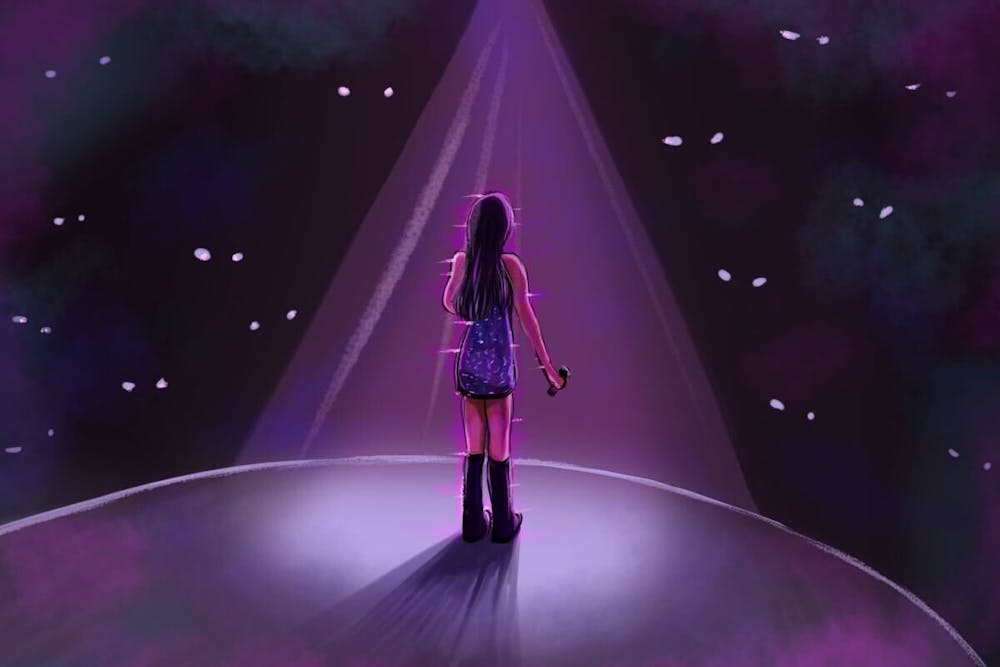
Two of the biggest reasons so many contemporary influencers fail to fully make the transition from influencer to revered artists—besides, at times, lack of vocal prowess and musical talent—are insufficient authenticity and oversaturation of the market. For artists like Sivan and McRae, making music was always the final destination. Especially for the latter, the majority of McRae’s popular content consisted of covers, dance videos, even original songs—which would later become a large part of her performance and presentation as an artist.
McRae’s “brand” was already music, so it didn’t feel misplaced or unusual when she eventually polished her work, signed to a label, and became a main–stream pop girl after years of foundational online performances. In contrast, many of today’s influencers stumble into music careers after gaining traction for an otherwise unrelated trademark online. Consequently, their sudden brand shifts come off as an attempt to capitalize on their pre–existing fame; motivated by attempts to keep the lights on or delay the limelight from flickering out rather than an anterior passion for music—like a slew of the Paul brothers’ diss tracks. Those, at times, fare quite well in the court of public opinion (somehow, “It’s Everyday Bro” charted at 91 on the Billboard Hot 100) because, if anything, they preserve some level of authenticity.
Stunts like these don’t try to hide the fact that they are meant to draw attention to online antics and profit off of their listeners, but when someone like Charli D’amelio—at the height of her TikTok fame—releases a song (the successor to her sister’s already less–than–stellar attempt at breaking into the industry), it falls flat.
In a moment where authenticity and relatability are pop–cultural currencies—as evidenced by the acclaim for Charli xcx’s BRAT, praised for its honesty and shamelessness—lacking such qualities will hinder the ability to be taken seriously as an artist. To make matters worse, it feels like everyone with a following wants to make music nowadays. Back in the 2010s, the Bieber model—internet discovery and the subsequent record deal—was still novel. A lot less people were putting themselves out there musically, and those who did were creative, risk–taking pioneers. But by 2025, the script has flipped. It’s harder to find an influencer without a Spotify page and at least one half–hearted single their management team goaded them into releasing.
This oversaturation has made audiences numb to new releases. Announcing a debut single just doesn’t turn heads anymore, and for influencers with genuine musical ambition, cutting through has never been harder.
While these days it seems like there is no escaping the authenticity desert—and accompanying influencer music swamp—there are some rare exceptions to the rule. Take Madison Beer. Just like McRae, Sivan, and Gray, she began her career posting covers of herself singing online until she was eventually noticed by Bieber—the original internet–origin baby himself—in the 2010s. However, despite correct timing, talent, and support, Beer seems consistently grouped in with the “influencer” pool—regularly under–recognized against chart toppers and even a Grammy nomination. This is in large part because of her associations with others in the internet sphere, her career often marred by controversies with everything from public relationship fallouts to industry plant allegations.
Conversely, we have the case of one Filthy Frank. George Miller started off making very brash and controversial comedy content on Youtube in the 2010s. While he occasionally released music on his channels, it was mostly for comedic purposes; parodies to support his main content. However, Miller ended up scrapping the “funny guy” image to adopt that of indie/alternative hitmaker Joji, where he is regarded as an authentic artist despite the major shift in focus. His success, at least in part, might be attributed to the detached nature of his content: his videos were bit–based. Joji never was the main focus, while the outlandish characters Miller made up were. In a way Joji is just another concocted personality, and it’s both amusing and mildly bizarre that most Joji concert attendees fail to realize they stand before the creator of the “Harlem Shake.”
Similar to Joji, one promising name in music is Addison Rae, who began with dance videos on TikTok—a far cry from where she is now. Her first 2021 single “Obsessed” was written off, like most influencer music, as a bad cash grab. But a shift began when she earned the Charli xcx’s stamp of approval—securing a feature from the pop star on her single “2 die 4” and later appearing on Charli xcx’s own album BRAT. She landed her first big hit “Diet Pepsi” summer 2024 along with album set to release in June. Rae was able to use her associations and quite frankly, creativity, to break out of the influencer mold she was cast in. Rae’s music stands out from the influencer fare; she doesn’t sound generic or boring and many respected musicians have cosigned her artistry. Frankly, the musician shows real potential to make the cross over into respected artist territory, if she hasn’t already.
The music landscape today is more expansive than ever, and part of that is thanks to influencers who’ve crossed into the world of music. Breaking through remains difficult, as aspiring artists must confront hurdles of stigma surrounding internet fame and artistic credibility—but it’s far from impossible. As the industry continues to evolve, it's likely that nearly every major artist in the future will have had some kind of digital footprint. The growing prevalence of the influencers and the online–to–industry trajectory might not be a blip in the media–saturated era; it could be the new norm.