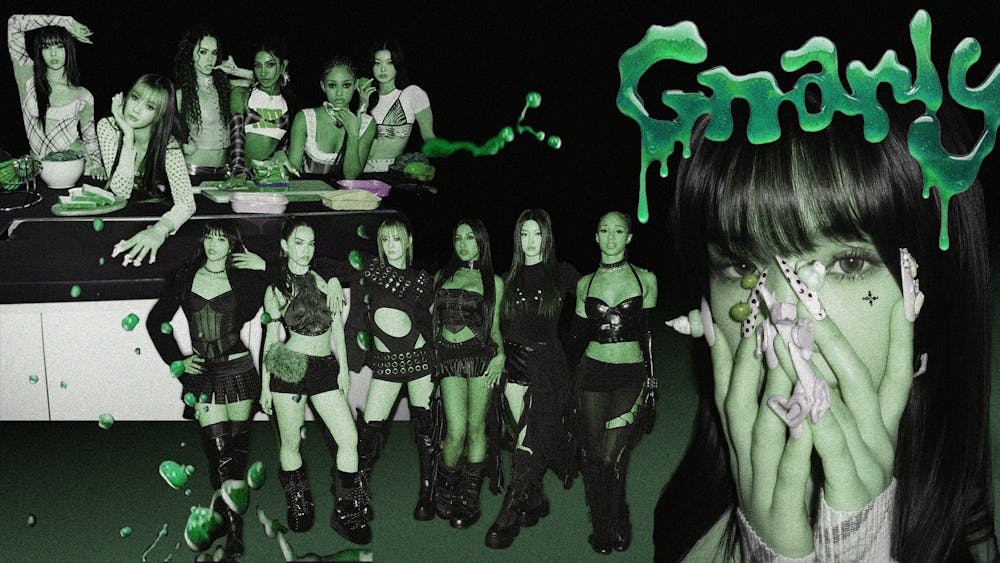
When KATSEYE dropped their latest single “Gnarly” this summer, the reaction from fans was swift and brutal. The six–member group, formed through the reality competition The Debut: Dream Academy and backed by K–pop powerhouse HYBE, had built their reputation on the soft, accessible sounds of their early tracks “Touch” and “Debut.” Their sudden pivot to hyperpop chaos gave listeners artistic whiplash, with the song's dissonant, industrial sound being a far cry from anything KATSEYE had put out before.
Within hours of the song's release, social media was ablaze with confusion and criticism. Fans compared “Gnarly” unfavorably to NCT 127's polarizing “Sticker,” while TikTok commenters dismissed it as an “off–brand Charli XCX” track. The lyrics—a seemingly random combination of American slang, brand names, and pop culture references—struck many as tone–deaf. Lines calling Tesla “gnarly” felt particularly ill–timed given current political discourse around Elon Musk, while the repetitive use of “gang” in the pre–chorus raised eyebrows given K–pop’s history with racism and the appropriation of Black culture and sound.
Yet three weeks later, “Gnarly” had benefited from a remarkable shift in public opinion. TikTok was flooded with choreography videos, live performances racked up millions of views, and genuine appreciation began replacing ironic consumption. One YouTube commenter captured the 180 perfectly: “It's funny seeing the old comments after this song became loved.” This dramatic reversal reveals something profound about how we consume and interpret art in the digital age. The key to understanding “Gnarly”’s journey lies not in the song itself, but in the framework through which audiences approached it.
Initially, listeners evaluated “Gnarly” through a K–pop lens, expecting the polished, sanitized aesthetic that defines the genre. K–pop's manufactured perfection leaves little room for the deliberately chaotic, and “Gnarly”’s apparent randomness felt like a failure of craft rather than an artistic choice.
But “Gnarly” was never meant to be consumed as traditional K–pop. The song's primary architect is Alice Longyu Gao, a Chinese hyperpop singer and songwriter whose work thrives on irony and cultural commentary. Gao’s other songs, such as “Lesbians <3,” showcase the satirical tone she was also going for on “Gnarly”, and listening to “Gnarly” alongside the rest of Gao’s discography makes its intentions more clear.
In the context of Gao's work, “Gnarly” becomes something entirely different: a satirical examination of American consumer culture and linguistic excess. “When I was first learning English, I was amused and surprised by the excessive usage of this word by some basic bros,” Gao explained in a TikTok video. Through this lens, the song's apparent incoherence becomes purposeful absurdity. The references to Tesla and Takis point out America's shallow obsession with brands and buzzwords. The repetitive “gang” highlights how language loses meaning through mindless repetition. Even the seemingly banal lyric “Is this real” brings to mind the wave of anti–intellectualism plaguing cultural discourse today.
The root of “Gnarly’s” misinterpretation lies in K–pop’s very real history of cultural appropriation, particularly when it comes to Black culture. Recent controversies involving groups like KISS OF LIFE and BLACKPINK have made audiences hypervigilant against racism in the industry. This rightful awareness made the song's repeated use of “gang” seem like a poor emulation of Black culture rather than a meta–critique of the K–pop industry’s mindless cultural appropriation. What Gao intended as commentary on American superficiality was read as participation in it. As a result, “Gnarly”’s deliberate clumsiness was seen as genuine incompetence.
“Gnarly”’s reappraisal required a fundamental shift in how audiences thought of KATSEYE themselves. Though signed by the K–pop label HYBE, Katseye’s members hail from around the world, showcasing voices and perspectives far outside the industry norm. As listeners began to consciously or unconsciously separate the group from traditional K–pop acts and recognize their international, cross–cultural positioning, the song began to be seen in a new light. The track’s evolution from failure to phenomenon demonstrates how artistic meaning isn't fixed at creation, but is created through audience engagement. In an era of rapid cultural production and consumption, context can shift as quickly as trends, allowing yesterday's missteps to become tomorrow's masterpieces. “Gnarly”’s journey reveals something essential about contemporary culture: Our relationship with art is shaped by framing and expectation rather than inherent quality.
KATSEYE was aiming to distance themselves from the K–pop world, and “Gnarly” is how they got their point across. The song reflects the cultural background of the group's members and is the start of an effort to better market the group toward Western audiences, which is why the song is fully in English and replete with references to American culture. It appears HYBE is trying to integrate K–pop into the Western cultural mainstream, something that the industry has attempted to do but struggled with for a long time. While K–pop certainly has an audience in the U.S., it remains seen as something distinctly Korean, and all K–pop music is often grouped together despite varying widely in sound. Whether “Gnarly” will be the track that achieves this market penetration is an open question—despite the song's reappraisal, it may still have trouble reaching true global success simply due to its experimental sound.
Whether “Gnarly” will have lasting impact remains to be seen, but its rapid transformation from flop to phenomenon demonstrates how cultural context impacts a song's reception. We may not be having a “Gnarly” summer, but KATSEYE's gamble in breaking from the K–pop mold has fans eagerly awaiting their next steps.