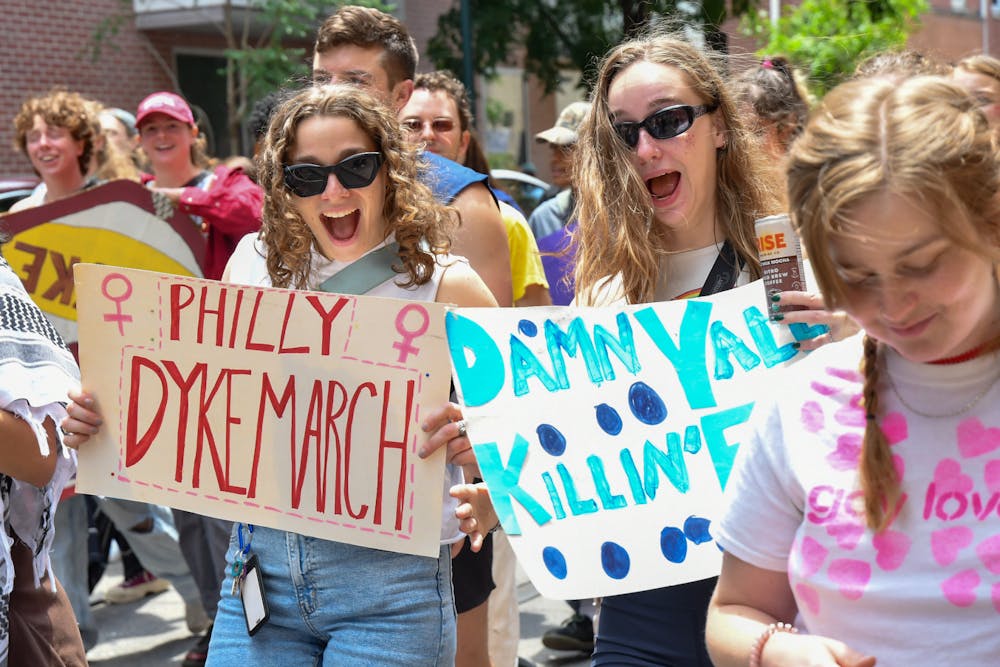
On Saturday, May 31—one day before the official start of Pride Month—Center City was filled with queer energy. It’s the day of the Philadelphia Dyke March, and it’s impossible to miss. Attendees decked out in leather and glitter turn Kahn Park into a colorful oasis of community, and from the revving of motorcycle engines to the drumming that helps keep the rhythm of a variety of chants, they insist on being seen as well as heard. And as the LGBTQ+ community faces off against an increasingly oppressive world, the march’s mission is more important than ever.
Commonly described as “a protest, not a parade,” dyke marches are separate from traditional Pride celebrations. They are typically held the day before a city’s Pride parade and tend to be more activism–focused than their wider–known counterparts. Since the first march in Washington, D.C., in 1993, there are now eight annual marches in major cities throughout the nation. Philadelphia joined the club in 1998 and is still going strong today.
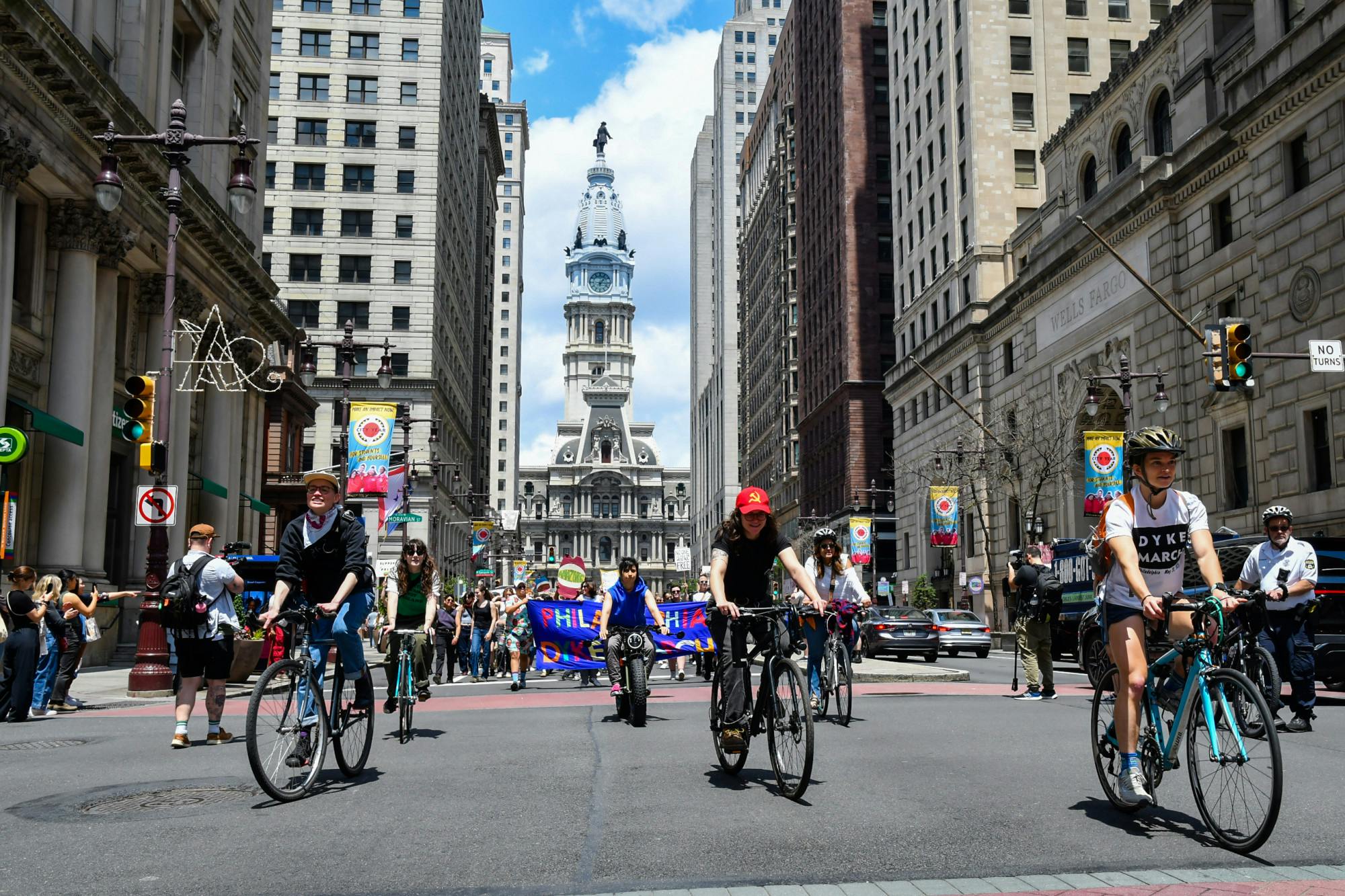
Beginning with a rally in Kahn Park, speakers include Rue Landau, the city’s first openly queer councilmember; Ashleigh Strange, executive director of the Pennsylvania Commission on LGBTQ+ Affairs; and the march’s original founders: Daniel Laurison, Kathy Gomez, and Kelli Dunham. Also invited to speak are Suz Atlas and Mary Groce, who live at the John C. Anderson Apartments for LGBTQ+ affirming senior care and have been together for over sixty years.
“I would love to have the younger generation see what it looks like when you get older … see and hear what a different generation went through,” said organizer Tami Sortman. Atlas and Groce truly embody living queer history. As Groce shared a story from her youth about a particularly crushing custody battle which she “would have lost because [she] was a lesbian. That was the only reason,” the crowd fell into solemn, contemplative silence. But as she celebrated a 1975 protest by a local lesbian activist group Dyketactics! against discriminatory custody rulings, her captive audience erupted into cheers. The bravery of these lesbians has persisted half a century into the future.
Atlas, on the other hand, highlighted what still needs to be done. “We all have different opinions about everything. But when the call comes, which is right now, we rise as one.” Here, Atlas referred to the oppressive legislation—from bathroom bans to barring access to gender–affirming care—drafted and even passed into law in some states, which serve as a brutal reminder that the rights we may take for granted are by no means guaranteed to last. Just four months ago, the Idaho House of Representatives moved to repeal the protections for same–sex marriages promised under Obergefell v. Hodges. This, in combination with the many anti–trans bills introduced in 2025 alone, makes it painfully clear just how much danger the queer community is currently in. But the Dyke March’s focus on these issues isn’t meant to dishearten. Rather, it’s meant to remind those both within and outside of our community exactly what to fight, and who to fight for.
“They call it the big, beautiful bill,” said Gomez, referencing the Trump administration’s most expansive piece of legislation yet, which threatens clean energy programs and restricts insurance from covering essential gender–affirmative medical care. “We know it’s ugly as hell.” Gomez goes on to urge attendees to “act fast, educate and mobilize your networks, make sure everyone you know contacts your senators. We likely have less than a month to make a difference.” While it’s a terrifying reality, Gomez is right—it’s not over, and it’s not hopeless. But it is urgent. Visibility and action go hand in hand, and if the Dyke March aims to do one thing, it empowers its constituents to go on and make a difference.
Laurison, one of the march’s original founders and sociology professor at Swarthmore College, prefers to ascribe this feeling of empowerment to the notion of collective effervescence. Sitting across from me at Milkcrate Cafe on 45th Street and Baltimore Avenue, he explained the concept, in true professor style, and its role in the formation of religion. “That’s when you’re moving in a group and chanting together and sort of doing something out of the ordinary, and that bonds you to people and gives you energy. That, I think the march does better than pride.” According to Laurison, this energy—the adrenaline buzz from really feeling like a part of something—is what propels real change. “What the protest atmosphere does is it gives people strength and support and a sense of collectivity that carry them through when they’re doing something else,” he said. Essentially, the march does not stand alone—it supplements the daily work of contacting legislators, volunteering at queer affinity centers, and relentlessly defending the rights of a community currently under attack.
Dunham, another of the original founders, made sure that everyone in attendance knew exactly what we’re up against. “I keep hearing that the system is falling apart,” she said. “The system is not falling apart. The system is working exactly as it’s meant to work.” The crowd erupted into cheers—not in support of an apathetic government, but because it’s so refreshing to hear someone acknowledge the issue out loud. “The system is based on misogyny and white supremacy. It’s based on the unpaid labor of enslaved people. It doesn’t seem like the system is breaking down, it seems like it’s doing what it’s supposed to do, which is concentrate power and money in the hands of as few people as possible,” explained Dunham. “The cruelty is not a glitch, it’s the blueprint.” This intentional bluntness surrounding class and race further separates the Dyke March from your typical pride parades, which tend to be dominated by cis, white, gay men. The march, trans–inclusive and racially diverse since its beginning, is both a point of pride for the organizers and a push for other queer spaces to do the same.
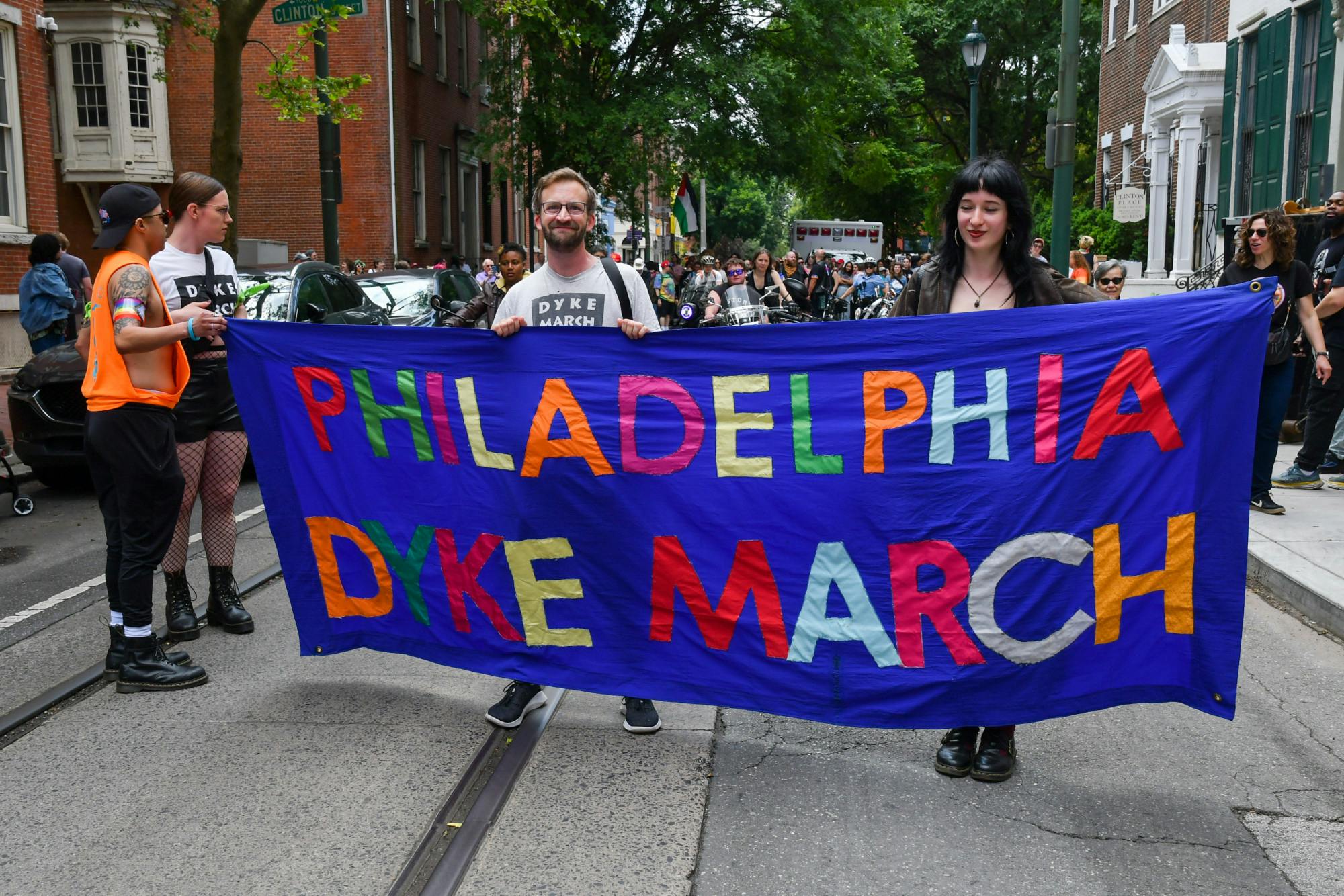
So if the aim of the Dyke March is inclusion, why use the word “dyke”? Although “dyke” originated as a slur against lesbians, particularly those who were more masculine–presenting, its unique meaning and history means that it may be one of the most inclusive words out there. Not every “dyke” identifies as a lesbian, but that doesn’t mean this march isn’t for them—it’s for anyone who identifies with the word, its associated community, and its history.
Although it’s becoming more and more frightening to be a queer person in the United States, spaces like the Dyke March—which fiercely advocate for the marginalized and work with, rather than against, intersectionality—find a highly successful, compelling middle ground. With its unique programming focused on both celebration and call to action, the Philly Dyke March both uplifts the local queer community and fiercely reminds the city of everything it still needs to fight for.