
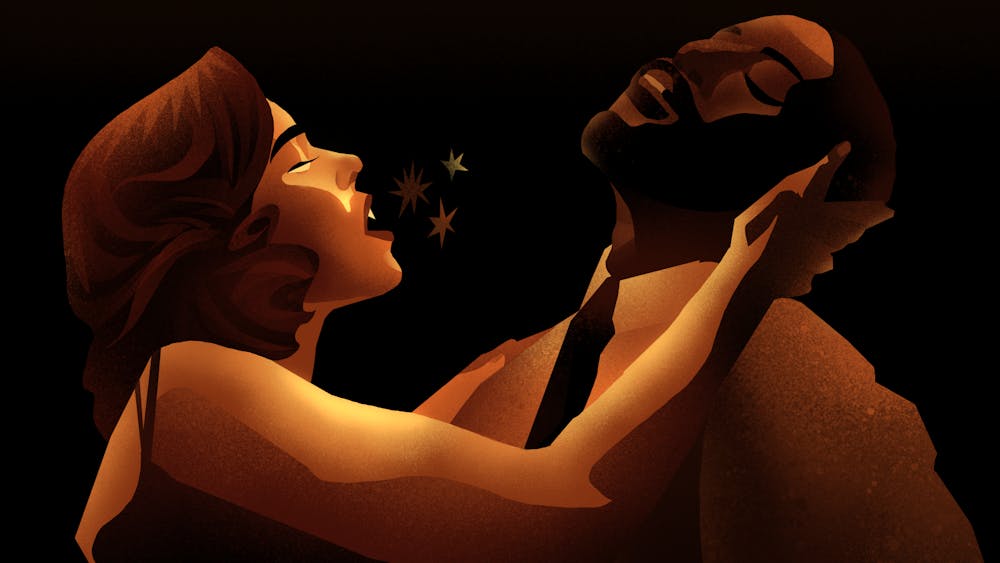
Among United States cinephiles, no time of year bears greater importance than summer. As temperatures peak, film enthusiasts foresee an influx of dramatic, enthralling blockbusters. Hollywood has traditionally packed this season’s releases with catharsis—maximizing action and tear–jerking suspense. From Jaws to E.T. to Jurassic Park, these productions have sustained in popularity across generations, with producers even issuing anniversary editions of the original screenplay. Although the once–thrilling ritual of starting summer at one’s local drive–in or movie theatre has largely faded, this year’s lineup reflects directors’ continued push for spectacle.
One such release is Ryan Coogler’s Sinners—a gory tale of mortal–supernatural confrontation. Like other box office hits, the film features a framework of motifs: the sacrifices which familial bonds often entail, two ex–lovers stumbling upon each other after forsaking their relationship, and eruptive warfare between good and evil. Even the film’s most suspenseful elements are elaborate; viewers encounter a myriad of plot twists and character transformations. Complexity aside, Coogler’s production experiments primarily with conventions of horror. Sinners offers a new perspective on the occult, challenging the Western tendency to frame undead spirits as figures of menace.
Sinners opens through introducing Smoke and Stack Moore (Michael B. Jordan)—Chicagoans venturing homeward to Clarksdale, Mississippi in 1932. Previously colluding with Al Capone as bootleggers, these brothers conceive greater ambitions in Clarksdale. With copious Irish beer, Smoke and Stack purchase an abandoned sawmill from Hogswood (David Maldonado), where they plan to establish a juke joint. After hiring “Preacher Boy” Sammie (Miles Caton) and Delta Slim (Delroy Lindo) as performers, the brothers transform this warehouse into a hip, glamorous venue, naming it “Club Juke.” During the club’s opening night, hundreds of clientele receive a fresh, enthralling repertoire of Blues selections.
During its story’s first half, Sinners highlights racial dynamics pervading the 1930s Mississippi Delta. Coogler depicts the Moores’ friends and relatives as sharecroppers: these individuals utilize scripps to purchase alcohol. For such townsfolk, the Club Juke entails not only entertainment, but distraction from plantation labor’s exploitative practices. Additionally, the director showcases ethnicities coexisting alongside Black enclaves. To decorate the Club Juke, Stack buys supplies from Chow Groceries—a mom–and–pop store in downtown Clarksdale. Here, he encounters owner Grace Chow (Li Jun Li), a Chinese American residing with her husband and daughter. Their exchange illustrates how African American communities formed transactional relationships with other indentured servants.
Subsequently, Sinners enhances this narrative with a subplot of body horror. Shortly before the Club Juke’s opening, Remmick (Jack O’Connell) approaches an ordinary farmhouse. He begs its two residents—Bert (Peter Dreimamus) and Joan (Lola Kirke)—for shelter, identifying himself as a target of Choctaw hunters. After transforming Bert and Joan into gargoyle–like creatures, the three approach Club Juke—again, pleading for entry. While initially unsuccessful, the Cainites attack Mary (Hailee Steinfeld) from outside; bloody, fanged spirits soon possess several other of the Moores' guests and employees. Those remaining identify Remmick as a vampire sire who has morphed the club’s guests into his surrogate family. Henceforth, Club Juke becomes a deadly battleground, where Stack, Grace, Sammie, and others seek to destroy these demons.
Sinners upholds the somewhat formulaic nature of vampire defeat. Resembling preceding vampire flicks, the survivors strategize an attack utilizing cinematic conventions: Annie (Wunmi Mosaku) uses garlic as a repellent, revenants cannot enter indoor spaces without invitation, and coronary penetration with sharp wood can immobilize these creatures. For audiences, Coogler’s incorporation of urban mythology is predictable. Stack’s allies cleverly destroy several of these spirits, while the remaining evaporate at dawn.
However, Coogler simultaneously defies conventions encompassing body horror—primarily regarding characterization. Rather than depicting Remmick and his fleet unidimensionally—as malevolent—Sinners construes these vampires with historical symbolism. For instance, Remmick embodies an Irish immigrant soul—reflecting Coogler’s desire to highlight the “[abundant] crossover between [popularized 1930s] African American and Irish culture(s).” When asking for entry into Club Juke, Remmick praises the establishment because—like juke joints—Irish–American communities created dance halls for performing Gaelic songs. After Smoke and Stack reject this sire, he strums “Pick Poor Robin Clean” on a banjo outside—a Blues melody. While Remmick may appear devilish, he shares the twins’ admiration of folk music.
This characterization further nuances Coogler’s storyline. Remmick and the twins both reap not only similar cultural practices, but also colonially exploited ancestries. Correspondingly, his motive for transforming mortals into vampires is establishing a “way to freedom.” For African American communities, Remmick contends, the supernatural realm is utopic: vampires are safe from perpetrators of discrimination. Additionally, he reveals Hogswood as a KKK member—intending to attack the Club Juke’s clientele at dawn. Thereby, surrendering to Remmick would relinquish Smoke and Stack from this white supremacist’s grasp.
Suggestively, as The Atlantic’s Adam Serwer writes, this scene reveals the film’s actual antagonist—“Jim Crow economics.” Despite their terrorization of the Club Juke, Remmick and his converts merely constitute a temporary threat. Correspondingly, these characters manifest how a greater force pervades the Moores’ establishment: socioeconomic disenfranchisement. While the joint’s remaining humans can slay each vampire, survivorship entails a cost, that systemic racism will ceaselessly victimize Stack and his friends. Therefore, Sinners proposes an enigmatic question: can one find solace in dystopianism?
Through his experimentation, Coogler produces a climactic scene of demonic invasion. Yet, the director questions the horror genre’s typical conceptualization of uncanniness. As viewers, we typically frame premature death—and its personified forms—as maximally frightening. However, can there exist a threshold where mortal suffering is equally fearsome? Sinners seems to say yes.