Dancerobot isn’t a restaurant—at least, it doesn’t appear to be from the outside.
Turn the corner of South 17th Street onto Sansom Street and you’ll understand. The location’s white exterior and smooth wooden doors contrast the brick buildings on both sides. Its neon–pink “dancerobot” sign offers the impression of a ’90s nightclub or an undercover cocktail bar. A little kid passing by echoes my curiosity, riding his scooter and stopping to point at Dancerobot with a look of awe. Both of us think of it as an anomaly.
The waiting area behind its wooden doors reveal a bit of its mystery. Guests become shrouded in a sharp purple light, and I’m welcomed with prints from Japanese cinema reminiscent of my childhood, from Studio Ghibli–like animations to live–action films like Godzilla. The poster wall echoes the retro theme of the restaurant’s sign, with each handpicked straight from Japan by the head chef himself, as a hostess conveys to me.
But once our server pulls back the curtain dividing the waiting and dining areas, my nostalgia becomes replaced by further surprise. The dining area stands as a stark contrast to the entrance of the restaurant. Its classical, modern feel—aided by golden–framed mirrors and ornamental lighting—echoes the environment of a business–formal Wharton dinner, while the front offers vibes of a retro speakeasy. Both are chic and lively.
Despite the sophisticated atmosphere, I’m practically yelling at my server. On a Wednesday night, every seat is filled with family dinners, first dates, and casual get–togethers. I hold onto the few words I can hear from our server as I scan over the menu. Given the family–style Japanese comfort cuisine, a recommendation of two plates per person is standard.
I start with their coffee–yuzu tonic. The bitterness from the caffeine mixed with the sour kick of the tonic leaves a refreshing taste; the perfect pick–me–up for the inevitable late–night study sessions that come with midterm season. If there’s cause for celebration, though, don’t be discouraged—their drink options outnumber their food. A mix of classic American pale ales and authentic Japanese sakes reflect the Japanese American cuisine.
This theme grows as our appetizers roll out. The nasu dengaku—one of our server’s top picks—offers an unexpected sweet and soft taste. Slices of fried eggplant are drizzled with sesame seeds in a sweet miso glaze, and the bite–sized dish leaves an earthy flavor on my tongue.
Next comes a gift from the chef: their signature kare pan. Its seasoned, crunchy look is reminiscent of an oversized fried mozzarella ball. Though its colossal appearance suggests that the bun is stuffed with meat, slicing into it reveals only a creamy, thin layer of beef coating its interior, a pleasing contrast to the crunch of its shell.
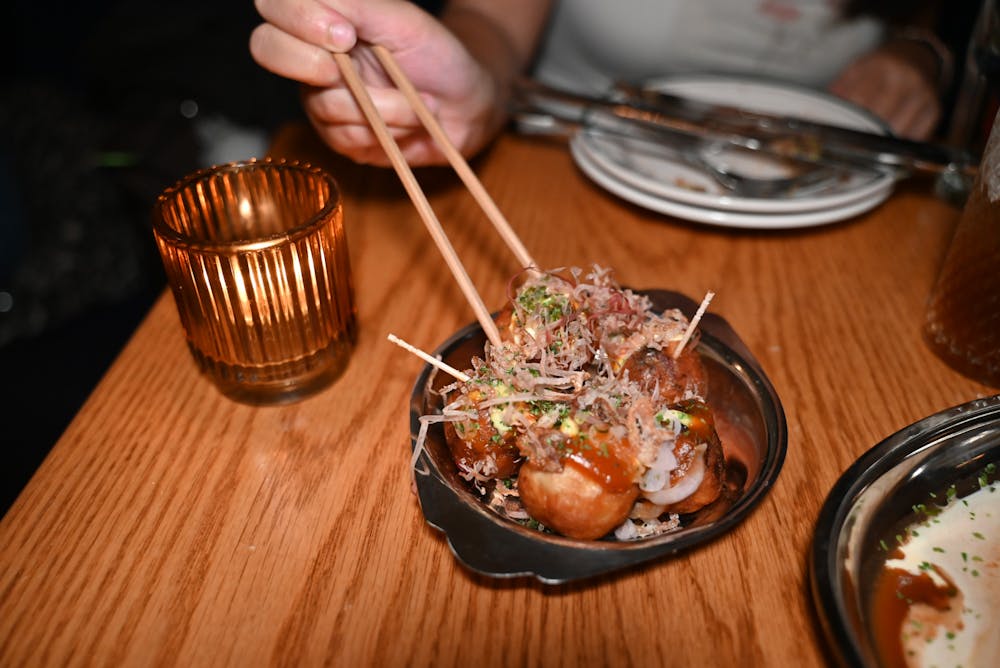
Still, the last appetizer becomes the mutual highlight of Street photographer Arina Axinia’s and my meals, both for its unique flavor and its aesthetic appearance on camera. The age takoyaki holds up to its reputation as a staple of Japanese street food. The fried octopus balls are complemented well with the chef’s signature shallot sauce, and the simultaneous fishlike and meaty flavor balances the airy crunch of its confetti–thin shallot flakes. I’m taken back to the time I visited Osaka, Japan with my family, eating authentic takoyaki at the dinner table now like I did sitting on a Japanese side street two summers ago.
I don’t have much time to digest before the main courses came out. However, by the time Arina and I finish snapping pictures of every angle of each dish, I am ready to eat.
The first entree, the Hamburg steak, is a bit underwhelming following the age takoyaki. Though the Wagyu patty is tender and juicy, it lacks the unique kick of the previous dishes provided.
However, the menchi katsu sando offers a comeback with its Japanese spin on your average American burger. If the combo of a breaded pork–and–beef cutlet doesn’t entice you enough, the red cabbage adds a welcome crunch to the soft texture of the patty, and everything is united by a savory tartar sauce.
Taking a break midway through the sando, I take in the environment. A couple holds hands on the table in front of me. Their hands are right underneath a framed vintage Japanese album, one of many lined on the restaurant’s walls. To my left, an old couple checking their bill catch my wandering eyes and strike up a conversation with me.
They are natives to the Philly food scene, and it is also their first visit after hearing that Jesse Ito, the chef and owner of their favorite neighborhood diner Royal Sushi & Ikazaya, opened a new restaurant near Rittenhouse Square with co-owner Justin Bacharach. Lovers of Japanese culture themselves—having visited Japan many times—they explore any opportunity to find bits of Japan in Philly. To them, Dancerobot hits the mark.
“It’s different—it’s energetic,” they relay to me while leaving their table.
I let that sentiment sit with me until I sign my check and stand to leave. That last word—energetic—encapsulates Dancerobot’s restaurant status. Bridging the gap between Japanese and American cooking, the balance of nostalgia and novelty in both its atmosphere and cuisine leaves me feeling revitalized. I exit Dancerobot with the energy I felt before entering—an excitement for the diverse dynamics this restaurant now offers to Philly’s food scene.
TL;DR: Dancerobot smashes together chic and retro vibes with its Japanese American comfort cuisine.
Location: 1710 Sansom St.
Price: $$$
Hours: 4–10 p.m. Tuesday–Thursday, 4–11 p.m. Friday–Saturday