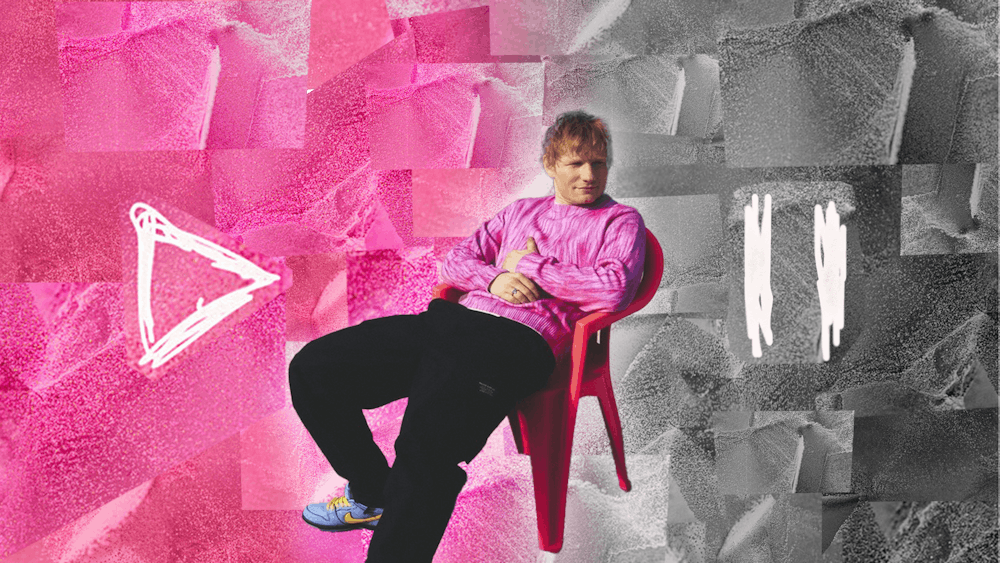
Ed Sheeran wants you to believe Play is a rebirth. The cover is Pepto–pink, the mission statement says he’s “leaving the past behind,” and the press cycle swears this is Sheeran embracing global sounds. Then you hit play and realize that beneath the tablas and Hindi hooks, he’s still the guy writing ballads for your cousin’s first dance. Reinvention? No. This is a man who treats world music the way most of us treat a new spice at Trader Joe’s—interesting in theory, but mostly there to garnish the same old dish.
The opener, cleverly titled “Opening,” is meant to be Sheeran’s line in the sand, defining the album as a break from his past. Instead, it fades like chalk in the rain, delivered in clunky, half–rapped verses that sound like he’s auditioning for Britain’s Got Talent. He boasts about longevity, shrugs at his haters, and tries to convince you he’s still hungry. But he doesn’t sound hungry. He sounds tired, like someone singing karaoke of his own career highlights.
There are moments where Play threatens to wake up. “Sapphire,” featuring Bollywood singer Arijit Singh, is glossy and infectious. “Symmetry’s” beat is so confident you can forgive Sheeran for relying on South Asian rhythms to add the seasoning his ballads lack. Even “Azizam,” with its Iranian flourishes, hints at the kind of album that Sheeran could have made: daring, collaborative, and legitimately new. For once, the production pushes him into places his guitar alone can’t.
But just when you think he might be onto something, Sheeran backslides into the syrup. “Camera” is pure wedding fodder, the kind of ballad you’d hear while being handed a slice of fondant cake you didn’t ask for. “The Vow” is another Hallmark original, complete with lines that could be emblazoned on a farmhouse sign in HomeGoods. And then there’s “Old Phone,” where Sheeran discovers nostalgia like it’s a brand–new concept. “Conversations with my dead friends / Messages from my exes,” he sings, like a guy who just realized his phone can save texts. It’s the kind of literalism that makes you want to hand him a creative writing worksheet.
This is Sheeran’s eternal dilemma: He built his career on being the “normal bloke” with abnormal drive. That formula worked when he was still fresh, rapping about being overlooked while secretly plotting world domination. It worked when he blindsided the charts with “Shape of You” and made marimbas sexy. It even worked when he got Cardi B to admit, on record, that “Ed got a little jungle fever.” But now his ambition feels dulled. The “everyman” schtick, once charming, now feels like complacency.
Even worse, his lyrics are clearly running on fumes. Sheeran’s old trick—taking concepts of explosions, stars, or heaven and slotting them into metaphors—has calcified into cliché. By the midway point, you’re tempted to turn listening into a drinking game: shot for every cosmic metaphor, double if he throws in “forever.” (Warning: You’ll black out before the end of Side A).
That’s not to say Play is unlistenable. Sheeran’s talent for melody remains freakishly durable. Even his most phoned–in ballads arrive polished and ready for Spotify playlists titled “Dinner for Two” or “The First Dance.” But that’s the problem: Sheeran has become so good at writing algorithm–ready music that he no longer needs to evolve. Dependability sells. Risk? Not so much.
That’s the true message of Play. Sheeran dabbles in sitars and tablas not because he wants to reinvent pop, but because it lets him decorate the same house he’s been living in for years. Fans get the comfort food they crave, the streaming numbers stay strong, and Sheeran gets to call it growth. Everyone wins—except listeners looking for a genuine step forward.
It’s a strange position for Sheeran to be in. Twenty years into his career, he’s no longer the hungry kid busking on the streets. He’s a father, an industry veteran, and a statistics obsessive who cares deeply about chart placements. The result is an album that feels like a half–hearted compromise: a little innovation for critics, a lot of ballads for the fans, and very little fire for anyone else.
The irony is that Sheeran has the resources, collaborators, and global reach to truly change the direction of pop. Instead, Play plays it safe. It’s an album that gestures at experimentation without committing to it, delivers wedding songs with industrial efficiency, and leaves you wondering if Sheeran is too comfortable at the top to risk falling off.
Play is Sheeran doing what Sheeran does best: holding the middle ground. It’s solid, dependable, a little boring. Call it a win if you’re looking for background music at your next brunch. Call it a loss if you still hoped Sheeran had one more surprise up his sleeve. Either way, the play button has rarely felt this ironic.