I don’t know how to drive. In fact, I refuse to learn. Why should I? I was born and raised in New York, and I fully intend to raise my own kids in cities like it.
Since arriving at Penn, I’ve learned these feelings are controversial. Although concessions are made regarding the environmental impact of trains versus cars, the overwhelming response to my affinity for this mode of transportation has been shock and repulsion. We romanticize late–night drives and houses with white picket fences. The dream is carpooling and drive–thrus, big backyards with pools and fire pits, with hardly anyone else for miles. Why raise your kid somewhere so dirty, so unsafe, when you could live in perfect suburbia?
It’s a shame, really. The idea that cities are too much—too dangerous for child–rearing, too busy for anything more than a summer interning at JPMorgan—holds so many people back from appreciating their beauty. Although I grew up on coming–of–age movies filled with car rides into sunsets and high schoolers decorating their paid parking spaces, the subway means more to me than growing up than a car ever could, frankly. It made me, me.
The subway became my ticket into a world of opportunity and adventure seven years ago, during my freshman year of high school. Equipped with my all–powerful student MetroCard, the city became my oyster. That little lime card I picked up every September was my key to the world that is New York. From that point on, I spent nearly every day pingponging back and forth between Harlem and Queens. If you ask me what I miss most about high school, it would be taking the train to and from school for an hour each way, and it’s not even close.
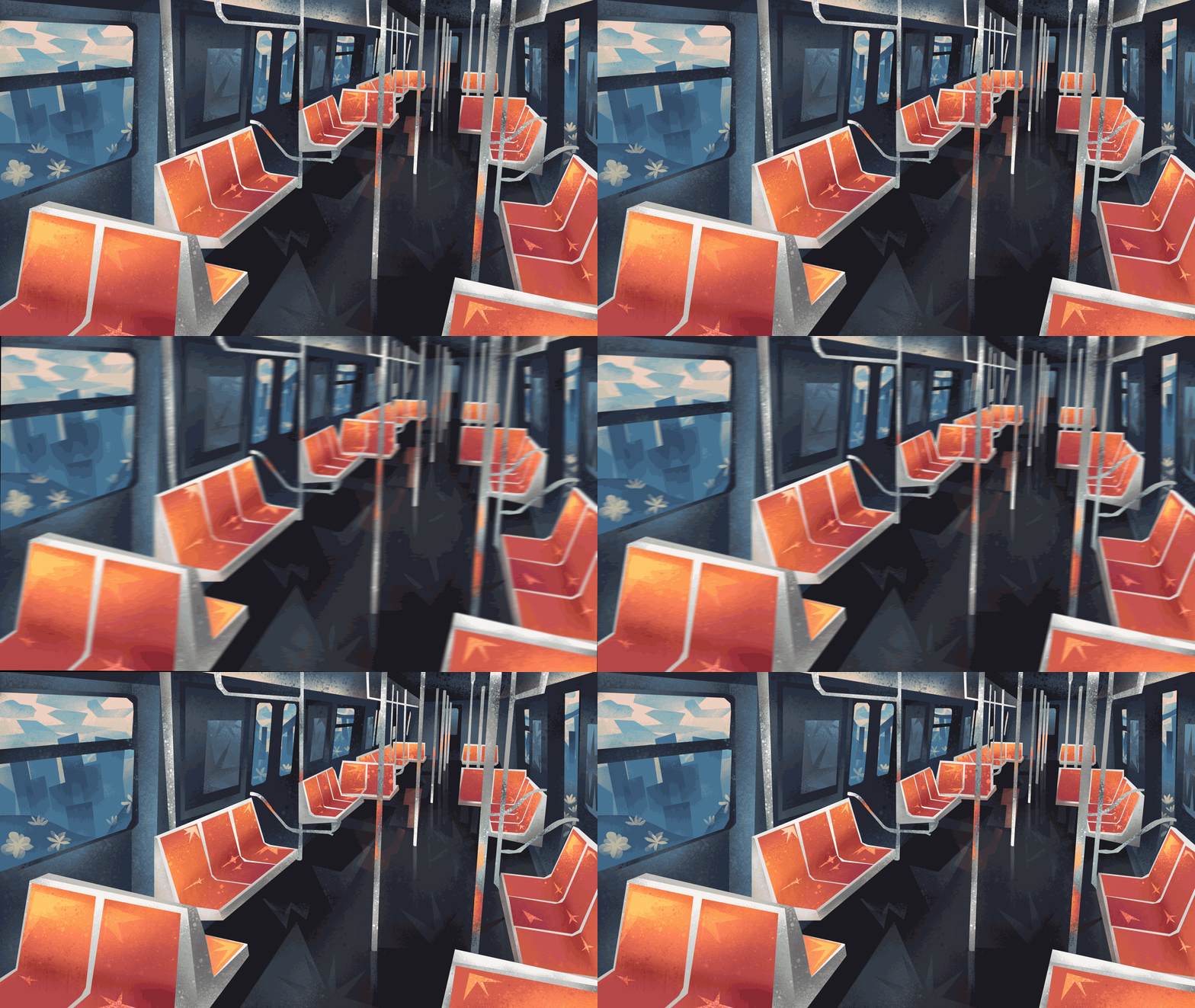
It became a ritual of sorts, mindlessly watching the lights fly by as the train maneuvered from station to station. The rhythmic bumps I memorized as I took the same route with the same transfers every morning—from the B to the D to the E. The screeches and the garbled, impossible–to–parse voice announcing every new stop. The relaxation that came over me as I people–watched and rested my eyes. In that hour before or after school, I was free, the looming need for constant productivity finally subsided. My mom might have banned me from listening to music, just as I was otherwise limited by my curfew, but in the subway, no one was there to surveil me. With my head leaned on a metal pole and the bottom of my phone held up to my ear, the subway was where I began my foray into the world of music for the very first time.
I used to feel a lot of embarrassment for being “behind” my peers. Discovering Rihanna and Lady Gaga as a teenager in the late 2010s, and my favorite artists being whoever my free plan of Spotify shuffled into my life, I was very out of the loop pop–culture–wise. Even more than that, though, I felt intense FOMO throughout my social life. Growing up, I had a lot of resentment toward my parents and their desire to shield me from the world by preventing me from experiencing it. In middle school, when I was just a short walk away from home, I couldn’t make the time to bond with friends outside of class. But starting high school with one of the best subway systems in the world at my disposal, I finally got to be a regular teenager. After school trips to Flushing and Midtown, exploring Chinatown and the other pockets of culture strewn across the city, it was through the fantastical hub that was Court Square–23rd Street station that I was able to see firsthand the different communities and sights that form the garden salad that is my city.
The subway is more to me than just a means to many ends. In a time when third places are hard to find, and simply existing outside costs at least a dozen dollars, the subway became the space between home and school. There’s a beauty in the anonymity a populous, bustling city offers you. In the dense crowds of people, I could find reprieve and an ironic privacy in the city’s most public space. As I developed my first crushes and some of my closest friendships, so many life–changing conversations took place on packed platforms and between stations. My first heartbreaks were wept over and felt out in their entirety inside these silver train cars. When I met up with people beyond my own high school, across the city’s five boroughs, we’d always meet in between, at one of those 472 stations. The subway wasn’t just a means of transportation to me—it offered me a place to exist away from the watchful eye of family or school.
Even now, in my final year at Penn, I look back fondly at the memories I had either with or because of public transportation. I miss the ritual and the sense of freedom it offered me. In my four years of taking it every day, the subway has seen me at my best and my worst, from opening my college acceptance letters on the Manhattan–bound C to weeping over cheap Valentine’s Day gifts in the Queens–bound 7. As a young Muslim kid with protective parents, it was my path to an almost normal teenage experience. It became the means to my own version of a young–adult American dream.
In a time when conservatism is on the rise, when urban spaces and public transportation are demonized and belittled, it’s important to cherish the services we do have around us. Life in the city is not just for twenty–somethings pursuing business and marketing degrees, nor is the subway an unavoidable inconvenience. To so many of us, it’s home—and personally, I wouldn’t trade growing up in the city for the world.