
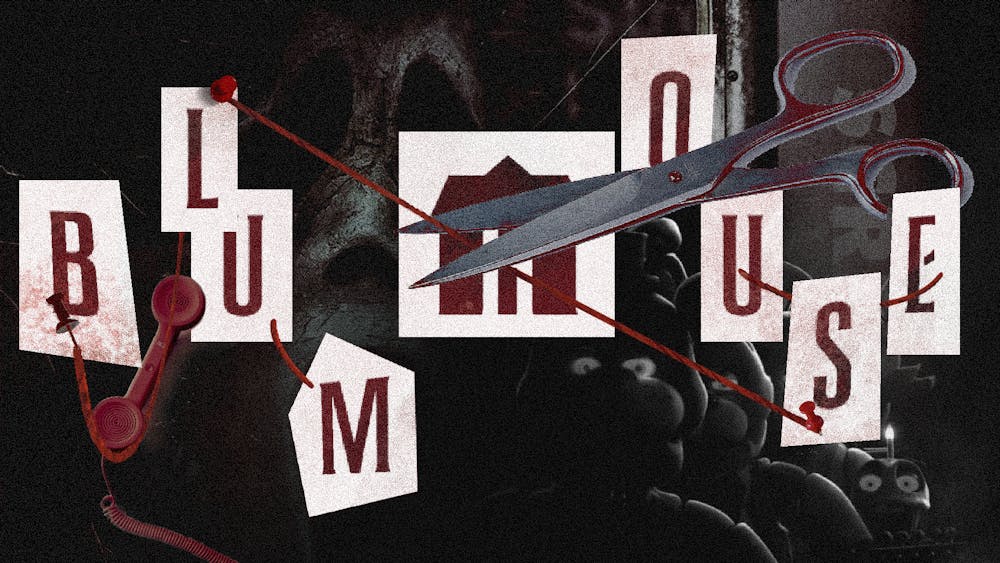
In an era defined by likes, streams, and shrinking attention spans, horror continues to be an example of tried and tested evergreen content—content that stays fresh, relevant, and keeps us coming back for more. There is something timeless and familiar about supernatural spirits, axe–murderers, and the undead—for this reason, they are stories that never die.
Because of its universal appeal and high–concept storytelling, horror has grown to become one of the industry’s most profitable—and sought after—genres of film and television. With big titles such as Ready or Not: Here I Come and Backrooms slated for release (in late March and late May, respectively) and 2025’s entire film slate defined by horror heavyweights like Weapons and Sinners, the genre isn’t going anywhere. And not to mention that horror had an incredible sweep in this year’s Academy Awards. The question then becomes: who does it best and why?
Many in the industry would answer Blumhouse Studios.
The producers behind Academy Award–winning films including Jordan Peele’s Get Out and hit film series like Paranormal Activity and The Purge, Blumhouse quickly established themselves as industry leaders in horror. What sets the studio apart—other than their entrepreneurial mindset and competitive financial model—is their willingness to take risks and bet on themselves.
In other words, Blumhouse has guts. And that’s how they win.
Founded by producer Jason Blum, Blumhouse Studios leads with their low–budget production model, allowing them to bring high–concept stories to the big screen. The minds behind notable gory franchises including Insidious and Sinister, Blumhouse is now making even bigger industry moves. The company recently merged with James Wan’s Atomic Monster in 2024, combining two of the industry’s biggest powerhouses in horror. Now, the studio has produced a catalog of close to 150 feature films, expanded into television, and launched a new gaming division. 2025 was a record–breaking year, as Atomic Monster and Blumhouse surpassed $1B in revenue. After M3GAN 2.0 flopped at the box office, the studio turned to some of their most profitable franchises, including Five Nights at Freddy’s 2, Conjuring: Last Rites, and Black Phone 2 to dominate box offices.
While low–budgets may appear risk–averse on paper, they represent a notable gamble for the studio, mainly because Blumhouse compensates its talent after a film’s release to maintain low–budget production costs. Deferred compensation also makes it more difficult to attract top talent who prefer being compensated in higher amounts upfront. However, there’s a benefit to being subject to these constraints: Blumhouse can discover fresh blood.
As a CEO and producer, one of Jason Blum’s core strengths is his willingness to bet on talent. This philosophy has led to some of his strongest collaborations, and some of the studio’s biggest hits. After tapping director Scott Derrickson to work on the widely successful Sinister, Blum worked with him again on the 2022 low–budget horror, The Black Phone. Originally planned as a stand–alone feature, and based on a short story by Joe Hill, the film centers around Finney Blake (Mason Thames), a child who gets kidnapped and imprisoned in a sound–proof basement by a sadistic killer named The Grabber (Ethan Hawke). Finney discovers an old phone on the basement wall, and with it, the ghosts of the Grabber’s past victims who help him survive. The film grossed over $161M worldwide (on a $18M budget), and audience reception was so high that Derrickson was greenlit for an unexpected sequel, Black Phone 2 (2025), which also delivered a strong box office performance against its $30M budget. Despite getting the greenlight, the sequel was risky; it’s campier, pivots to follow the journey of Finn’s younger sister Gwen (Madeleine McGraw), and is an obvious tonal shift from the original.
Black Phone and its sequel are one of many examples of what makes Blumhouse stories work: delivering on fun and thrill, yet successfully balancing spectacle with universal storytelling. Black Phone and its sequel situate a coming–of–age character arc within the horror genre. Totally Killer, a standalone 2023 feature, is Back to the Future meets Scream—fun, nostalgic, and completely aware of its own silliness as it tells the story of a daughter trying to save her relationship with her mother. These stories make thrilling loglines—they sell well to investors and generate massive fandom.
Blumhouse fans know what they want. Yes, they want guts and gore, but they want emotion, too. They want to see themselves in a character who trembles in front of an axe–wielding masked killer, but escapes anyway. They want to feel like a kid again, watching Freddy Fazzbear loom down the checker–tiled hallway on the big screen and feel their stomach twist in knots, like it used to when they lay awake playing the game past their bed time.
Simple, high–concept stories don’t need to make sense to be truly enjoyed and appreciated. Critics can hammer FNAF 2’s illogical plotline all they want. But Blumhouse did not make that movie for them. They made it for the fans—the ones who keep watching. Because just like Blumhouse is brave in its production philosophy, the viewers are brave, too. It’s why we watch horror in pitch–black soundproofed boxes with strangers in the first place: to see if we’re brave enough to stomach something so cruel and gut–wrenching.
After just releasing the top–trending original series Scarpetta on Amazon Prime, and with titles like Lee Cronin’s The Mummy and Curry Barker’s Obsession slated for release later this season, Blumhouse has a thrilling future. The studio knows how to spot talent, how to stay relevant, and how to take risks in an industry that prefers security and guarantees over betting on bold new ideas.
But most importantly, Blumhouse keeps its fans front–and–center. And like William Afton, we always come back.