Sure, the United States may not technically have its own officially–instated monarchy, but the Kennedys might just be the closest bet to many. Although widely known for John F. Kennedy’s historic presidency from 1961 to 1963 until his assassination, and his wife, former First Lady Jackie Kennedy Onassis and her groundbreaking influence on 1960s fashion and culture, the Kennedys’ political and social influence dates as far back as the 1800s. Over the course of centuries, they have endured as arguably one of the most politically and socially influential families in the nation’s history.
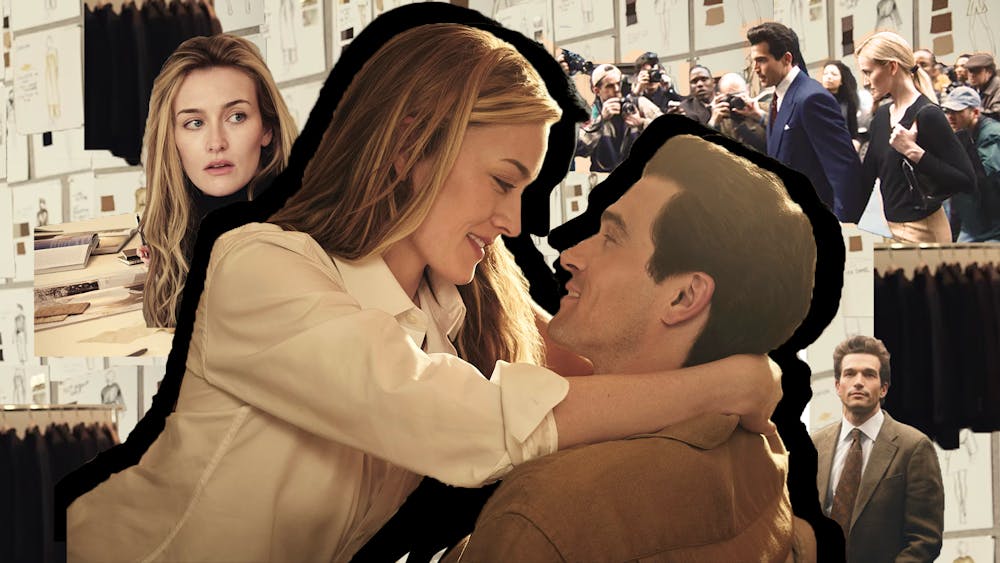
But in the 1990s, the Kennedy family was ushered into a new era that transcended strictly politics and fell into nearly full–force celebrity stardom. John F. Kennedy, Jr., the son of JFK and Jackie O., and his relationship with Carolyn Bessette–Kennnedy became America’s cultural fixation of the 1990s. The pair was dubbed one of the most prolific “it” couples—the equivalent of “American royalty” so to speak—of the decade, up until their tragic deaths in 1999 as the result of a plane crash. Almost thirty years later, Bessette and Kennedy have still remained an important part of the American public consciousness. But now, the story of their whirlwind relationship has been reinvigorated, only this time with its own dedicated television hit series that is capturing the attention of new generations of audiences. So what are we to make of this resurface fascination with Love Story’s subdued, minimalist styling? Well perhaps, at its core, in a modern–day fashion world oversaturated with fleeting aesthetics and microtrends dictated by social media platforms, Love Story now has viewers brimming with nostalgia, craving the same simplicity and, above all, authenticity that Bessette and the ’90s at large epitomized when it came to personal style.
Created by Connor Hines and executive produced by Ryan Murphy, Love Story: John F. Kennedy & Carolyn Bessette is a limited television series—aired by FX and available to stream on Disney+ and Hulu—that documents the ups and downs of Kennedy and Bessette’s tumultuous personal lives under the close watch of the American public eye. The show is the first installment in Murphy’s Love Story anthology. Actress Sarah Pidgeon plays the role of Bessette, a fierce, driven sales assistant–turned–executive at Calvin Klein, while Paul Anthony Kelly plays Kennedy, who struggles with navigating his political career and the added pressures of his family legacy.
Since its premiere on Feb.12, 2026, the show has amassed millions of viewers with its weekly–released episodes, becoming FX’s “most–watched limited series ever on Disney+ and Hulu” and Disney+’s highest streamed drama. While many are becoming infatuated with the series’ portrayal of Kennedy and Bessette’s relationship, there is another critical aspect of the show that is drawing in a younger audience: fashion.
Love Story isn’t just a time machine back to ’90s New York City, but back to ’90s minimalist fashion, a cultural era in which Bessette was a pioneer. Influencers and users across TikTok have been posting their very own videos inspired by Bessette’s style, from recreating her most iconic looks with pieces from their own wardrobes to hair tutorials and hunts for similar pairs of her signature oval sunglasses.
Major fashion magazines and publications from Vogue and Elle to InStyle are giving interested readers how–to manuals for recreating CBK’s iconic style. Even clothing brands are capitalizing on the massive resurgence of CBK–inspired ’90s minimalism. Take Urban Outfitters or Anthropologie for example, who each have their own carefully curated selection of ’90s–minimalist–inspired pieces for women featured on their website, ranging from slouchy low rise jeans and loafers to crisp white button–up shirts.
If the ’80s was chronicled by vibrant, obnoxiously–neon colors, funky patterns, and sharp shoulder pads, then the ’90s was its utter antithesis. The new decade, faced with a recession, ushered in a great departure from previous fashion trends, now orienting itself around simple yet still stylish silhouettes, neutral tones, quality materials for an “effortlessly chic” look that seems to never go out of style. As Harrods notes “A palate cleanser between the maximalism of the ’80s and Y2K kitsch, the mood of ’90s style was effortlessly understated (the original quiet luxury, if you will) … Much of ’90s minimalism was defined by a cosmopolitan ‘day–to–night’ quality that dominated the decade’s fashion parlance.”
Bessette was a key figure in the ’90s minimalist fashion movement, influencing the style choices of women all over. She often donned subdued but chic ensembles: tailored, clean–cut black wool coats, classic blue jeans, black leather boots, button down poplin shirts, black turtlenecks, and more. Wearing little to no jewelry and minimal accessories (with the exception of neutral designer handbags, occasional tortoise shell headbands, and dark oval–shaped sunglasses), Bessette’s toned–down, quiet–luxury style spoke for itself.
Her wardrobe was filled with “Prada, Helmut Lang, Jil Sander, and Yohji Yamamoto … She was loyal to Levi’s 517s and stocked up on her favorite headbands at New York apothecary, C.O. Bigelow.” Bessette’s distinct style naturally made sense, especially as a salesperson eventually turned publicist for Calvin Klein. The designer brand was widely known during the time for its own leading interpretation of minimalism, featuring clean cuts, muted color palettes, and simple yet elevated styles.
In Love Story, costume designer Rudy Mance ensured that the show remained true to Bessette’s timeless personal style, sourcing vintage clothing items and accessories that transported viewers back into the 90s fashion space.
“With careful consideration of these necessary attributes, Mance focused on the costuming’s quality—using crisp lines, elegant silhouettes and neutral colorways to shape the characters’ intertwined storylines and immerse the viewers in 90s era nostalgia,” Forbes wrote. Throughout the show, Pidgeon could be spotted in scenes wearing looks that closely resembled Bessette’s own: black turtleneck long sleeves, tailored black pants, and loafers, a long black slip dress, trousers and sweaters, and more.
Decades since the era concluded, ’90s minimalism and Bessette’s style have remained cultural fixations, especially for newer generations of audiences being introduced to the pillar of fashion history through Love Story’s reinterpretation. Today, much of fashion—what’s in and what’s out—is dictated through social media platforms. For Gen Z in particular, microtrends in particular are ever–prominent. With specific aesthetics such as “mob wife,” “coquette,” or “clean girl” born through digital spaces such as TikTok and Instagram, it is easy to get wrapped up in trends that go out of style in a matter of weeks. As an article from the New York Times states “Every generation feels pressure to keep up with trends, especially in its youth. But many members of Gen Z seem to be under particular stress … Short–form video platforms like TikTok are fertile territory for microtrends.”
While microtrends are indeed simply Gen Z’s way of trying to express themselves and fit it among each other, with fleeting fashion fads constantly popping up across our FYPs, it can be easy to feel as though genuine personal style, untainted by the influence of social media popular trends, is somewhat of a lost art. Bessette’s quiet, subdued style that epitomized ’90s minimalist fashion represents a departure from microtrends and an emphasis on authenticity that many seem to be nostalgic for today.