To observe all of Philadelphia’s wonders, you cannot miss its art museum’s West Entrance at sunrise. At this hour, dozens of runners gracefully sprint up the steps, mirroring the iconic training montage of 1979’s Rocky. Atop this path lies a statue of Rocky himself, saluting each individual’s effort and resilience. While standing beside the monument, a visceral feeling of against any obstacle emerges, alike Rocky’s unexpected win against Apollo Creed. Since its installation, however, this monument has represented more than athletic persistence: among marginalized communities, it has become a living, multipurpose symbol of resistance.
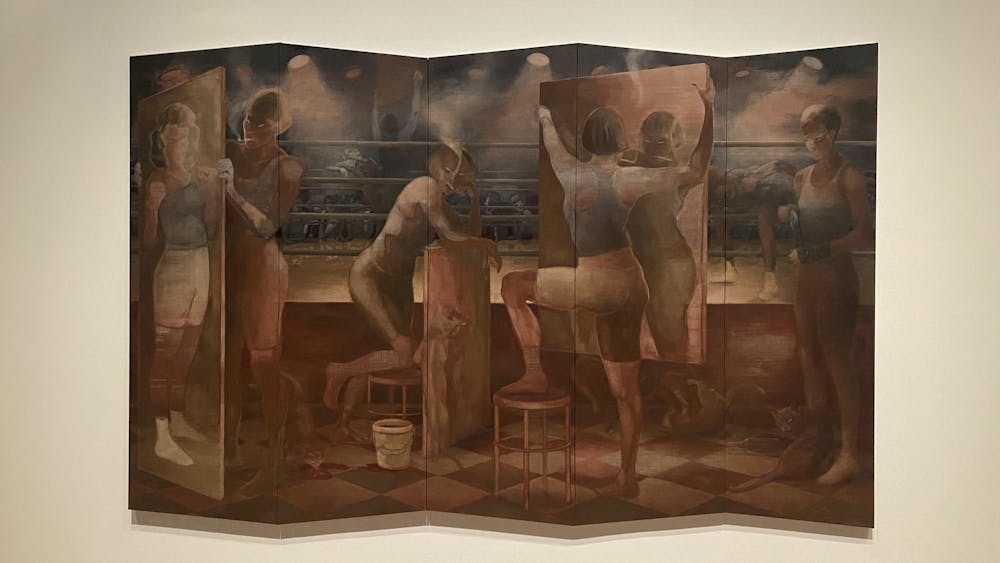
This spring, the PMA’s “Rising Up: Rocky and the Making of Monuments” exhibition illustrates this resistance. Curators Paul Farber and Louis Marchesano offer an intricate glimpse of boxer monuments—presenting the narratives and legacies such structures entail. Although spotlighting the museum’s own statue, the collection showcases structures featuring other Philly–renown heavyweight champions—like Joe Frazier’s Broad Street Gym. Simultaneously, Farber and Marchesano portray an archetype defining each boxer—underdogs tenaciously working to become legends. In doing so, they convey why such monuments have emerged as political symbols—guiding movements for visibility among underrepresented identities.
Farber and Marchesano open the gallery with “Enshrining the Boxer,” a collection of ceramics, statuettes, and sculptures depicting boxing matches spanning 500–100 BC. Such artifacts introduce the gallery’s thematic underpinning: since ancient times, artists have characterized boxers as diamonds in the rough. Subsequently, “Monuments to Modernity” propels this framework into 1700s–1900s America, while presenting boxing’s emergence as a professional sport. For instance, the gallery recalls heavyweight champions Joe Louis and Joe Frazier: yearning to escape lives as sharecroppers, these men started anew as prizefighters in Detroit and New York City. These anecdotes provoke a considerable perspective of boxing champions: while a culminating victory often dictates one’s legacy, equally significant is the journey preceding this breakthrough. 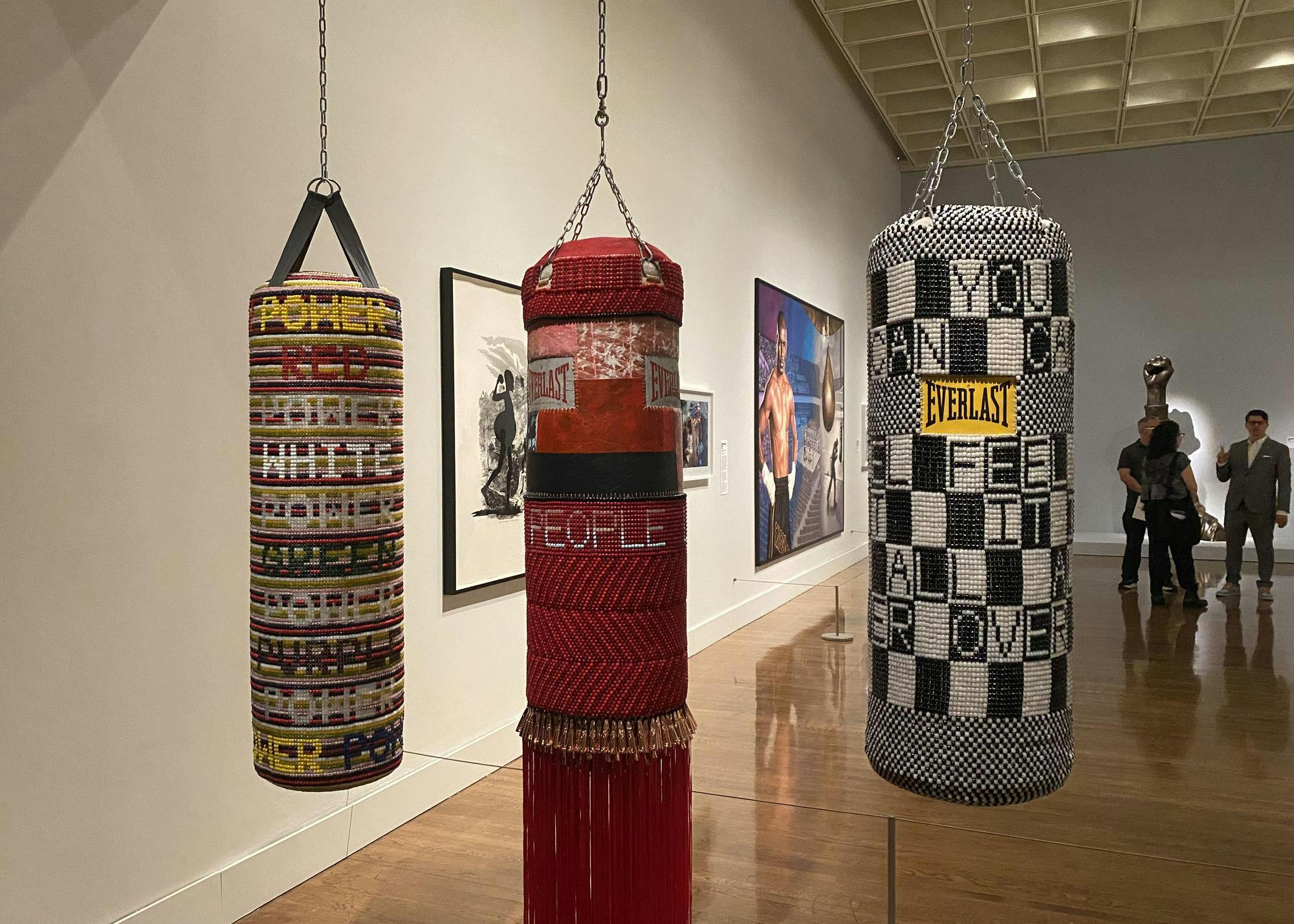
Through viewing the artwork, observers glean why boxing monuments have long underpinned Philly’s cultural landscape: these structures symbolize not only athletic, but also activist victories. The exhibit’s “Underdogs Rising” gallery manifests how contemporary boxer careers—like Louis’ and Frazier’s—combat systematic injustices. Within his 2005 “Bernard Hopkins” mural, artist Eric Okdeh juxtaposes the start and ending of this legend’s training: after years of training during incarceration, Hopkins ultimately earned a middleweight championship. Additionally, Hankie Willie Thomas has a 2023 “Solidarity” statue.
Additionally, photography extends this trope internationally. Farber and Marchesano present 2001 prints from Thomas Dworzak, entitled “Afghan Refugees at the Exiled Kabul Box Club.” Within the Taliban’s oppressive regime, the series communicates a demise in the freedom of practicing boxing.
“Rising Up” shows that monuments—and the stories within—speak great volume. Their legacy demonstrates an impact of perseverance, ambition, and never underestimating oneself. Quoting former Eagles player Malcolm Jenkins, the exhibit conveys that “real resilience in Philadelphia is not limited to stadiums.”