
It was 2012 when I experienced my first political thought.
I was watching the Obama–Romney debates in the living room with my parents, wholly engrossed as I witnessed the only two politicians I had ever heard of duke it out before the American people. They were in the middle of a discourse on immigration when I heard Obama say that Romney wanted to send the children of immigrants back to their countries. He was talking about DACA recipients, of course, but I immediately burst into tears. Would I have to go back to India? The last time I visited, I’d gotten a stomach virus!
While I didn’t really know who former President Barack Obama was, I knew that then–United States Sen. Mitt Romney had to lose.
There’s a reason we don’t let children vote, I guess. But at least 7–year–old me had some kind of policy position. Could you say the same about most Americans? The problem, it seems, is not just a lack of political faith, but a surplus of political apathy. That’s where we come in.
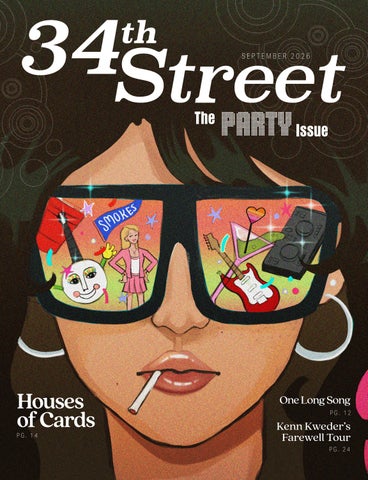
Don’t know who to vote for? Don’t know why you’re voting? Don’t really know what politics is? This issue has you covered, with urgent dispatches on goings–on at the federal, state, and campus levels. Features Editors Sadie Daniel and Ethan Sun pounded the pavement hard this month, speaking to insiders about the conservative student movement and open expression on Penn’s campus. You’ll also find plenty on the unionization wave washing over Penn’s campus, as well as a peek into the inner life of the most powerful man in Penn’s Undergraduate Assembly. It’s not all so serious—the coming pages also contain a profile of the most interesting candidate in the upcoming Pennsylvania gubernatorial race, a personality quiz that’ll tell you how you ought to vote in the upcoming midterms, and, of course, a crossword.
It’s easy to shy away from judgments when it feels like politics is a TV show you can tune in and out of whenever you feel inclined. When it comes to the issues closer to home, however, that kind of hedging comes apart at the seams. How should we fight against the erosion of free speech rights on Penn’s campus? How can we fix an economy that serves the interests of the few at the expense of the many? How can we as individuals do anything at all to solve problems at the level of the collective? While you won’t find clear answers in this magazine, you will get some useful hints as to how to settle these questions for yourself.
In the pages that follow, Street has interpreted the world—your job, reader, is to change it.