1000 items found for your search. If no results were found please broaden your search.
(02/25/19 12:45am)
February is Black History Month which means there’s no time like now to watch extraordinary film and television that honors black creatives and preserves black narratives and culture. To celebrate, Hulu just released a new collection, Black Stories. Comprised of hundreds of titles, Black Stories features unique artists, histories, and stories across all genres. I’ve rounded up a list of the collection’s best five titles you need to watch ASAP.
(02/21/19 7:01pm)
The Oscar nominations were met with excitement. Black Panther got a Best Picture nomination, Alfonso Cuarón was nominated for Best Director, and both Rachel Weisz and Emma Stone were nominated for The Favourite. Perennial industry greats were nominated, including Glenn Close for The Wife and the Coen Brothers for The Ballad of Buster Scruggs. However, while the public celebrated these successes, there was a glaring omission in the list of Oscar nominations: Director Paul King’s artistic masterpiece, Paddington 2.
(03/11/19 12:48am)
I remember the first time I ever heard the phrase “manic pixie dream girl"—it was as though millions of tiny puzzle pieces clicked together in my head. It was a concept I had been aware of, something that had long frustrated me. It was the phrase that sat at the tip of my tongue for every heroine that fell flat, every female character that managed to strike just the wrong nerve. I knew something wasn’t quite right, but until that moment I was helpless when it came to articulating my grievances.
(02/13/19 7:39am)
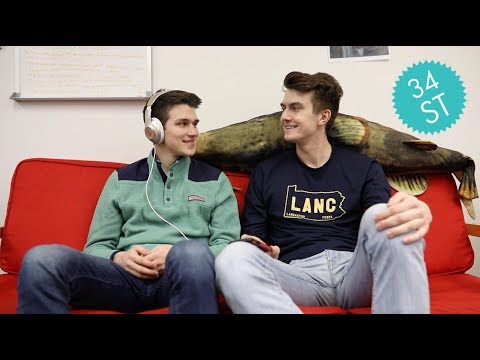
We asked Max and Will to talk about their relationship while the other person was wearing noise-canceling headphones. This is both sides of their story.
(02/13/19 7:17am)
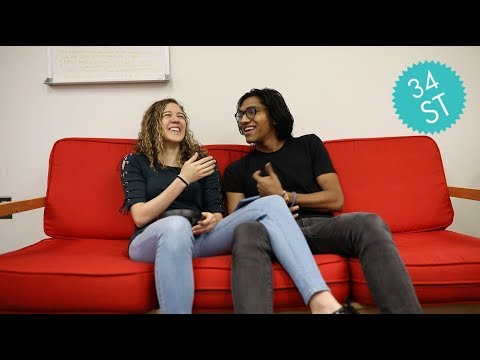
We asked Sabrina and Jahnik to talk about their relationship while the other person was wearing noise-canceling headphones. This is both sides of their story.
(02/13/19 7:13am)

We asked Kiana and Brian to talk about their relationship while the other person was wearing noise-canceling headphones. This is both sides of their story.
(02/13/19 6:45am)
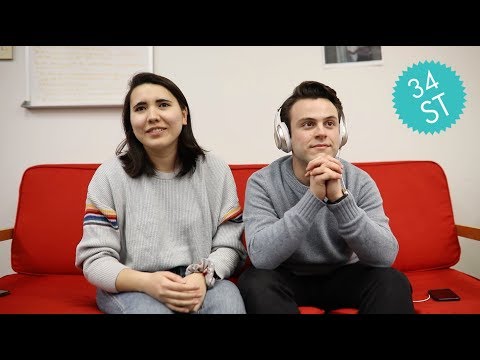
We asked Susanna and Eric to talk about their relationship while the other person was wearing noise-cancelling headphones. This is both sides of their story.
(02/17/19 10:50pm)
While most horror movies on Netflix are campy and yawn–inducing (I’m looking at you, The Babysitter), a new subset of the genre is gaining popularity: foreign–language horror. These select viewings are all highly rated by critics and audience members alike, and are guaranteed to make a chill creep down your spine.
(02/13/19 7:09am)
PSA to Jeff Bezos: “There’s something in your pants that makes girls want to fuck you. It’s not your dick, it’s your wallet.”
(02/13/19 8:15am)
Essay Contest Winner: Learning to Feel Beautiful
(02/13/19 6:16am)
I’m the kind of person who tends to fuck everything up. Friendships, relationships, casual dating situations—you name it. Self–doubt always creeps in—does this person really like me? Am I comfortable hanging out with them? Why put in the effort to talk to someone new when I can have a fun conversation with one of my friends? I cut things off, I get way too sensitive, I infect people with my angst. And then, after I do those things, I lie awake kicking myself for doing them. But with you, things are kind of different. You rejected me, my all–time fear! But our friendship survived. And I’m actually happy about that!
About a year ago, you and I both broke up with guys a couple days apart. I was full of angst, but you talked to me. You’d already had way more experience than I’d had, but you didn’t make me feel inferior because of that. We got coffee and we talked for hours. And then, just as I was beginning to figure out how much I appreciated you, you left for Europe for four months. I don’t know whether it was our long text conversations or the aura that surrounded you while you were gone, but somehow I began crushing really hard. Every time you sent me snaps, I would swoon and tell my friends, “his eyes are so beautiful!” My friends got tired of hearing me talk about it, but I didn’t care. I was in love!
I couldn’t let well enough alone: I decided to tell you. By text. While you were still away. I spent twenty minutes trying to write a text that seemed flattering but not too clingy, as if my exact tone would make or break whatever romantic possibilities existed. I sent it and went to dinner with friends, took a shower, cleaned my room, and ignored my phone for three hours. Then I opened your reply: Thanks for telling me all this, it means a lot, but I don’t think so.
Ahhh! I’d blown it! I’d killed my dream and almost definitely burned bridges with someone who’d become a valuable friend (despite being across the globe). That night I got really drunk at a party and wandered around the city for several hours in the dark. I was inconsolable.
Then, the next morning, you texted me.
Hi, you said. You were at some hacking event and were looking for suggestions for music to put on a website you were designing.
Wow. Seeing your name in my notifications was the last thing I expected. I assumed you were trying to be kind and reach out, and so I thought of a couple songs and replied. Nice move, Jackson! I thought. You should have left him on read. You don’t need him anymore!
But our relationship didn’t turn out to be about retaliation. Still, we didn’t talk that much for a while, and after the first couple days, I began to get over you. The weather was warm and my friends hung out with me in the sunshine and helped me take my mind off of you. When summer came, I looked forward to getting some time away from the city. I’d applied to spend a month at the beach doing architecture research. You’d gotten back to the States. When I got to Wildwood, I texted you and said hi. You should come down and visit sometime, I said, thinking this invitation was as meaningful as the many lunch plans that people make on Locust every day. Your response flabbergasted me: Let’s find a weekend! I was confused—I thought you’d never want to see me again after everything weird that had gone down. But I was also excited—Wildwood is a nifty place, and I knew we could go on a hella bar crawl! (Or ride some roller coasters or something? I hadn’t thought about it yet!)
So you came to visit me! I was so nervous to see you that an hour before you arrived on the bus, I had two shots of vodka at my friend’s house to ease my nerves. But when you came, everything was OK! I didn’t need to worry! We rode the Ferris wheel, we talked about music, we got drunk. It was all right. Everything was in the past. Our friendship was a sunny, beachy haze with Summer Salt playing in the background.
Except that my feelings came back, dammit. Back at Penn, the first time I saw you, I panicked. When you walked in the room, my friend next to me must have thought I was crazy. “Oh my god! It’s him! Does he see me? I’m gonna go to the bathroom! Wait! I have to pass him to get there! I’ll just duck! No, that looks stupid! Is my hair OK?” And throughout some of the fall, I was confused when we went to bars together as part of a larger group of friends. I saw all these couples getting happy hour drinks together, and I wished that they were us. I was in a better place about you (and even started going out with other guys), but I still couldn’t figure out what I was feeling.
After a few months, though, my feelings began going away. Gradually, but still! I realized that our personalities would never work together. I noticed that I’m not really your physical type, and I sure wasn’t gonna go to the gym and make that happen. And I found that you’re way more fun when I’m sharing weird Tinder screenshots and groovy memes with you than you’d be if we were anything more than friends. You’re a cool guy, and it would be a shame to waste that on a relationship, which would probably have ended quickly anyway, since I’m a massive flake.
Thanks for being there for me, even when it didn’t really benefit you. Thanks for going to gay bars with me and enduring the free tater tots that super–ripped bartenders sometimes give us because they think we’re together. And most of all, thanks for not writing me off after I told you how I felt. While there’s no promises I’ll feel this way tomorrow, right now, I’m sitting here in the oddly warm breeze and feeling peace about all this, and it’s pretty groovy.
(02/13/19 6:11am)
I met Adam on Bumble in September, because I’m a feminist. I was in London, and he had a British accent, and the world felt alive. It was still sunny, and to me, pounds were equivalent to dollars, and everything was flavored by elderflower and rose. We met on a Wednesday, in Hackney, and I walked through a back alley to get to Hatch Coffee, which looked just indie enough. Adam was waiting outside, in a burgundy sweater and the black jeans I would soon give him shit for (why would you ever wear black when you could wear dark wash denim and maybe even roll the cuffs and actually look like an adult man?), and we made the awkward introductions. He hugged me, which I would never typically accept, but perhaps this is what people who meet on the internet do, and I, a foreigner, would give my origins away.
(02/13/19 6:17am)
Whatever love is, it confuses me. I know the warm feeling in my chest when hugging my mom, swooning after taking a heavenly bite of Nutella, and feeling the relief of sinking into my bed after a long day. But true love? A foreign phenomenon to me.
At one point, I thought I was in love. Or rather, I convinced myself I was in love because I wanted to feel it so badly. A year ago, my friend set me up with a guy who I began to really like. Four dates, three coffees, and two movies later, I was naive enough to believe he could be my Prince Charming. As a young girl, I grew up watching Disney movies and it was ingrained in my head that I, too, would eventually be united with my prince and we would live happily ever after. The fantasy that someday someone would sweep me up off my feet and into eternal bliss stuck with me like glue throughout my adolescence.
It sounds so silly to me now, but for the longest time, I actually believed I needed to be in love with someone else to be happy. This feeling has chased me through many love interests and made it harder for me to put my foot down when I knew I deserved to be treated better. The guy I started developing feelings for—let’s call him Jake—decided, after getting to know me for three months, that he all of a sudden and without any explanation, wanted nothing to do with me. In a flash, we went from constant conversation to a hum of radio silence. It was painful—but I kept telling myself that he’d turn around, that he’d come back for me and realize his mistake. But he never did.
I clung to false hope like a kid climbing the monkey bars. When the radio silence began I mostly was confused. I thought it was my fault. I was angry at myself because, of course, if a guy lost interest, it was because I did something wrong.
My emotions became so potent that they blinded me from processing the situation rationally; if you are mistreated by someone over and over again, you probably shouldn’t waste your time on them anymore. I couldn’t fathom why I gave one person so much power—the power to dictate my mood, to empower me, to control me. Ultimately, I acted the way I did because I so badly wanted to believe that my fantasy of finally finding my prince charming could actually be tangible.
After giving many second chances, it dawned on me that I didn’t even know the person I was falling “in love” with. Clearly, I loved the idea—the illusion—of a person I constructed. In truth, my fantasy of Jake was simply that, a fantasy: a pristine version of him stripped of all his imperfections, of everything I wanted him to be, and for us to be. It blinded me from seeing how deceitful he actually was. My only regret? I willingly relinquished to him the power over my emotions.
Looking back, I know I wasn’t in love with Jake. I liked the feeling.
There was a void I was filling with this fantasy. When Jake wasn’t around to talk to me, my mood sunk. I felt hopeless. I knew there was a problem because if he did talk to me, I instantly went from devastated to cheerful.
The problem: I didn’t love myself unless Jake did. My self–appreciation stemmed solely from his compliments and feeling loved by him.
And that was the first time I realized that the void I was needing to fill was empty of self–love. I used to think it wasn’t okay to really like things about myself because often it feels like real self–love is mislabeled narcissism. As a result, I waited for someone else to love me so I could love myself.
What I didn’t know is that love should not and can not act as a form of validation. If someone says that they love you, that shouldn’t be treated as permission for you to love yourself. Self–love comes from within; it stems from believing in your self–worth. Only you can construct and control how you feel about yourself. External validation is not a prerequisite for self–appreciation.
The issue is that self–love isn’t a norm or expected behavior in our society. We don’t grow up learning that it’s important to love ourselves. Even the definition of self–love is misleading because its synonyms are vanity, narcissism, and conceit. Rather, self–love is a person’s comfort in their own skin because they have the confidence and courage to admire themselves. No one is perfect, but if we can learn to love ourselves and all of our imperfections, we can eventually work towards a genuine acceptance of our whole selves.
Although imagination is a beautiful thing, constantly ruminating about the past can only lead to disappointment and self-doubt. A friend once told me that a “happy” person is one who doesn’t get stuck in the past—the happy person learns from their past mistakes and then has the capacity to move on.
It took time, but I eventually I stopped thinking about Jake every day, what he was up to, who he was with—and I felt so much freer when I ceased to put energy into someone who never had the intention to reciprocate it.
I’ve realized that romantic love, even though I’ve yet to actually experience it, can’t possibly be what I saw and wished for as a young girl who idealized Disney’s happy endings. I know I will find someone who loves me because I chose to love myself first.
I don’t need a Prince Charming and neither do you.
(02/13/19 6:02am)
“Your dad is a bad dad,” my friend Annabelle informs me, with the world–weary confidence she gains from being a whole three weeks older.
“My dad isn’t a bad dad!” I respond indignantly, with all of the grouchiness and intimidation a short, chubby, violently blonde four–year–old can muster while wearing light–up Skechers and a stained T–shirt.
“No, silly, I said he’s in Baghdad,” she says, stopping on the stairs above me. Not wanting to admit I have no idea what (or who) Baghdad is, I continue stubbornly with the one thing I know for sure.
“My dad is not a bad dad!”
What I didn’t realize was that my father was a US Army soldier, who was deployed to Bosnia, Kuwait, and Iraq over several years before I was born and during my childhood.
While other kids had stuffed teddy bears, I had a pack of stuffed camels (including one particularly memorable camel that spoke only in Arabic and had glowing red eyes) from all of the places he was deployed. I also had a sandy colored bear in camo with a shirt emblazoned with: Somebody in Arifjan Loves Me.
A kid can’t understand the true meaning of warfare. War is something in books and movies, for hobbits and elves, muscled superheroes and clean pressed, sharp jawed WWII heroes. The idea that my dad was in “Baghdad” meant the same as my mother travelling on a business trip, albeit a much longer one. I had no idea of the danger—or that he could die during combat.
My mother took over the role of both parents, raising me essentially on her own for my first few years. We didn’t live on a military base, so she didn’t have the support network that most military families have from other military wives whose husbands are also deployed. She was on her own while raising a kid, although she did have experience with tough situations. As one of the first women at the US Naval Academy, who later became a Marine, and then entered the male–dominated world of defense contracting, she was used to relying on her own strength rather than outside support networks.
Because of the security and reliability that she gave me, I grew up a normal, well–adjusted, and precocious kid. I played soccer, learned Taekwondo, rose up the ranks of Girl Scouts, all while making friends at my local school. On weekends, we would make care packages for my dad, which included my letters and drawings, cookies, and bootleg action movie DVDs that he would share with the Iraqi men deployed alongside him (action movies don’t need a common language). When I was very young, I would try and hide myself inside the box, hoping to send myself as part of his care package.
Every night, my mother would read My Daddy is a Soldier alongside Goodnight Moon because I liked routine. In a military house, few things are ever assured, and this nightly ritual added much needed stability to an unstable scenario.
As a military kid, I learned a lot of essential skills very early: how to meet new people (especially adults), becoming acquainted quickly, how to be alone and entertain myself, and most importantly, how to adapt to unfamiliar scenarios without complaint. My father was a reservist, so his deployments overseas came with little notice. I learned through my tears that while I couldn’t control the situation, I could control my reaction to it.
The official flower of the military child is the dandelion—for a reason. It can grow anywhere, adapt to any situation, and most importantly, is almost impossible to destroy. Life may bluster and roar, but I can always plant new roots, make new friends, and find new adventures in any location. Today, my “good dad” is home, and I have finally learned what (and where) Baghdad is.
(02/13/19 6:06am)
**Content warning: The following text describes substance use and depression and can be disturbing and/or triggering for some readers. Please find resources listed at the bottom of the article.**
(02/13/19 6:07am)
“If you’re a ghost, I’ll kill myself, and we can haunt this house together,” Wei once said to me.
It was his first time over in a couple of months—most nights, we preferred the freedom of his place because I didn’t have to sneak in, and because we could walk around, even microwave leftover chicken tenders, without worrying about making too much noise. He was older, and his family didn’t seem to mind the stranger in their house.
That night, the sky was especially dark. Wei was always jumpy when he came to see me—understandably, because Saratoga was spooky and full of strange silhouettes, made even stranger by unfamiliarity. That night, though, he seemed especially spooked, and when he reached the frame of my window, he whispered, “Why is your city always so dark?”
I’d lived in Saratoga since I was nine years old, so the darkness of the city—how it was hard to tell where the edges of a mailbox melted into night air, where a house was no longer a house—it no longer startled me. But I remembered when I’d first moved here from brightly lit, straight road Morning Glory Lane, and how tightly I’d gripped my mother’s hand as we made our way from our new driveway to our front door because there was a heaviness in the air, a sure presence of an entity or a ghost. It was something about the eerie stillness.
Months later, I remember pulling out of the same driveway and toward Wei’s apartment, half an hour away. He always seemed embarrassed about his smaller apartment and his car, which rumbled loudly when he drove, and whose passenger’s seat door didn’t close properly. I was still a high school student, and going to see him on weeknights felt like a secret life. Sometimes, when I wasn’t careful enough, I would let myself imagine us living in our own apartment, going to our separate jobs in the mornings, and coming back to each other in the evening. Sometimes, when I was even less careful, I would tell him this. And by the way he would respond, with his shy smile and hopeful eyes, I could tell he wanted it too.
Wei pulled himself into the window, and I lifted the swatch from the ground outside and pressed it back into the window frame. I slid the window shut. Even with the blinds open, the room was pitch black except for the occasional splotch of gray in the corners of the room, but I drew the blinds anyway out of habit. As I did, I felt the darkness swallow us. There was something inherent about the quality of that darkness that seemed to erase the walls of the room, that protruded to the outside of the house and into infinity. The only reminder that we were still in my room was the faint blinking of my digital clock.
We crawled into bed together, and he turned his body toward mine and wrapped his arms tightly around me, like he was afraid of something. Finally, he cleared his throat. “I’m scared right now because I can’t see your face,” he said. “What if I turn on the light and you’re not there anymore?”
Wei often said things I did not understand. I snuggled closer to him, a new light flickering on and off in my head. “What do you mean?”
“I don’t know,” he said, and suddenly, his voice sounded so uncertain. “What if you’re a ghost?”
“What if I am a ghost?” I repeated, waiting for him to go on. A cruel part of me liked an uncertain Wei—I had been uncertain for so long in this relationship that it felt good to not be on that side for once. I felt like I had entered a dream: I knew how we were talking was bizarre, yet it didn’t feel out of place. I let myself melt into this new reality until my senses could no longer distinguish between what made sense and what didn’t.
“Are you admitting that you are?” he asked softly. His hand loosened on my torso like he was preparing himself for something.
“No, but what if I was?” I asked in a way that made the situation sound more than hypothetical, more than a surreal dream. I wanted suddenly, desperately, to understand this paradigm of his, one whose nature I might’ve understood fully if I were younger, if I were still a child.
“If you were, then I would kill myself,” he replied in a mix of pain and feigned nonchalance. “It would mean that these last nine months have been nothing.”
There was a danger, a toxicity to those words, but in the moment, I didn’t care. Accepting them as truth meant denying that there was a place where mailbox melted into night air, where a house was no longer a house, where boundlessness still had a boundary it wasn’t allowed to cross. Where we couldn’t haunt this house together, not now, and not ever. I let myself sink into the words, dissolve into a paradigm whose ending I could already see. I still hadn’t quite thought about what would happen when I left for school—I knew he would hate seeing me living a life without him. Little did I know. I reached for the desk lamp and turned on the light.
(02/13/19 5:57am)
There’s a button pinned to a cork board in my dining room. It’s somehow managed to stick with me through two cross-country moves and twice as many apartments. A bland, white type-face stares out at me from the requisite red and blue background, loudly proclaiming, “I met my husband at Penn!”
It was picked up years ago as a joke. In a fit of giggles, jaded college friends and I pinned them to our backpacks—an act so painfully designed to be ironic it’s physically uncomfortable to look back on now. “Can you believe these actually exist!?”
I went through the entirety of my undergraduate degree without a single significant relationship. A victim of campus hook-up culture and a steadfast believer that I was just too busy for love. If I said it to enough people it would be true, right?
Throughout the years other buttons came into my possession:
“I met my wife at Penn!” (My heart still fills with joy when I think of my platonically beloved college spouse and go-to party date)
“I met my best friend at Penn!” (Who else would I spend the High Holidays with?)
“Quaker for life!” (lol – but also, I came back for graduate school so that joke’s on me)
But I couldn’t tell you where any of those are now… The only one that’s still pinned to my cork board, two cross-country moves and twice as many apartments later, is THAT goddamn button.
“I met my husband at Penn!”
It caught my eye the other day. I’ll graduate with my master’s degree on the same day as my five-year reunion. And I’m still peddling that age-old excuse… no, no I’m just too busy for a relationship. I might have picked up that pin as a joke, but it’s starting to feel like curse. Either that or I desperately need to examine my own priorities and insecurities while also calling out the toxicity that can exist around developing relationships in a highly competitive environment amid a generation with an increasingly short attention span…. Nah, that fucking pin is cursed.
Well, come all ye loyal classmen now, in hall and campus through… I’ve started to look at Ph.D. applications, and I really don’t need that in my life right now, so help a girl out? Thanks.
(02/13/19 6:14am)
Sometimes, it is hard to make people understand that Sam and I aren’t dating. Part of the problem is that we have before—in high school, for a year or so, on-and-off one too many times. Part of it is that, a la Avril Lavigne, he is a guy and I am a girl, and while we both know how to bitch about heteronormativity and society, we probably don’t do it loudly enough. Probably the biggest issue, though, is that we still love each other. We both feel it. We both know it. And—to the eternal chagrin and confusion of whatever person I’m trying to trick into dating me at the time—we still say it to each other.
I know that it’s weird. We talk about it, sometimes, when it’s just the two of us hanging out, using language we’ve stolen from our combined years of therapy, about emotional labor and reciprocity and so-what-do-you-need-right-now. More often, we joke about it. Or joke around it. I spend a lot of time performing playful hatred for him. Our greetings over text have become, “Hey bitch,” et al. I am constantly making fun of his clothes, his shoes, his experiments in facial hair. I try to especially play it up in front of other people, especially the ones who aren’t quite sure what’s going on—as if to signal, “it’s cool now, it’s funny, it’s chill. We’re chill. Definitely chill.”
I know a good deal about acting chill. For my entire life, I’ve felt like I’ve never been able to get close enough to anyone. I was a chronically insecure kid from the start. I waited on the edges, in the periphery of other people’s lives, first terrified that someone would come up and try to pull me in, and then—after years of feeling alone—just as scared that no one ever would. In that regard, Sam is my opposite. As far as people go, he is almost incomparably warm. He can win any position, breeze through any interview, and endear just about anyone to him. It runs deeper than charisma—he has a unique ability to make everyone feel seen, to treat everyone like they’re valued, even special. When I met him, that was what I needed; we have been close for this long because I clung to that kindness and have yet to let go.
Through the ages, there have been tens of thousands of words written devoted to extolling the virtues of first love, but the romance is the dullest part of this story—even now, just a few years later, the sentimental pull is all but gone. The real love story is about what happened after. The first few awkward weeks of friendship, both of us unsure what the new rules were. The decision, somewhere along the line, to say: Screw it. Trying to keep up with the litany of new girls he immediately fell in love with—one time, wingman-ing for hours at the party of someone I hated so he could shoot his shot. Watching b-movies in his basement. Driving to the beach at one in the morning, just to sit in his car and stare at the water. Going to college a thousand miles away and calling him at midnight to sob. Telling him that I didn’t think that I could make it, that I felt completely alone (again), that I was scared I’d never make another friend like him. (And, for all the progress I’ve made, that stands. I’m still not sure that I ever will.)
I have seen enough romantic comedies to know that this sounds like the part of the story where I’m in deep denial about Sam being the person I'm supposed to be with. It seems unlikely to me—at the moment, he is deeply in love with a wonderful person that I hope he marries—but I would be lying if I said I was never jealous. Not of her, specifically, but of all his new friends. All the new people that he meets, all of whom he will invariably treat like they’re wonderful, some of whom might actually be (and funnier and more interesting and better than me to boot). I do also worry, though, that we are ordained to fall in “real” love—just because that would feel so much lesser than what we have going right now. What we’ve got means the world to me, just as it is. Anything else would be a step down.
Love is strange. But, in whatever form it comes in, I don’t think you can ever have too much of it. It is rare, and it is crucial, and I think you have to take what you to get. Sam is the best friend I always wanted and finally have, and I love him. Saying that might not make sense to anyone else. It might not always make sense to me. But I am grateful that I get to tell him that, and that he’s stuck around to hear it. I hope that he is, too.
(02/13/19 6:17am)
I think it would be ill-advised to name the one who hulls and crushes the fruit of my love. So, for those who do not know, I’ll do my best to evoke your jaunty gait, your crackling beard, and freckled face. I’ve typed up this timeline of my affection, though I do not know its purpose. For reference, I suppose.
We fell in love in midsummer, it’s true. And after that? Weeks with only thoughts of you. Sewing my affection between letters in words in messages. Remembering the feeling of your chest on mine, your back, then a car-door between us, then an ocean, then an interstate. As I sweat through simmering summer nights, my dreams held you. Eyes unmoving, you instructed me on how to properly balance as I walked along the curb. I woke up, face tingling. I’d never made eye contact in a dream before. At least not that I could remember. And definitely not with eyes like yours. Kindly, amber, and moss.
When I was awake I obsessed over your occupation of my phone. I skipped, swiped, saved your face, your jump, your dance. From far away I sent emails like darts with strings attached, hoping one would find you and lead you back. I held on tightly to the rim of a messy jam jar. I fell in.
Summertime slowed and I was sustained by an image of you in August. My friend. You’d hug me and shake my hand. Finally, you arrived and we made plans. Not today, but the next one. Plenty of time. Scrambling through work, I gathered things from the office. Texting, arms full, droplets forming and flying. I raced to see if I could beat my time. The train came at five.
I saw you out of the corner of my eye. Gray shirt, lounging, reading a book. Suddenly I was sitting for my final examination. Hadn’t I spent weekends and nights preparing? Your hair and your shoulders, the curve of your ear. A small gulp. I stood still. You didn’t see me, but you would. Your hand plunged into the jam jar, inviting me up. Should I reach out to take it or avoid getting crushed? You looked up. As you approached I thought one thousand things. You looked just like you had in my dream. Smirking then smiling, you folded me up. Very, extremely, incredibly glad to see you.
And after that, we became quite concrete. You’d call me and my heart would beat. Rachel asked if I liked you. I said, “well, I would … .” I would if I wasn’t so terribly afraid that one day I’d force our heads out of this haze only to find empty, freezing air above. I shivered. Cloudless. I decided a hug and a handshake could be enough. I’d cling to your arm inside the jar, just above the jam. Better that than to drown in that viscous stuff.
But that night you sat at my table for hours, listening to babble, hiding your powers. That night I noticed a dart in your back with a string attached. Below a tree (cut down in October), in your white buttoned shirt, you joined me on my jam-covered earth. You stammered and swayed but delivered your message: "I’m feeling these feelings, they’re scary, I’m reeling." I asked to walk and spoke for a while without saying anything at all. I tormented you with my unpracticed admission: "I like you, I do. I think I like you a lot."
(02/13/19 6:13am)
I’m dreaming about the Eagle Nebula. Everyone recognizes a part of it even if they don’t know what it’s called—those three columns of glowing gas clouds and baby stars. I won’t remember anything about the dream once it ends but the shape of the pillars of creation remains stamped on the inside of my eyelids. My left eye opens before my right, which is glued shut by melted mascara. I blink stickily up at his glow–in–the–dark star–speckled ceiling—a poor substitute for what I’ve just woken up from. I try to reassess.