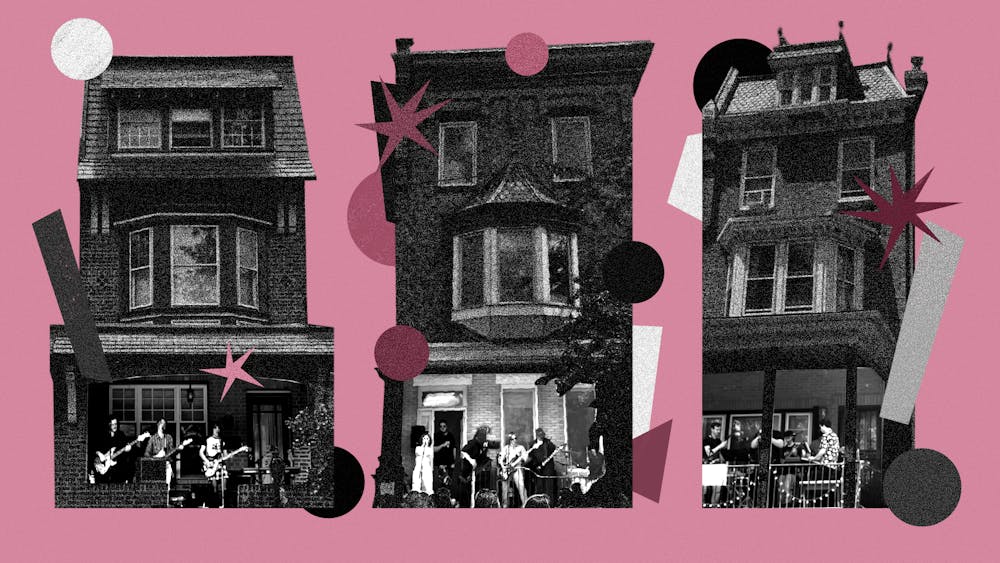
Rays of sunlight embrace nearby trees. Row homes and Victorians line the streets. Lawns flaunt batches of petunias and tulips. Pedestrians sport fishnets, black concert tees, and myriad other grunge accessories, as they walk past children loudly advertising their lemonade stands. The aroma of fresh pastries from Clark Park pervades the air. Long lines snake out the door of every nearby cafe. Typically, one might dismiss these summertime emblems as ordinary. Today, however, they enliven my friend and I as we saunter through West Philly Porchfest—the neighborhood’s beloved grassroots music festival.
Since 2016, Porchfest has shaped Philadelphia’s musical scene significantly. In contrast to the grand spectacles of Coachella or Lollapalooza, this event strives for simplicity: attendees receive a free, casual opportunity to engage with local artists. Additionally, spectators catch a glimpse of styles outside beyond the mainstream, with more than 200 performing groups spanning genres from alternative rock and jazz to classical and electronic. Since anyone can register to play on the porch–turned–stages spanning 42nd–51st streets, the festival is especially helpful for emerging artists looking to secure gigs.
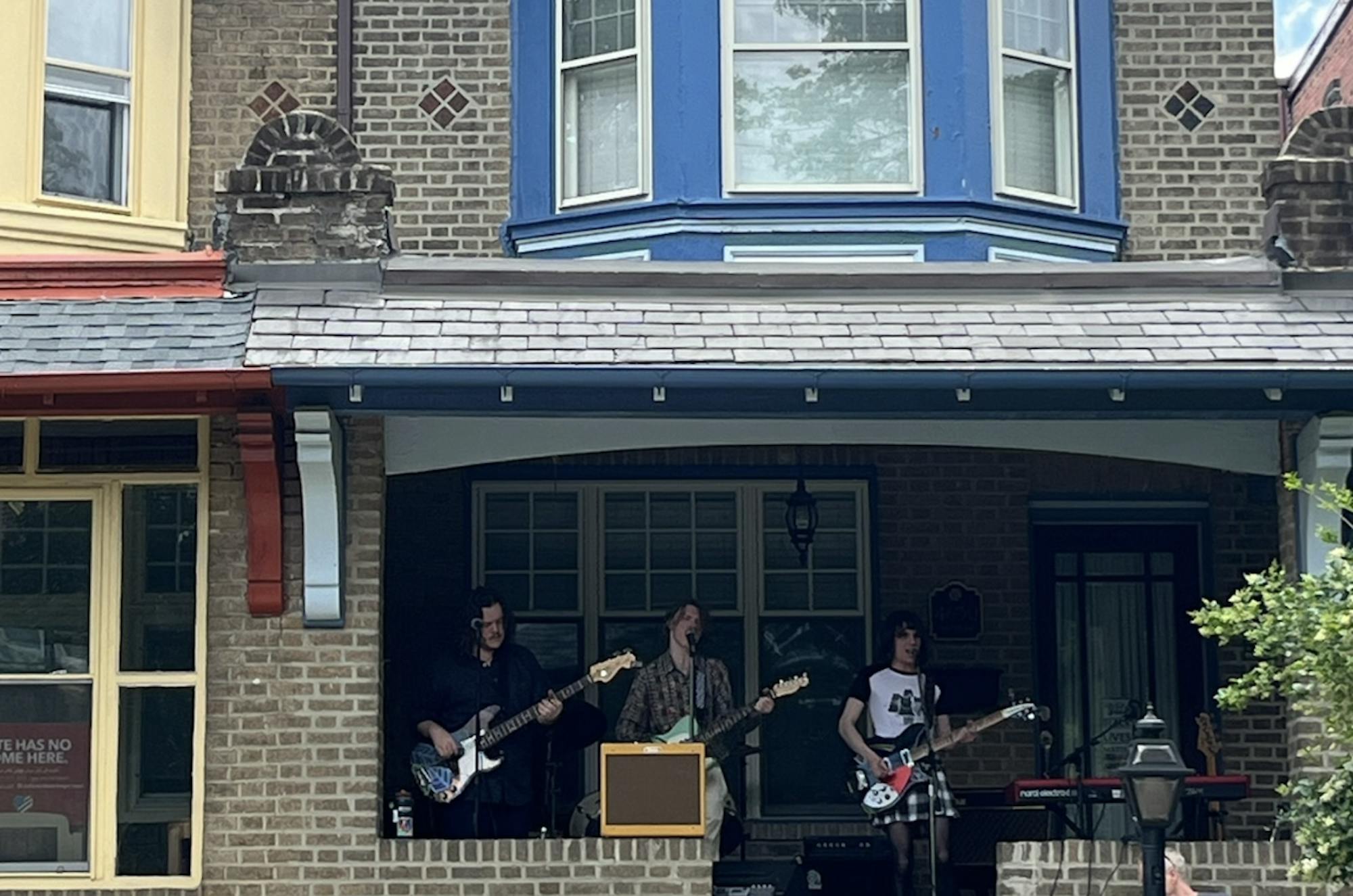
At 4630 Larchwood Avenue, dozens of students and local tenants crowd the street, gathered to watch indie rock band Ghostship Dreamland. With two guitarists, a keyboardist and drummer, the ensemble proffers a delicate balance of metalcore and soft acoustics—featuring sparse guitar riffs and chromatic harmonies. Their setlist pulls me headfirst into the raw, unfiltered world of underground grunge. After performing their hit single “IDK What I Want,” they transition into a cover of Olivia Rodrigo’s “brutal” as the crowd sings along to the popular track.
Andy Niedermeier—the band’s lead guitarist and vocalist—explains that their original songs incorporate elements from hybrid genres. A songwriter of 10+ years himself, Niedermeier has experimented heavily with varied sensibilities and theatrics. “I’m really into ’90s alternative music, especially Weezer,” he says. “I [incorporate sounds from] fuzzy rock songs which have pop core and interesting chord progressions. Additionally, I derive melodical inspiration from 1960s pop, such as Brian Wilson of The Beach Boys and the Beatles.”
Ghostship Dreamland’s melodies are, on the whole, upbeat and electrifying. Their lyrics, however, embody much more heartfelt and somber messages. “IDK What I Want” reconciles a state of uncertainty encompassing a seemingly broken relationship; this pessimistic tone also defines “Doesn’t Feel Like My Year.” “I often [incorporate] themes of trying to fit in during the times we live in,” says Niedermeier. “In a post–COVID world, I feel we are turning more towards digital rather than in–person interaction. When writing about romance or life situations, I often [utilize] that lens.”
Afterwards, we stroll towards 4637 Spruce Street. Here, assistant professor Chris Chambers—known as DJ Lono onstage—has established a facade stand equipped with synthesizers, turntables, and other eclectic elements. We watch as Chambers bops along to electronic harmonies spewing out from two adjoining loudspeakers. Soon, the DJ’s trap remixes grow reminiscent of Y2K–era jams: nostalgic memories of moshing to David Guetta and Ludacris reverberate in my ear canals.
Originally from Orlando, Florida, Chambers’ undergraduate years at the University of Central Florida installed his passion for DJing. While attending myriad house parties, the musician found comfort in synthetic pop. EDM concerts, too, fueled his desire to experience the genre live. Chambers seeks to cultivate a distinct style of disco synth. While invoking inspiration from DJs such as Larry Levan, his aesthetic also pays homage to ’70s and ’80s artists such as Marvin Gaye and Acid Jazz.
Like most DJ booths, Chambers’ platform is an intricate display of lights and noise effects. A unique number–letter combination represents each feature: to amplify his sound, Chambers asks his partner—who also happens to be his wife—to randomly select a key. That button or disk she chooses grants the mix a funkier feel. By mastering this system, artists may fabricate entire playlists around one or more specific keys.
For Chambers, DJing is more than just a leisurely craft—it’s a way to combat performance anxiety. “You never know if [a remix] is going to work, just as you can’t predict if an instrument will be in the right tune,” Chambers says. As such, DJs must learn to find comfort in freestyling. “It’s rooted in improvisation, but you’re supposed to perform in a way that sounds prerecorded,” he says. “The [first track] should be spontaneous and there are certain songs which belong in the middle since they raise things a bit. But I need to figure all of that on the spot.”
With repertoires of unwavering authenticity, Niedermeier and Chambers embody the liberating, expressive spirit of Porchfest and the artists that make it possible. More than a tradition, the event offers the rare gift of accessible, high–quality live music. Equally so, it grants local musicians a platform for promotion. With its unmatched blend of artistry and community, Porchfest ensures University City will always rock on.