Recently, the sneaker community has been incredibly divided.
The average sneaker collector perusing the consignment shops at their local mall will often find themselves leaving with a pair of Air Jordans or Yeezys. Those who prefer more niche sneakers, collecting “Pink–box” Nike SB Dunks or the latest Teddy Santis x New Balance MiUSA collaboration, don’t necessarily have more refined taste than the average Jordan wearer—they simply prefer shoes that have stayed out of the spotlight. Whether it’s for the sake of being different, appearing more knowledgeable, or out of pure personal preference, hype culture just isn’t something that some collectors like to partake in. But that absolutely isn’t the case for the rest of the world. And there’s no better example of what’s currently in the sneaker spotlight than the police raid of Cool Kicks LA that happened earlier this month.
Cool Kicks Los Angeles, founded in 2014 by Adeel Shams, is one of Sneaker YouTube’s most prominent brands and a must–stop destination for any collector in the Los Angeles area. By taking elements from other sneaker–related internet shows—such as starting their own version of Complex’s Sneaker Shopping s-eries—Cool Kicks rose to fame quickly over the last five years, making content targeted towards those interested in the most hype sneaker models. With two bustling locations in Los Angeles, the sneaker community had found a consignment store that treated their customers like family. Guests were often featured on social media content, and their service was known to be friendly to both novice and veteran sneaker collectors alike.
One of Cool Kicks' most popular shows is a series of long–form YouTube videos featuring employee Rami Almordaah going through hundreds of pairs of sneakers and “legit–checking” them on the spot. Showing off the way he checked the stitching, inspected the leather quality, and even listened to the sound the shoe made when you hit the outsole, “ramitheicon” made himself and the Cool Kicks YouTube channel famous with his seemingly foolproof authentication process. Cool Kicks, now with over 1.3 million Instagram followers, gained a reputation as a place to be trusted and as a premier store to buy trendy sneakers.
But on October 2nd, 2025, news broke that Cool Kicks’ store and warehouse were raided by the Los Angeles Police Department. CEO Adeel Shams was arrested as well. The running charges were accusations that Cool Kicks possessed and resold almost $500,000 worth of stolen sneakers, potentially as a part of the Nike train heist that occurred earlier this year (yes, a real, bandit–style train heist).
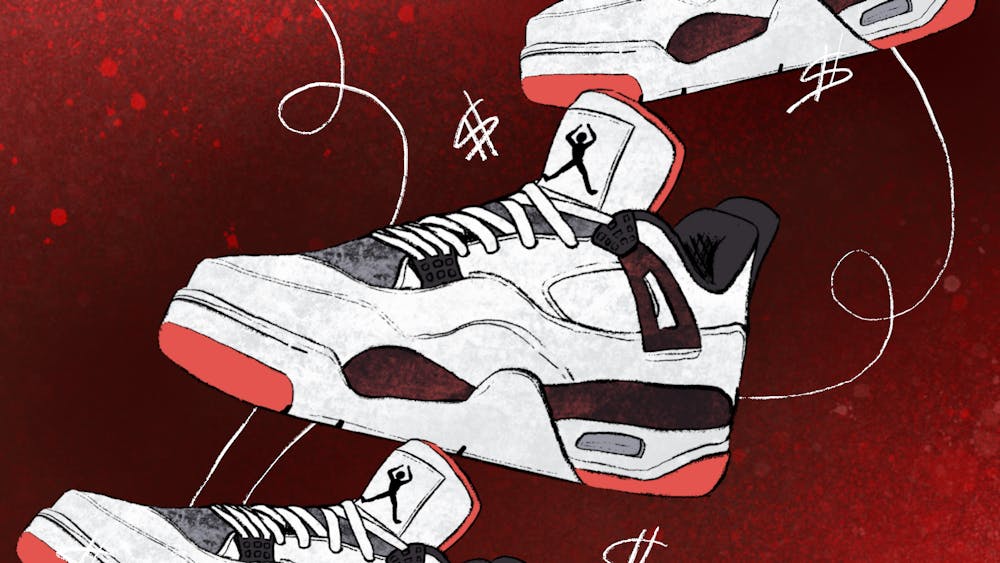
Interestingly enough, the majority of the pairs recovered were new colorways of Nike’s Air Jordan 4 and Air Max 95 models, both of which are having a “moment” in the hype spotlight right now. Cool Kicks, despite the sheer volume of their stolen inventory, denies any knowledge that their products may not have been genuine, doubling down on their authentication processes that made them famous in the first place.
But it shows that above all, hype trumps everything. Forget spreading culture or making the community feel appreciated. As long as stores can thrive off of the hype, we can push crime under the rug, right?
The real question now is what this means for the state of the sneaker scene and what it’s like being a collector in 2025. And honestly? Things couldn’t be worse.
At its genesis, sneaker collecting was not at all like it is now. In the early 2000s, when the term “sneakerhead” was just beginning to gain traction, a budding collector wouldn’t find any difficulty walking into their favorite Foot Locker, finding the pair of Jordans that they wanted off of the wall, and walking out with a smile on their face, knowing that they just got their grail pair for the MSRP (manufacturer’s suggested retail price).
Now, in 2025, that same new collector has one of two options. They could walk into a store like Cool Kicks and pay $200–300 above the MSRP, or take the “steal” on a site like StockX and only pay double what Nike would have charged. The days of being able to simply buy the pairs that you liked have been gone for years now, mostly because sneakers have become “investments” for scalpers trying to pay off their mortgage without getting a real job. "Hype" pairs of sneakers—the pairs with the best odds of being flipped for a big profit—are all being wholly scooped up by fully grown, unemployed adults waiting in line overnight at their favorite sneaker boutique. If the human scalpers don't grab them, it's the tens of thousands of bots, ready to strike when a sale drops online, autofilling someone’s credit–card information to nab the newest pairs. The sneaker game should be something anyone can get into. Resellers found a way to rig it.
Another shortcoming of the modern sneaker market is the sheer amount of fakes in circulation that are a little too similar to the originals. StockX, quite possibly the most popular sneaker buying platform, built its entire business model on the promise of authentication. Each and every pair of sneakers bought on StockX was shipped to a verification center, and was only sold to the customer if the pair passed a rigorous legit–check process. Of course, StockX’s “Verified by StockX” authentication is only as good as the authenticator themselves. Issues arise when a buyer expects their pair to be 100% legit, only to be matched with a lazy or inexperienced StockX authenticator.
Tens of thousands of sneakerheads rely on StockX for fast, real sneakers. So when a kid that’s been eyeing the latest Travis Scott x Air Jordan 1s all year tears open a fake pair on Christmas day, StockX has a choice to make. Either take the blame and buff their vetting process, or hope that by some Christmas miracle that word doesn’t get to Nike. Unfortunately for StockX, it did.
Last year, a Nike lawsuit revealed that out of 62 purchased pairs of the “University Blue” Air Jordan 1, 38 were counterfeit. StockX’s “industry–standard” authentication process, which zero fake pairs are supposed to get through, had a success rate of under 50%. So for those collectors who are considering shelling out double MSRP for their dream pair, the question now exists as to whether or not that pair is even real. And this isn’t a sneaker–only phenomenon. Reselling culture has crept its way into every possible crevice of the fashion industry. Hot–ticket handbags and accessories can be found on websites like The RealReal (which, funnily enough, also sells rare sneaker collaborations), which runs on the premise of authenticated luxury goods at a more reasonable price. And even in a different section of the fashion world, the story stays the same. The RealReal has seen more than one lawsuit filed against it for false claims of authenticity, alongside other inconveniences for its customers. It seems that consignment stores can never truly guarantee that each and every product they sell is verified and authentic. So why advertise it that way?
As it stands now, sneaker collecting is a total mess. From the hype culture to the joke that sneaker authentication has come to be, being truly happy with a purchase nowadays feels almost impossible. Sneakers are, at their core, an opportunity for members of all kinds of communities to tell their stories, show the world their backgrounds, and express who they are as individuals. The average scalper couldn’t care less that the Yuto Horigome SB Dunks they have stashed in their closet were a celebration of the first–ever Olympic Skateboarding gold medal. And now the people who watched Yuto’s come–up on the world stage can’t even support his moment by wearing those shoes. Sneaker culture should be a way for people to bond over something as simple, and usually cheap, as a pair of shoes. When scalpers come hunting for profits, the people who make up the core of the sneaker community are priced out of buying pairs that are rightfully theirs.
There’s no worse feeling than waiting all week for an Air Jordan drop on the Nike app, just to enter and be hit with the “Didn’t Get ‘Em” screen. How could it have happened? You entered the drop queue the second it opened. Who on earth could have been faster? The reality is that it wasn’t actually a person—it was their legion of sneaker–bots, buying up every pair in every size.
But that’s okay—for just $300 more, you can still get your pair in a couple days!