FRIEDA hums with a quiet familiarity. The scent of fresh pastries wafts through the air, mingling with the low murmur of conversation and the soft clatter of coffee cups. Paintings line the white walls, their colors luminous under the morning light. Each table seems to tell a story—an artist sketching in his journal, a student furiously scribbling notes, or a pair of old friends reconnecting over breakfast.
To call FRIEDA a café feels reductive. Although its savory pastries and piping–hot espresso undoubtedly contribute to its distinctive charm, its deeper appeal lies in its interpersonal connections. FRIEDA is a social movement that uses food as the axis for its broader mission to craft an inclusive space free from intergenerational division.
Founded almost ten years ago by David Wong and Thomas Steinborn, the space was never intended to operate as a restaurant in the traditional sense. It instead began as a question: How can older adults remain connected, creative, and fulfilled after retirement? Steinborn has watched his mother struggle with the sudden quiet that follows decades of work. The loss of routine, coworkers, and the daily invigoration that comes from being a part of a broader community is emotionally devastating. Together, he and Wong began imagining a space that can fill the void left by retirement and create a dynamic community hub that operates beyond the bounds of restrictive, age—segregated senior centers.
Shortly after settling in Philly, Wong and Steinborn became aware of the city’s long history of generational activism, particularly the Gray Panther movement. In the 1970s, activist Maggie Kuhn was forced into retirement at 65 but refused to accept that her professional life should end because of her age. As a result, she and her similarly situated peers founded the Gray Panthers, a social justice organization that challenges the notion of aging as withdrawal. Modeled after the Black Panthers, her organization was created to fight against age discrimination, challenging mainstream conceptions of older adults as societal dependents. Conversely, she empowered them to enact meaningful change within their communities. The Gray Panthers has grown into a nationwide movement, at one point recording more than 75,000 members and 122 networks in 43 states across the country.
Shortly after the Gray Panthers’ creation, Temple University launched its Intergenerational Center, a space that focuses on exploring civic engagement and career training through intergenerational connection. Across the city, from community centers to local tutoring programs, a network of local organizers has built programs where children and elders can learn from one another through sharing stories, skills, and perspectives.
Drawing inspiration from past initiatives, the founders envision a space rooted around three pillars: art, culture, and food—each functioning as a vehicle for human connection.
“You have communities built around sets of values, dogmas, or beliefs,” Wong says. “What we wanted to do is build a community around a set of values that were nurtured by art, culture, and food—the idea of curiosity, the idea of creativity, the idea of openmindedness, and the idea of inclusivity.”
The name FRIEDA itself embodies the café’s central mission. Named after Steinborn’s grandmother, FRIEDA serves as a tribute to older adults whose influence has shaped the next generation in enduring ways. The café’s sense of heritage extends to its menu, filled with elegant European dishes—buttery croissants, open–face toasts, and tarragon Niçoise salads—that are carefully crafted by FRIEDA’s kitchen team. The meals mirror the space’s atmosphere: warm, communal, and artful.
Wong and Steinborn’s entrepreneurial journey began in a rented commissary kitchen at the Enterprise Center, pairing older adults from local parishes and community centers with students from Walnut Hill College. The goal wasn’t to train professional chefs but to experiment with culinary collaboration across generations. The process was months of trial and error: recipe cards were printed in larger fonts, shifts were shortened to three hours, and pastries were redesigned. For example, FRIEDA’s rugelach is a rolled, sliced cookie, a signature twist on the pastry’s traditional purse shape. Wong explains that the cookie’s original form was modified since many elderly employees lacked the dexterity required for the dough’s complex configuration. Although a seemingly insignificant alteration, the dessert became an emblem of their mission to reform systems that uphold ageism in the service industry.
When they eventually found the space at 320 Walnut St., it had been boarded up for more than 15 years. Realtors warned them against it, citing its poor foot traffic and prolonged abandonment. However, for Wong and Steinborn, the space fit their logistical needs—low rent and a central location. After they purchased the building, the once abandoned storefront was filled with raucous laughter, clinking dishes, and local art.
At FRIEDA, older adults initially worked alongside younger volunteers, forging relationships between employees from diverse backgrounds. However, this close–knit community soon faced heartbreak as members of the original team began passing away. For Wong, the death of Oliver, an elderly employee, was particularly devastating, leading him to end the café’s practice of employing older adults in the kitchen. The loss of employees who had helped build FRIEDA from its earliest days reshaped the space’s identity.
“It never entered your mind that people in your community are all ten years older and some of them will get sick and some of them will die,” Wong says. “That was never a factor in our thought process. And it really hit us hard at the very beginning when we started losing people. All of those relationships that you build over time, over ten years, you still cherish them because it’s like a family.”
After this, the café shifted its focus: While younger volunteers remained in the kitchen, older adults who once worked there were now involved in smaller tasks such as labeling jars or packaging goods. As FRIEDA's founders turned their attention to expanding its cultural and educational reach, elderly employees assumed new roles such as running community art workshops and teaching creative writing to 3rd–7th graders in under–resourced neighborhoods.
When the COVID–19 pandemic hit, the café was faced with a new set of challenges. With restrictions tightening and social isolation mounting, FRIEDA's founders worried about how to maintain both their business and the sense of community that defined it. Yet, rather than shutting down, it adapted—offering a $15 daily meal that provided freshly cooked dishes for pickup or delivery to vulnerable community members. To preserve the café’s social mission amid lockdowns, Wong and Steinborn moved FRIEDA’s programming online, hosting daily Zoom sessions that ranged from cooking demonstrations to film and book discussions. Devoted café regulars pushed Wong and Steinborn to create FRIEDAcommunity, a non–profit created to carry the café’s mission of intergenerational connection and social engagement into the future.
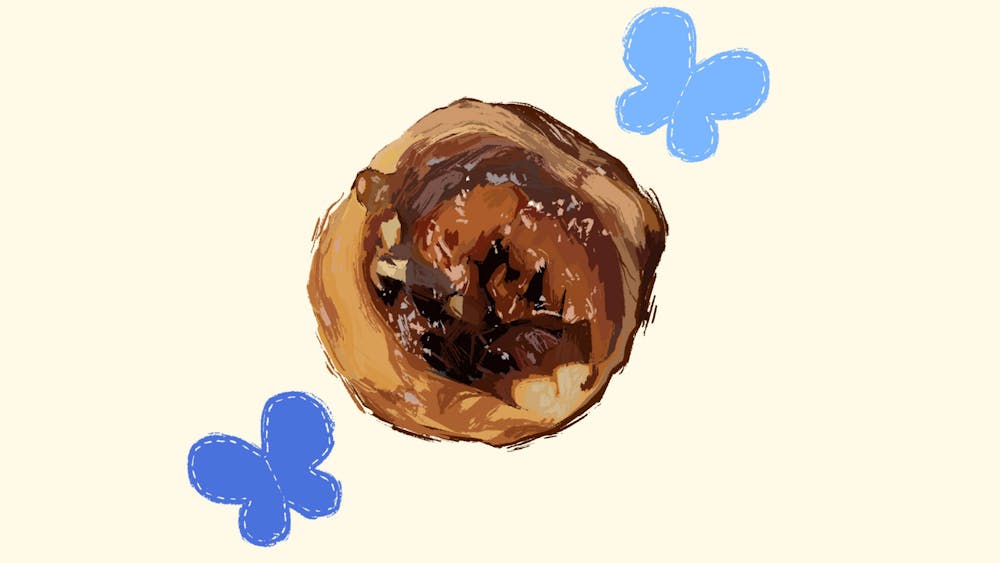
During its transition to a nonprofit during the pandemic, FRIEDA launched two projects that furthered its core mission. The first, #BlueAsAButterfly, invited community members to pick up envelopes of blue paper butterflies from the café, cut them out at home, and return them to be laminated and displayed in FRIEDA’s windows. Slowly, the installation grew to dozens of blue shapes, creating an art exhibit visible from the street.
Their second project, the FRIEDAcommunity Food Book, was a yearslong project that not only collected individuals’ favorite recipes but also the personal stories behind them. Contributors shared the dishes that reflected a meaningful aspect of their life—family meals, cultural traditions, first dates—and paired them with artwork and photography. Each page is a fusion of personal narrative and cultural pride, a reminder of food’s power to render memory tangible.
“What I like about the book is, yes, some dishes are very ethnic and very culture–specific, but the story is universal,” Wong says. “You know, when you talk about your mother, your grandmother, or when you talk about your first date—trying to seduce a person of interest by cooking—it all demonstrates our human emotion. That’s what I love about that book. It’s not specific to the FRIEDA community.”
After the pandemic, FRIEDA’s work expanded further into the city. Through partnerships with local schools and nonprofits such as Mighty Writers, Wong and Steinborn bring art and storytelling workshops to children in low–income neighborhoods. Volunteers—many of whom are retired educators—travel to schools in West Philly and Camden, N.J., leading creative projects inspired by FRIEDA’s community art exhibits. One series, Stuffed Reading, used imaginary characters named after global dishes, such as shakshuka, moqueca, and wasabi, to encourage students to invent stories that connect cultures through writing.
Preparing to celebrate its tenth anniversary, FRIEDA remains a place of social activism in the service industry. Its mission continues to evolve alongside its community. For Philly’s residents, FRIEDA is more than a café; it’s a community stitched together through art, activism, and belonging.