We’ve all heard the saying “survive ’til ’25.” And while the entertainment industry may still be asking for more time to heal, there was certainly no shortage of output this year. Whether you prefer the cozy, C418–backed gameplay of Minecraft, you’re a fan of the high–tension lovable ragebait of the Five Nights at Freddy’s franchise, or you adore The Last of Us but find yourself too scared to pick up a controller and play it (though I would encourage you to put on a brave face and try), there is an adaptation for you. Originals also have their moments, with A24 indie darlings putting their stars on the map, family dramas winning the Cannes Grand Prix, and animated musicals about a K–pop girl group topping the film and music charts for months on end. Whatever your preferences, this year had something for everybody—and some of Street’s most chronic Letterboxd users are here to tell you their favorites.
—Liana Seale, Film & TV editor
The Naked Gun (2025)
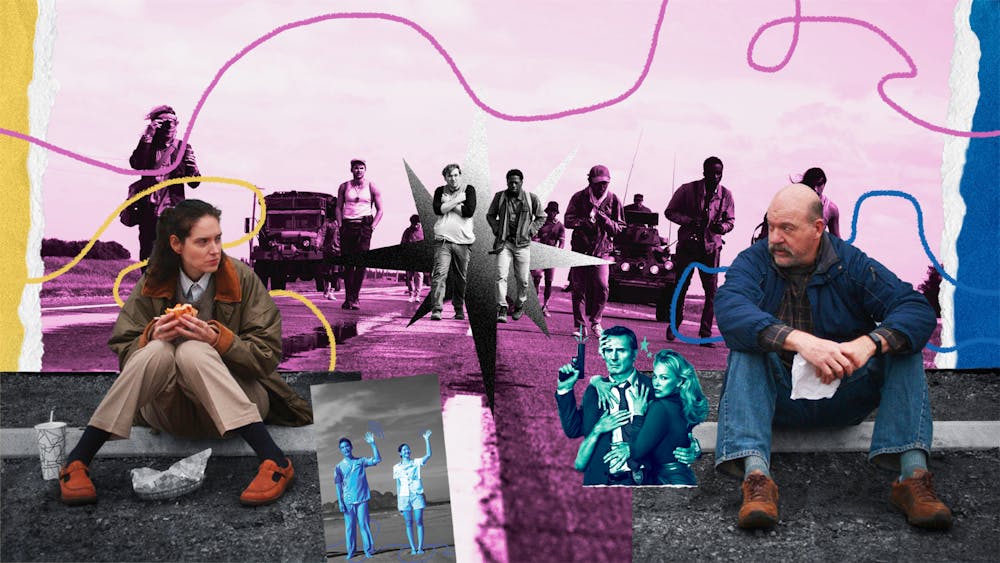
In a world where pure comedies—the genre once dominant in the 2010s but now a fading memory after the COVID–19 pandemic—have been exiled to streaming, watching The Naked Gun in a theater with actual people is something I didn’t remember I needed. Liam Neeson’s deadpan Taken delivery contrasts perfectly with the pure absurdity that makes the original franchise a classic. There isn’t much more to say without spoiling the best gags.
When you see Academy Award–nominated Liam Neeson rip off a Mission: Impossible–style Girl Scout mask, threaten a bank robber, and inexplicably grow taller until his underwear peeks out from under a skirt, you know you’re watching artists at the height of their craft. At a brisk 85 minutes, it moves fast enough that your brain deteriorates just the right amount without turning to complete slop. The jokes land, the pacing clicks, and for the first time in years, a studio comedy remembers that laughter doesn’t need a moral or a message. Oh—and the snowman sequence deserves its own Oscar.
—Henry Metz, Film & TV beat
Andor: Season 2
This year, I believe there is no show as timely or necessary as Andor. Beautifully complex from start to finish, Andor’s visually stunning final season had me hooked. Despite the stress this show caused me—I still tense up every time I hear those opening strings—Andor genuinely changed how I view the world around me, engaging me in a way that very few pieces of media have ever done. Set in the Star Wars universe, Andor follows the early days of the Rebel Alliance as it organizes and works to overthrow the evil Empire—basically “How to Fight Fascism 101.” The show doesn’t sugarcoat the sacrifices ordinary people make for the greater good, and is filled with complex characters portrayed by a talented cast, but Elizabeth Dulau and Stellan Skarsgård stand out as Kleya and Luthen, respectively. The fate of the Rebellion hinges on their ability to channel their mutual feelings of hatred and love toward one another into something so much bigger. The incredible writing of their relationship is supported by masterful performances as Dulau stuns in her television debut, very much holding her own on screen against veteran actor Skarsgård. In Andor, it’s simple acts of love—a mother’s love for her son, a husband’s love for his wife, and a senator’s love for her people—that drive people to do the right thing. In a time of tense political climates and great uncertainty, Andor shows us that there will always be hope.
—Anjali Kalanidhi, staff writer
Sentimental Value
After their mother’s death, Nora (Renate Reinsve) and Agnes Borg (Inga Ibsdotter Lilleaas) return to their childhood home and confront their estranged father, Gustav (Stellan Skarsgård)—a once–celebrated filmmaker who devoted himself entirely to his craft but left little of himself for his family. Charismatic yet emotionally wayward, he is now chasing a late–career comeback, but with a catch: He needs the help of the daughter he abandoned. The project is, in his words, a film for her.
Does this new film redeem years of absence? Why do the two sisters respond to him so differently, growing into such different people despite sharing the same home? Joachim Trier’s Sentimental Value is funny, warm, and emotionally rich—a beautiful portrait of family, art, history, and the generational memories, wounds, regrets, and choices that shape who we become. This 2025 Cannes Grand Prix winner is a must–watch for all those interested in an intimate story about family, reunion, and reconciliation.
—Leo Huang, staff writer
Sorry, Baby
I went into Sorry, Baby completely blind—no trailers, no synopsis, nothing. I walked out of that theater a changed woman. The film follows Agnes (Eva Victor) in the moments before and years after she experiences a sexual assault. Even if you didn’t know that Victor wrote, directed, and starred in the film, it’s obviously a deeply personal story. But what lingers most is the film’s soft contemplation. Through small gestures, unguarded silences, and a platonic love that feels lived–in rather than performed, Sorry, Baby unpacks the emotional aftermath of trauma with a rare gentleness. From a chance encounter with a kitten to a beautiful conversation about life with a newborn, Sorry, Baby is one of the most quietly devastating films of the year, and it stays with you long after the lights come back on.
—Chenyao Liu, Film & TV beat
The White Lotus: Season 3
The spirit practically hightails it out of my body the second The White Lotus’ theme starts squawking in my living room. This summer, my sister and I tore through all three seasons like we were being graded on it; we finished the Season 3 arc in four days flat. We paused every episode to overanalyze the frames. I’m not exactly sure whether it was the pastel–filtered “clean girl” aesthetic Sarah Catherine Hook brings to Piper Ratliff or the intense spirituality and self–actualization Aimee Lou Wood gives Chelsea, but I was hooked. Season 3 doubles down on its signature mix of awkward humor and slow–burn tension, with every interaction between the guests and staff feeling loaded. The show’s setting in Thailand only adds to this postcard vibe, making the characters’ meltdowns feel even more chaotic by contrast. The White Lotus cuts into the ugly truths about success, money, morality, and the little lies people tell themselves to survive. It’s unsettling—and utterly addictive.
—Saanvi Ram, Focus beat
Smiling Friends
I hate watching TV. Episodes are too long for me (due to ADHD, definitely not years of TikTok consumption) and I hate getting emotionally invested in fictional characters. That being said, Smiling Friends overcomes this barrier with its short runtimes, constant barrage of jokes and bits, and minimal linearity throughout the episodes.
Smiling Friends, Inc., a small company based in Philly, employs a cast of bizarre, alien–looking characters and tasks them with bringing a smile to clients’ faces. The show is very “LOL random,” sure, but I think that is the charm. It feels as though the showrunners are just fucking around and doing whatever they want: insane escalations, several different animation styles, and minimal context as to whatever’s going on. And that’s honestly probably the case.
As I write this, the show’s third season is currently airing, and it still manages to surprise me. It’s a mixed–medium masterpiece and the perfect show to watch while knitting.
—Insia Haque, Design editor
The Long Walk
How exciting can watching a walkathon possibly be? Turns out, more than you’d think. The Long Walk, adapted from Stephen King’s novel of the same name, hooks you from the first step and refuses to let go. The premise plays like a dark twist on a Mr. Beast challenge—to compete with each other for a chance out of poverty, a group of teens must maintain a pace of three miles per hour, and anyone who falls behind is executed. The last one walking wins a prize of their choice. Although the pacing is excellent and keeps audiences on their toes, what really shines is the chemistry and depth of the characters. The friendships that blossom between the competitors, despite knowing they’re pitted against each other in a deadly game, are as moving as they are tragic. In particular, protagonists Ray (Cooper Hoffman) and Pete (David Jonsson) deliver devastatingly emotional performances with staying power. Powered on by phenomenal acting and stellar character development, The Long Walk doesn’t disappoint—both for fans of Stephen King and those entirely new to his work.
—Matthew Jeong, Film & TV beat
Caught Stealing
While I’ve been spending the fall immersing myself deeper into Darren Aronofsky’s filmography, I’m a little embarrassed to admit that the first film of his I saw was his summer crime/sports thriller Caught Stealing. To be honest, though, I’m really not that embarrassed. This movie has literally everything I could ever want or need within the genre: Bad Bunny, baseball references, car chases, cat dads, betrayals that are logical but emotionally jarring, over–the–top Cockney accents, Hasidic Jewish gangsters who get home in time for Shabbat, and, of course, the raw sexual chemistry between Austin Butler and Zoë Kravitz at their peak hotness. This movie flies by at a gory, heartrending, whip–quick pace, so go in blind, bring a friend, and have fun.
—Jackson Zuercher, foreign correspondent
Eddington
“COVID–era period piece” is a difficult concept to pull off well, particularly for a director with too weak a stomach to really make a statement about the era. Thankfully, Eddington isn’t apolitical. Contrary to critical opinion, it isn’t even really nonpartisan. Take the first shot and the final scene of the film—they center on the same plot beat, a minor theme easily forgotten in the midst of the shootouts and conspiracies that make up the majority of the film’s runtime. The real thematic throughline of the film is the growth of SolidGoldMagikarp, a deliberately nondescript tech firm whose operations thrive under both Democratic and Republican administrations. Though social attitudes come and go like the tides, structuring our character’s discursive (and eventually, physical) conflicts, every one of Eddington’s characters eventually bends a knee to the iron law of capitalist expansion. Eddington is successful because it focuses on the content of our post–COVID–19 era rather than its formal elements, commenting incisively on the role that Silicon Valley has had in reshaping our political sphere for the worse.
—Nishanth Bhargava, digital managing editor
KPop Demon Hunters
When you first read the title, you can’t help but think: “Seriously? That’s what Netflix’s most watched movie of all time is?” Then you watch it. Then you listen to “Golden” and “Soda Pop” on repeat for three months and you think, “Okay, maybe I get it.” KPop Demon Hunters is deceptively juvenile—all the bright colors and whimsical animation of childhood classics with the hard–hitting themes of self–identity, expectations, and the weight of the world on your shoulders. When a film speaks to both five–year–olds and 50–year–olds in the same way—speaking as someone whose Korean mother cried while watching it—that No. 1 spot is surely deserved. And hey, there’s a reason so many people are enchanted by its equal parts flashy charm and authentic representation of Korean culture. This film is affectionately known in my head as the benevolent cousin of “Gangnam Style.”
—Liana Seale, Film & TV editor