I’m always so excited for the colder seasons to come around because it means that I can “really” start dressing. There’s nothing like a 15 degree wind chill that makes me see the real value in my North Face puffer jacket (aside from the fact that it looks great). Finally, the wardrobe that you’ve spent the spring and summer carefully curating can be shown off to the world (or at least Locust). You’re already putting hours of effort into curating the perfect collection of outerwear. Let me do some of the work for you, and take a look at what the horizon of 2026 fashion has to offer.
This winter, Street makes its grand return to New York Fashion Week and New York Men’s Day, the bi–annual exhibit put on by Angetry PR to showcase the latest in up–and–coming menswear designer clothing. Hosted by Mercedes–Benz of Manhattan, I’m here to cover the wall–to–wall on everything there was to see, expect, and look forward to in fall/winter. What better way to do that than taking a trip to the capital of East Coast high fashion?
PROJECT by Informa takes the first stage as the main partner of NYMD. Setting up a showcase front and center, it’s the first thing guests see when they walk in the door. As a fashion conglomerate, their section consists of ten standout brands under the PROJECT moniker, all with the goal of stealing the spotlight on the world stage. PROJECT made their mark as a leader in contemporary fashion, using general versatility as a foundation, and setting it in a frame that lets each designer make their own spin. After all, how good can a piece be if no one can pull it off?
Using that sense of wearability as its guiding principle, each brand had twisted the PROJECT blueprint of versatility through a unique lens. It could be a play on golf wear, complete with clubs and a pattern–printed sweater vest (I never thought about a golf bag being an accessory until now), or an intertwining combination of denim and leather in a matching jacket and pant set. Each item, while retaining a distinct designer identity, is also something that wouldn’t look out of place walking through Philly. Couture is slowly becoming more and more accessible to the general public, and PROJECT sits comfortably at the forefront of that trend. All the clothing featured in their selection is to be made available for purchase at PROJECT Las Vegas, their own signature event held from Feb. 17 to 19.
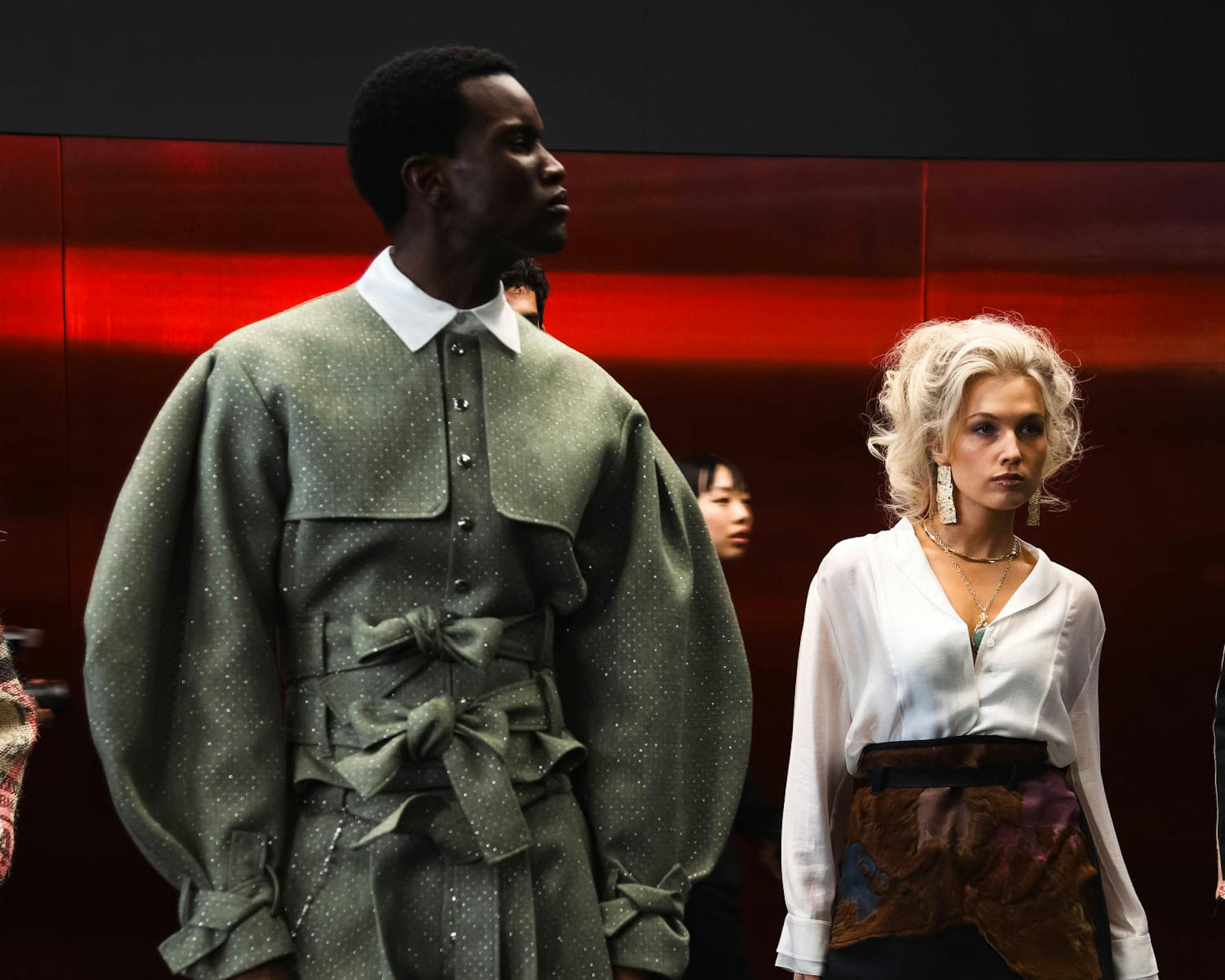
Another brand using experimentation as their ethos is MONDAY BLUES, STUDIO, as they dressed their models in purposeful touches of fur, animal print, and even burlap. MONDAY BLUES, STUDIO strives to find a happy medium of the image of affluence and high class, with materials that invoke their “built from scratch” message. Their collection proves that certain pieces don’t have to be gatekept behind the doors of perceived wealth, and that clothes, at their core, are meant for anyone and everyone that resonate with the visual ethos. Where else are you going to be able to find a trench coat that’s been made to look like a literal burlap sack? It takes a certain level of finesse to spin that into something that can be considered high fashion.
Fabrics aren’t the only way to be creative. Some outfits on showcase are sewn up to be quite literally uplifting in what some would consider unconventional places. The result is a silhouette form–fitting in the torso, but balloon–ish in the sleeves. Not necessarily the best for practicality, but fashion is just as much for the artists in us as well as the simple clothes–wearers. MONDAY BLUES, STUDIO recognizes this, and executes it masterfully.
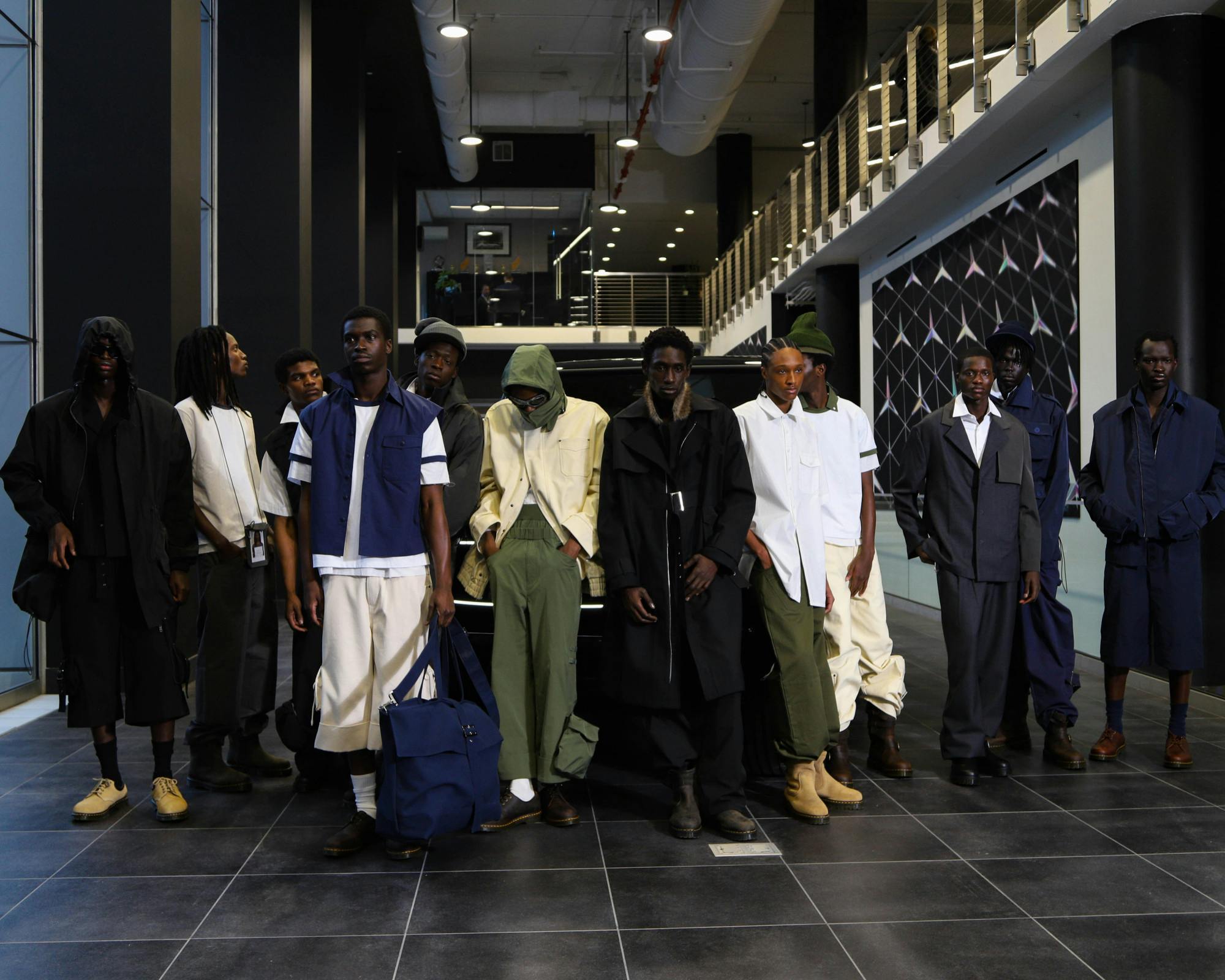
It can easily be argued that at the heart of high fashion is truly the art of experimentation, and several brands at NYMD are wholly proof of that. Exclusivity and uniqueness are powerful drivers behind what a designer will include in their selection. At an event with as much volume as New York Fashion Week, the more you stand out, the better.
And yet, it’s equally important to consider the consumer. High fashion thrives on spectacle, and when looking at it from a business perspective, a designer piece of clothing is only as good as the person willing to buy it. At Penn, rarely do you see students strutting with colorful multi–paneled jackets or flared–leg leather pants. It’s not necessarily that the art in fashion isn’t appreciated. It absolutely should be. But that’s just not where a student’s priorities are when getting dressed in the morning. Sometimes it’s difficult to pull off what designer brands want to put out into the world. But from that, the designers who understand the consumer begin to shine.
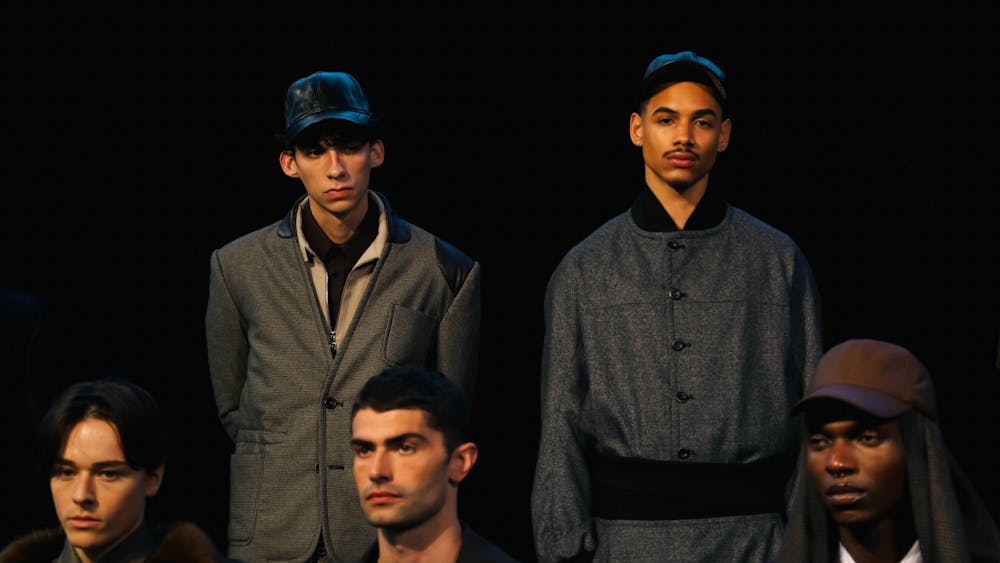
Also on display at NYMD are a couple of brands that particularly stood out to the Penn student in me. WANGDA Clothing’s stage features a collection of mostly inconspicuous pieces: earth tones, trench coats, wide–leg pants, and suit jackets. This collection has no crazy print, no out–there materials, just foundational clothing; it’s what some would call wardrobe “essentials.” And yet, despite being the least visually interesting, WANGDA Clothing ended up being my favorite brand at NYMD, because it proves that you don’t need to be haute to be fashionable.
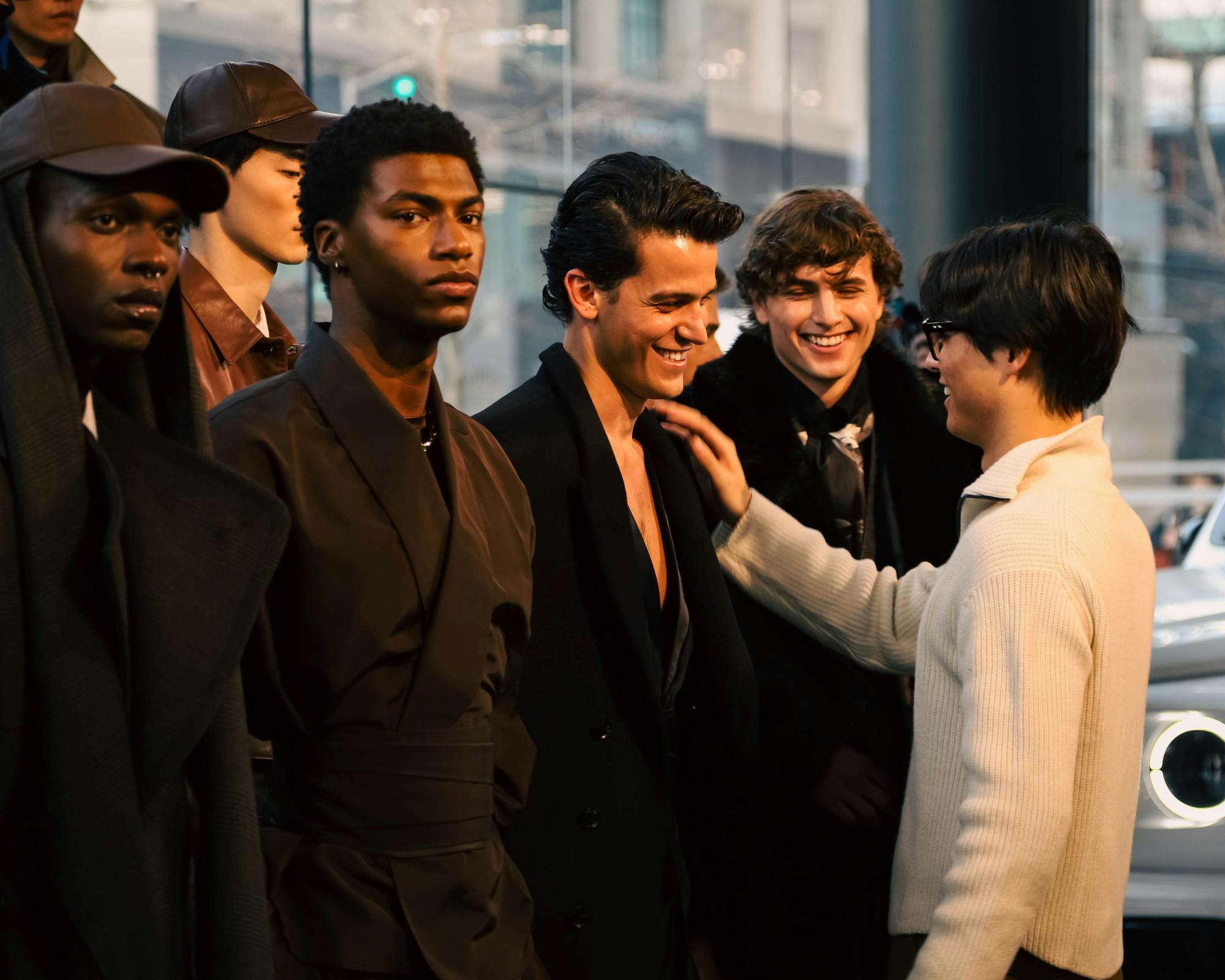
WANGDA’s forefront model was dressed in a thick, tweed–esque brown long coat, clean dress pants, and a simple leather cap, all matching. One of the others in the lineup was dressed up in a slim custom–cut black suit. Another wore a grey wool jacket with simple hits of black on the trimmings. Lots of deep, dark tinted fabrics, in almost every shade of earth tone you can think of. Sound familiar?
Ever since coming to Penn, I’ve noticed the long coat become deeply associated with the DNA of the school. I couldn’t imagine walking anywhere here without seeing at least three Wharton students walking into Huntsman bundled in a long coat. It’s become such a staple piece of Penn culture, whether those who wear it realize it or not. I even fell into the hive mind and bought a coat for myself, and I’ve been wearing it proudly throughout the winter. So imagine my surprise when I saw something so ingrained into my daily life presented in this context of high fashion. Many of the WANGDA outfits were “retoolings” of outfits I swear I’ve seen going to class. The “Penn” look that this school has manufactured for itself is now a worldwide fashion phenomenon, and I couldn’t be more proud of that fact. Who said the Penn look isn’t real fashion?
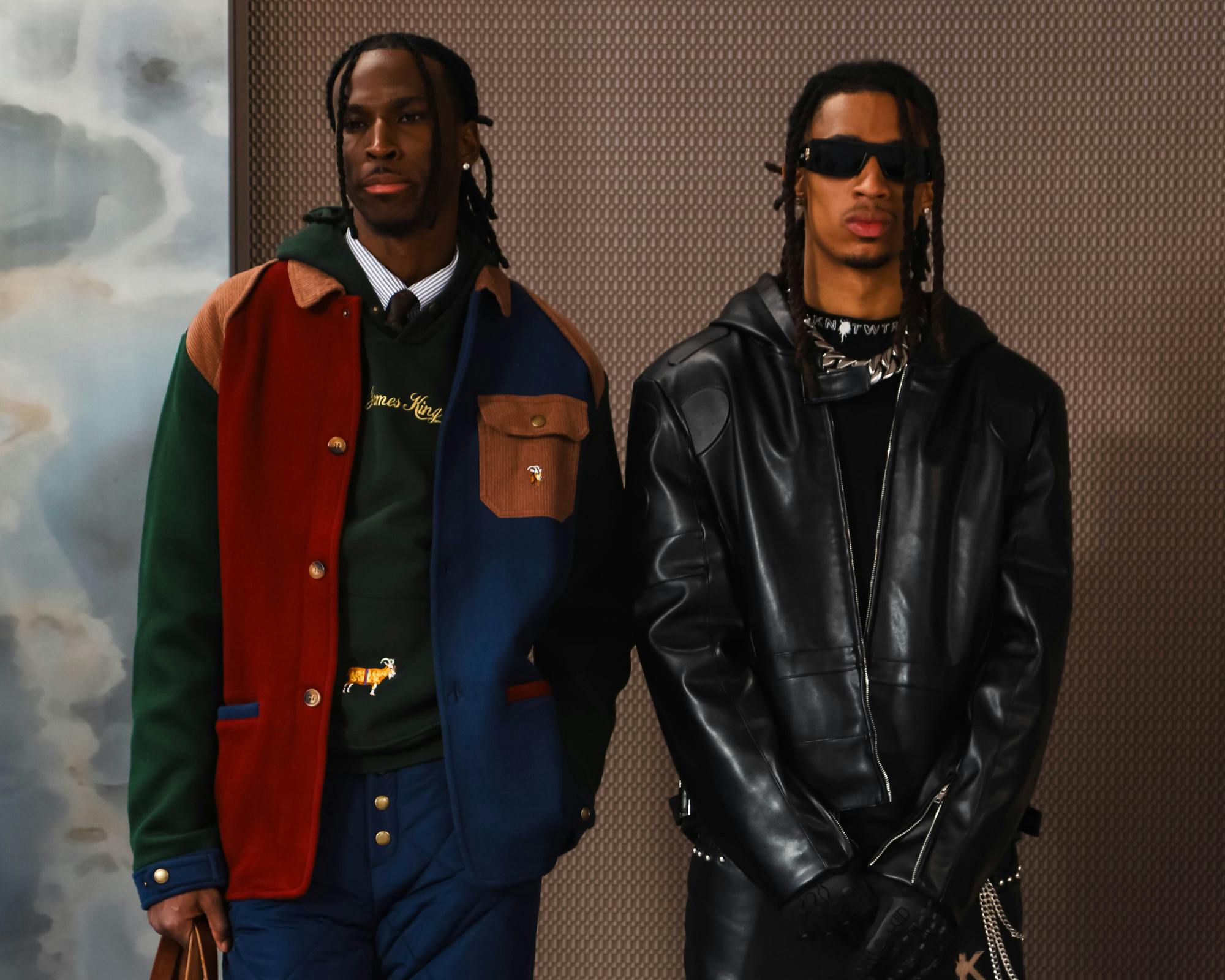
NYMD reminds me that some of the best outfits don’t necessarily need to be the most unique or neck–breaking, but rather lived–in and intentional. As much as gatekeepers and self–proclaimed experts like to argue otherwise, fashion sense really is something that you can teach yourself. A rudimentary knowledge of how to curate even the simplest pieces together can elevate a look from “I fell out of bed wearing this” to “I know how good I look right now.” The Penn look is indeed a trend in and of itself. And that identity, no matter how popular it gets worldwide, will always be uniquely ours. Sometimes all it takes is a look from a different perspective, or in my case, a trip to New York.