In the heart of northern Philadelphia, there’s a portal to another world. Perfectly preserved are hundreds of thousands of inhabitants from another time; minerals, insects, and coral, skeletons that paint a picture of a world that is long gone. If you look close enough, they may even reveal their secrets to you; how they lived and how they died, what they ate and what they cared for.
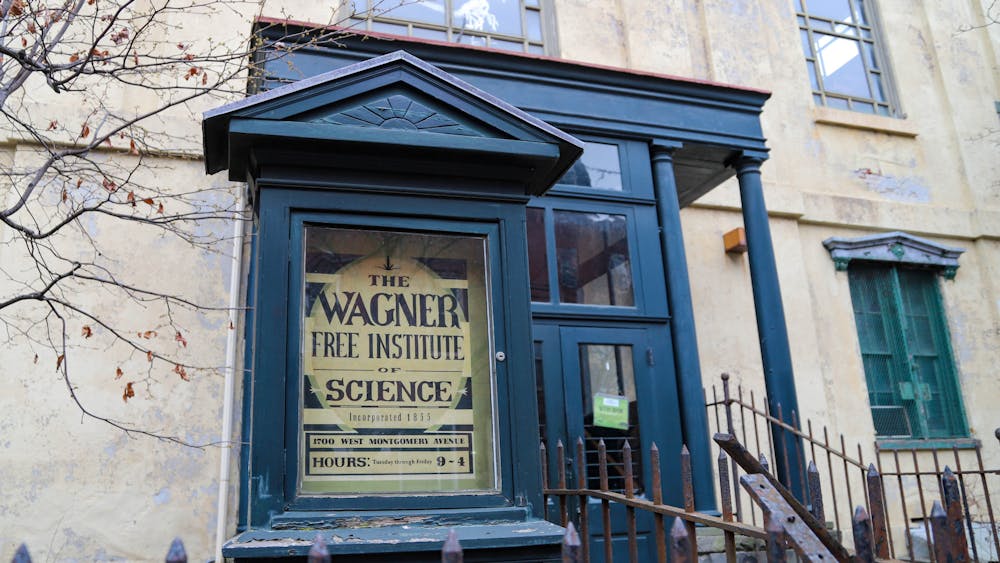
Step through the doors of the Wagner Free Institute of Science, and you’re transported to a Victorian–era museum that has remained virtually untouched since 1865. Row upon row of wooden cases line the hall, filled with specimens that tell their own stories: tiny insects preserved under glass panels by the hundreds, a massive ichthyosaur skeleton mounted on the wall, dinosaur bones, coral specimens, and so much more. The same handwritten labels, penned in ink and longhand, still sit beside the objects they meticulously identified. This isn't your modern science center with interactive displays and dizzying animations; it's something far more intimate.
“When you’re looking at a specimen in this museum, the animal can really come alive,” explains Charles Besant, a retired museum contractor who assembled the bracket for the Draft Horse skeleton. Mr. Besant excitedly gestures to the Draft Horse, a beloved skeleton that centers the display room, transported all the way from England where it was first purchased in 1889. Standing next to an object so old is daunting, but a testament to the history of Wagner and the many dedicated individuals who have contributed to it. While staff move objects around and clean the cases as needed, they've maintained the museum's authentic character, resisting the temptation to modernize. “This museum has rows and rows and rows of objects in their cases,” Bessant continues. “It's not a Disneyland kind of ride that's full of video and speakers and a lot of graphics … The objects tell the story at the Wagner Institute.”
What truly sets Wagner apart from places like the Academy of Natural Sciences is its democratic approach to knowledge. As Dr. Jason Downs, a Penn alumnus and professor who teaches a free weekly paleontology class at Wagner, puts it: "As a natural history museum, it’s one of very few—it’s the only one locally—where you have access to the entirety of the collection. You can walk around and pull drawers. The whole collection is here on display.” This all–access philosophy was common in the 19th century but has largely disappeared from modern museums. Dr. Downs continues, “A child can come here and have full access to the collections, that's just unheard of at the Academy [of Natural Sciences] … That kind of all access is in keeping with Wagner's mission of free education for all.”
And “free” isn’t just about access to the collection; it means literally free of charge. Since its founding 170 years ago, Wagner has maintained its commitment to providing science education without cost to anyone who walks through its doors. The evening science classes for adults continue this tradition, offering courses that would be expensive elsewhere at no charge to the community.
At Wagner’s recent “Sip of Science” cocktail benefit celebrating 170 years of service, the institution’s dedication to making a positive impact on their North Philadelphia community shined through. Christine Brown was honored with the Louisa Binney Wagner Award for her work as director of Beech Community Services. BCS works to foster community within the Cecil B. Moore neighborhood that Wagner happens to be located in. BCS organizes a neighborhood cleanup initiative, involving residents, businesses, and community leaders to come together and build a stronger neighborhood community. As I spoke with Brown, she beamed as she spoke about her connection to the place. “Working with Wagner is one of my greatest joys,” she says. “Wagner is one of those hidden gems. Anybody that listens, I’ll tell them about Wagner and tell them to come bring the children, because this is one of those places where you can get free services and learn all in one place. I think that's something we should be proud of.”
The evening felt less like a formal fundraiser and more like a family reunion. Old friends shared hugs and life updates; new ones shared their favorite items in the collection. As I made my way through the collections, speaking with many passionate members of the Wagner community, what stood out to me was the dedication of every single community member as they contributed in different ways—teaching free classes, organizing events and fundraising auctions, or even building Draft Horse brackets—leading to a museum that is truly owned by and made to serve the Cecil B. Moore community.
Phillip Wagner, a descendant of the institute’s founder Joseph Wagner and past board president, reflected on the institution’s transformative power. “We’ve made an impact from day one, originally teaching science to grown–ups, adults in the evenings,” he says. “But nowadays, [we’re] also teaching and shaping youngsters in community schools [and] public schools in the ways of science, so that they can embrace it and perhaps spend a career in the scientific fields.” Wagner runs various events oriented towards younger children, from Open Houses with family friendly activities to opening up the Wagner Teaching Garden on Friday afternoons for open exploration.
Mr. Wagner emphasized the particular importance of this mission in today’s climate. “The impact on the community by an institution that’s been largely hidden for most of its history … continues today in terms of inspiring youngsters to pursue a path in the sciences, despite the tone, the tenor of our current times, which would tell us that science is not important.”
The commitment to keeping Wagner’s doors open comes from supporters like Phillip Lian, honored alongside Joan Mueller for their philanthropic contributions. “What it really means is we're supporting individuals who may not have the opportunity to learn about different aspects of science and have that chance, both children and adults,” Lian explains.
For Dr. Downs, the museum’s uncurated authenticity was life–changing. “That kind of access changed me into the sort of collections–based scientist that I am today,” he says. It's a transformation that happens quietly, specimen by specimen, in the dusty Victorian hall; a transformation available to anyone willing to make the journey to the Cecil B. Moore neighborhood in North Philadelphia.
The Wagner Free Institute of Science stands as a reminder that the most valuable education doesn’t require flashy technology or expensive admission fees. Sometimes, all you need is a room full of carefully preserved specimens, handwritten labels in fading ink, and the freedom to explore at your own pace. In an age of curated experiences and paywalls, Wagner remains defiantly accessible as a 170–year–old promise from Joseph Wagner himself that knowledge belongs to everyone.