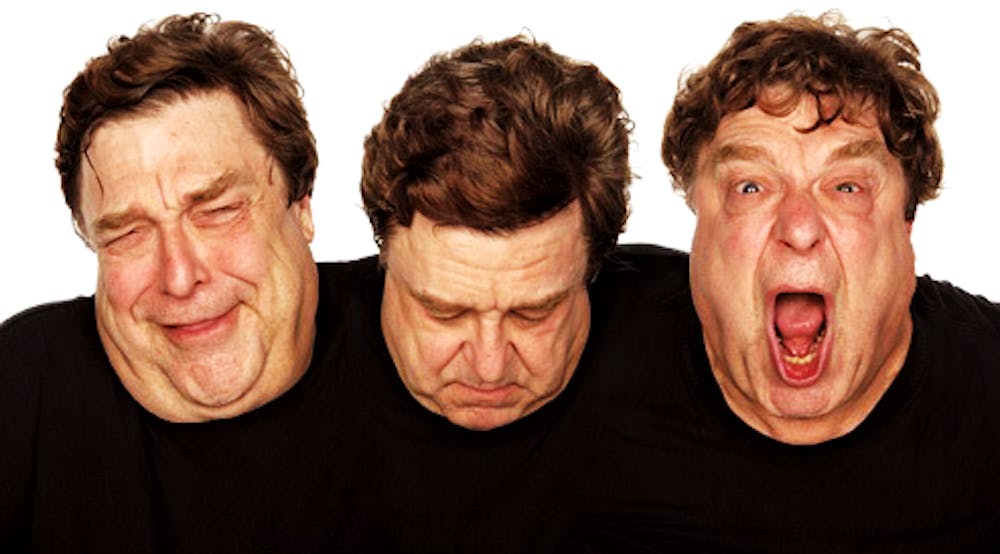
Sometimes I like to feel good, man. Other times I fall in love with John Goodman. Indeed, the jolly fat man may be one of the most underrated actors in Hollywood- — his versatility shines foremost on the indie film circuit, particularly when he works with the Coen Brothers or guest–stars on Community. My fascination with John Goodman doesn’t come from his stunning good looks, but rather from the amazingly dark nature of his best roles, usually found in Coen flicks. From Charlie Meadows in Barton Fink to Big Dan Teague in O Brother, Where Art Thou? Goodman carries himself with a wonderfully sinister air, albeit one concealed in a neighborly demeanor. Yes, these roles are somewhat repetitive, even typecast, but Goodman pulls them off with such finesse that each performance appears brand new, his villainy either completely treacherous or oddly inspirational.
Perhaps John Goodman will begin to fade away soon, though I hope not. Rather, I wish John the same kind of endearing effervescence that Bill Murray has adopted in his old age. I want to see John develop those strange eccentricities, become almost a parody of himself and ascend into the greater annals of film history. Because he deserves it.